

South Africa has moved to clarify its position regarding the hosting of the 2026 Women’s Africa Cup of Nations (WAFCON), insisting that no formal confirmation has been made that the country will replace Morocco as host of the continental tournament.
The clarification follows public remarks by senior government officials that sparked widespread speculation about a possible change in hosting arrangements with the competition scheduled to begin in just over two months.
Confusion emerged after comments made by Deputy Minister of Sport, Arts and Culture Peace Mabe at the HollywoodBets Super League Awards ceremony, where she spoke confidently about South Africa’s readiness to stage the tournament should the opportunity arise.
Her remarks were widely interpreted as confirmation that Morocco had withdrawn and that South Africa was stepping in as host.
“We took an opportunity that presented itself because we feel we have the necessary infrastructure and support [to host] the WAFCON,” Mabe said. “When Morocco said: ‘We are not able to host,’ South Africa said: ‘Yes. We are available. We are going to take it.’”
Mabe pointed to South Africa’s experience in staging major international events as evidence that the country would be capable of organizing the tournament at short notice. She referenced recent global gatherings and past football tournaments as proof of readiness.
“It cannot be debatable because we have just hosted a successful G20 [summit in November] where heads of states – of different countries – were here,” she said. “It tells you that in terms of hospitality, we are ready as well.”
She added that infrastructure would not be an obstacle, highlighting the country’s existing stadiums and history of hosting elite competitions.
“We have the necessary infrastructure when it comes to stadiums. We have hosted the [2010 men’s] soccer World Cup before, so we are ready – we can host it.”
With the Women’s Africa Cup of Nations originally scheduled to run from March 17 to April 3, Mabe suggested that preparations could be accelerated without major disruption.
“Given the fact that it is in 60 days as well, we are not very much worried. We just have to put systems in place. From tomorrow, we will begin.”
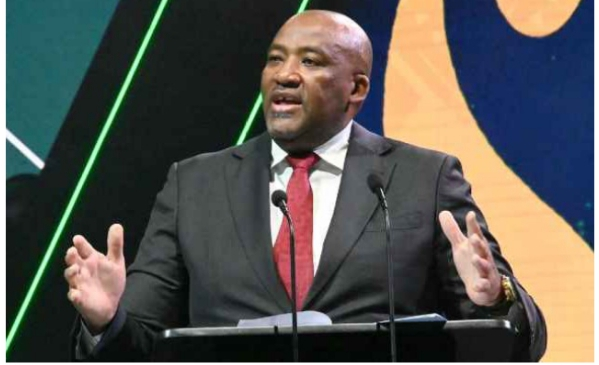
However, those comments were quickly followed by a formal statement from Sports Minister Gayton McKenzie, who contradicted the suggestion that South Africa had been confirmed as host and stressed that the process remained at a preliminary stage.
“As the Minister of Sport, Arts and Culture, I wish to provide clarity following remarks made by the Deputy Minister of Sport, Arts and Culture at the HollywoodBets Super League Awards regarding the 2026 TotalEnergies Women’s Africa Cup of Nations,” McKenzie said.
He emphasized that while South Africa had expressed willingness to assist if required, no official relocation of the tournament had been approved and Morocco remained the designated host.
“South Africa has expressed its willingness to support the Confederation of African Football if required, should alternative hosting arrangements for the 2026 WAFCON become necessary,” he said.
“These engagements form part of ongoing discussions initiated by CAF as it considers various contingencies in line with the confederation’s responsible stewardship of the continental game.”
McKenzie made it clear that no formal decision had yet been taken and that the existing hosting plan was still in place.
“At this stage, no formal decision has been taken to relocate the tournament, and Morocco remains the officially designated host of the 2026 Women’s Africa Cup of Nations. CAF has not yet triggered any alternative hosting process.”
The minister also outlined the conditions that would need to be met before South Africa could be confirmed as host, stressing that the matter involved more than verbal readiness or political goodwill.
Any potential hosting role would require formal approval through established governance and government channels.
“Any potential hosting of the tournament by South Africa would be subject to established government and football governance processes, in partnership with the South African Football Association and other stakeholders,” he said.
These requirements include official confirmation from CAF that alternative hosting arrangements are necessary, approval through cabinet processes, confirmation of host cities and stadium availability, adequate accommodation and transport capacity, and the completion of government guarantees and operational agreements.
McKenzie further clarified that the deputy minister’s remarks should not be interpreted as an assumption of hosting responsibilities.
“The remarks made by the Deputy Minister reflect government’s longstanding engagement on supporting African football and South Africa’s confidence in its proven ability to host major international sporting events,” he said. “They do not constitute a formal confirmation or assumption of hosting responsibilities.”
He added that discussions with CAF would continue in a structured and responsible manner and that any official announcement would only be made once all required processes had been completed.
“The Department, with SAFA and stakeholders, will continue to engage with CAF in a structured and responsible manner. Any further announcements will be made only once all required processes have been concluded and formal decisions taken.”
Despite the uncertainty surrounding the hosting decision, McKenzie reaffirmed South Africa’s broader ambition to attract major sporting events as part of a long-term national strategy.
Read also: Crystal Palace extend winless streak with 1-1 draw at 10-man Forest
“The Ministry of Sport, Arts and Culture will continue to pursue a long-term strategy of hosting major sporting events to boost sport, tourism, economic growth and the image of the country on the world stage.”
For now, the status of the 2026 Women’s Africa Cup of Nations remains unchanged, with Morocco still officially listed as host and CAF yet to issue confirmation of any relocation or revised tournament timeline.

