Security analyst Charles Awuzie examines Sheikh Ahmad Gumi’s influence, his ties to bandits, and predictions about Nigeria’s security and political risks.
In Nigeria’s complex security landscape, few figures divide public opinion as sharply as Sheikh Ahmad Gumi, the Islamic cleric who openly engages with bandit groups terrorising northern Nigeria.
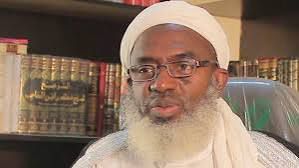
Some see him as a peace advocate, others as an enabler. Either way, his words carry weight in shaping national perception and policy response.
Based on long-term observation and research through an internal Civilian Security Analytic Tool developed at Gemsbok Technologies, this article examines Gumi’s ideological roots, influence, risk potential, and how his role could affect Nigeria’s stability in the coming years.
Who is Sheikh Ahmad Gumi?
Sheikh Gumi is a medical doctor, a former military officer, and an Islamic scholar known for his literalist interpretation of the Qur’an. His military background grants him insight into Nigeria’s internal defence structures, while his religious authority connects him deeply to northern communities.
Backed by the Northern Elders Forum, Gumi’s voice commands respect in the region. However, this same influence makes his rhetoric particularly consequential — especially when it appears to rationalise the actions of violent groups.

A literalist voice in a contextual world
Unlike reformist scholars who contextualise scripture to fit modern realities, Gumi adheres to literalist teachings. This rigidity shapes his controversial stance that bandits are not enemies of the state but “misguided Nigerians” who can be rehabilitated.
At various points, he has argued that “northern bandits believe in Nigeria,” contrasting them with members of the proscribed IPOB movement in the South East. Such comments, while possibly intended to preserve national unity, are widely viewed as insensitive to victims of terrorism and polarising along regional lines.
Security assessment: A medium-high threat
At Gemsbok Technologies, our Civilian Security Analytic Tool categorises Gumi as a medium-high threat actor. The classification is not based on violent conduct but on rhetorical influence — the capacity to radicalise sympathisers or embolden terrorist sympathies through persistent moral justification.
By portraying armed groups as redeemable patriots rather than violent criminals, Gumi risks fostering a dangerous ideological divide: northern extremists gaining moral confidence, while southern separatists grow more resentful and militant.
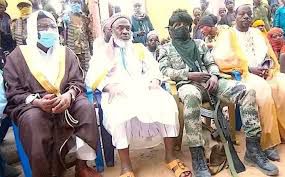
Prediction 1: Possible elevation by President Tinubu
Probability: 75%
Nigeria’s President Bola Ahmed Tinubu may, in the spirit of peacebuilding, establish a National Peace Commission. If Sheikh Gumi is appointed, it would confer both legitimacy and de facto immunity.
Such an elevation could calm northern insurgents temporarily, as they might perceive recognition from the federal government. However, in the South, secessionist groups could see this as state bias, escalating regional militancy and deepening mistrust.
Recommendation:
The government should exclude Gumi from formal negotiations and instead collaborate with moderate clerics respected across regional lines.
Prediction 2: Drone strikes under a Trump administration
Probability: 60%
If Donald Trump returns to the U.S. presidency, analysts expect a renewed hardline stance against Islamist terrorism in Africa. There is a credible possibility that the U.S. could consider targeted drone strikes against known terrorist enclaves in northern Nigeria.
Under such a scenario, Gumi could be labelled a “facilitator of interest” if satellite imagery or intelligence links him to negotiation meetings within militant camps.
Should a U.S. strike occur:
Southern separatists might celebrate it as symbolic justice.
Northern extremists would likely retaliate with a wave of revenge attacks, potentially marking Nigeria’s worst security crisis since the Boko Haram insurgency.
Recommendation
The U.S. must collaborate closely with Nigerian Defence Headquarters and understand the cultural nuances of Nigeria’s insecurity before any intervention.
Nigeria should demonstrate genuine progress in combating insecurity before Easter 2026, a potential symbolic window for Western intervention.
Prediction 3: Exile and digital Dawah
Probability: 30%
If U.S. or international pressure mounts, Gumi might be declared wanted by Nigerian authorities. In that scenario, he could relocate to Mecca, continuing his preaching through digital platforms such as Telegram, YouTube, or X (Twitter).
This “digital Dawah” would target young northern Nigerians and could evolve into a cross-border ideological movement — more challenging to regulate than physical gatherings due to encrypted platforms.
Recommendations for Nigeria’s security community
1. Enhance HUMINT and SIGINT surveillance
Deploy advanced Human and Signal Intelligence tools in Kaduna, Zamfara, and surrounding regions to track funding networks, recruitment patterns, and communications tied to northern clerical groups with foreign affiliations.
2. Launch counter-narrative campaigns
Neutralise extremist rhetoric by amplifying the voices of terrorism victims — both northern villagers attacked by bandits and southern families affected by secessionist violence.
Equip survivors in the diaspora with digital tools — ring lights, smartphones, and stable internet — to share testimonies that humanise victims, not perpetrators.
3. Strengthen religious literacy and contextual interpretation
Work with moderate Islamic scholars and Christian leaders to promote contextual understanding of religious texts. Extremist literalism thrives in ignorance; education remains the best countermeasure.
4. Improve government communication strategy
Government silence allows misinformation to thrive. Authorities should respond swiftly and clearly to controversial statements by influential figures to control public narratives before they deepen division.
Broader implications for Nigeria’s national security
The Gumi dynamic exposes Nigeria’s larger problem — the politicisation of religious influence.
In a nation where clerics shape community loyalty more than elected officials, religious rhetoric can either ignite violence or build peace.
If Gumi continues to occupy moral and media space without accountability, Nigeria may see empathy redirected from victims to aggressors — a dangerous shift for any democracy.
Peacebuilding must not mean platforming extremism. True reconciliation begins with justice, transparency, and compassion for those who have suffered most.
Final thoughts
Sheikh Ahmad Gumi embodies both risk and opportunity — a man whose voice could either heal divisions or deepen them. His training as a doctor, service as a soldier, and prominence as a cleric make him uniquely influential in Nigeria’s ongoing security story.
But peace built on appeasing violence is unsustainable. Nigeria must carefully choose who speaks for peace and who profits from conflict.
As an analyst and cybersecurity professional, I reiterate that this assessment is independent and non-governmental. The insights derive from long-term observation and open-source intelligence.
Nigeria’s leaders should treat the Gumi phenomenon not as a personality issue but as a strategic security challenge that demands foresight and firmness.
The time for action is now — before external forces, internal mistrust, or digital radicalisation escalate beyond control..
Author: Charles Awuzie, CEO of Gemsbok Technologies, Johannesburg. Cybersecurity and Counter-Terrorism Analyst.
More news at ireport247news
About The Author