

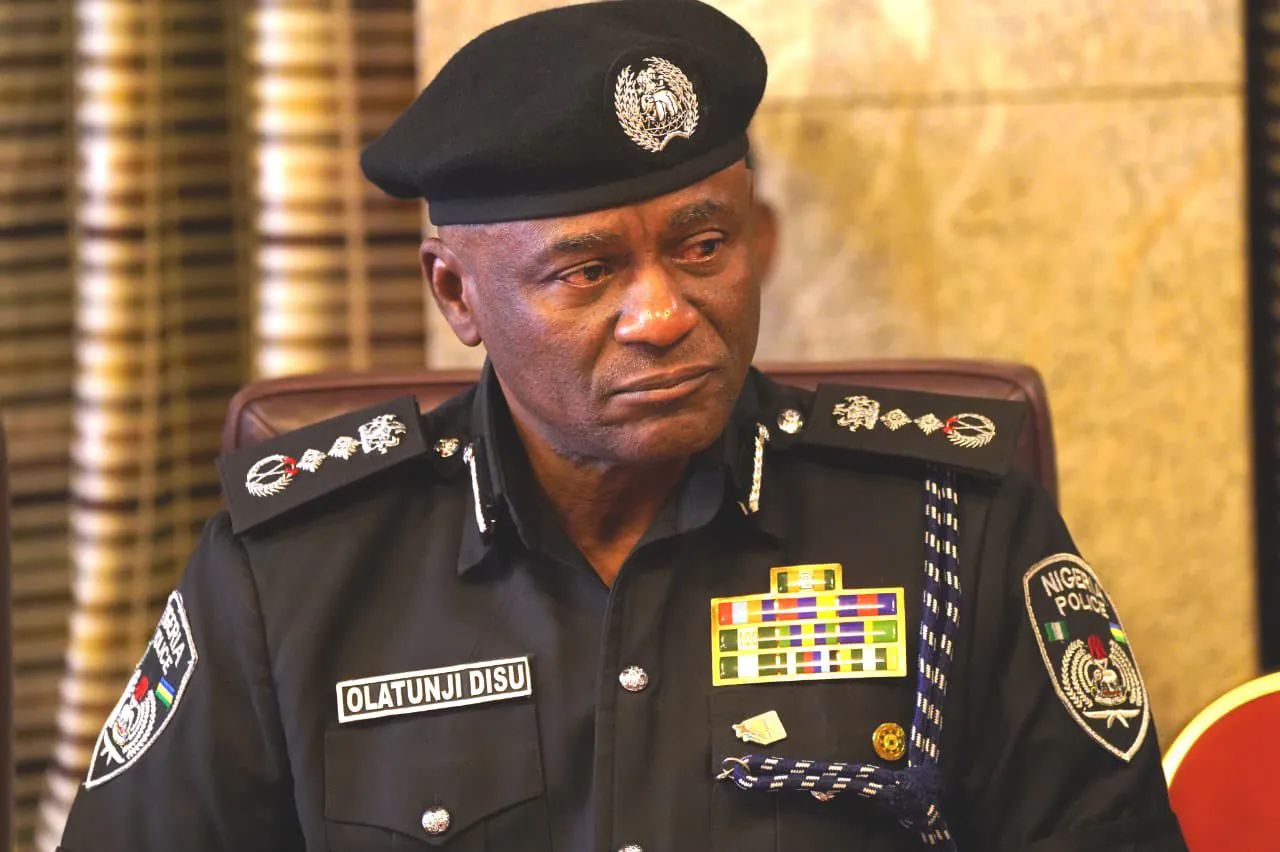
The Inspector-General of Police, Olatunji Disu, has ordered a fresh security intervention in Niger State following deadly attacks and retaliatory violence that have left several people dead in Borgu Local Government Area.
The police leadership has dispatched Deputy Inspector-General of Police Umar Shehu Nadada to the affected communities, with a mandate to evaluate the security situation, strengthen ongoing operations and engage local authorities on ways to prevent further bloodshed.
The development comes after two separate incidents in Lumma Ba’are and Wawa communities on November 21, during which more than 30 people reportedly lost their lives. Several houses were also destroyed in the violence, raising concerns over the safety of residents in the area.
According to the Nigeria Police Force, the assignment is not limited to increasing the number of security personnel on the ground.
It also involves consultations with traditional rulers, community representatives and other relevant stakeholders to address the circumstances surrounding the attacks and prevent a recurrence.
The Force Public Relations Officer, CSP Ani Iniedu, confirmed the deployment in a statement released on Wednesday.
He explained that the Inspector-General specifically instructed Nadada, who is the Deputy Inspector-General in charge of Operations, to visit the affected locations, obtain firsthand information and coordinate measures aimed at restoring normalcy.
Nadada arrived in Minna on November 23 and was received at the Niger State Government House by Deputy Governor Comrade Yakubu Garba, who represented Governor Mohammed Umaru Bago.
After the engagement at Government House, the police delegation proceeded to New Bussa, where the DIG met with the Emir of Borgu, Alhaji Muhammed Dantoro, at his palace.
The meeting provided an opportunity for the police leadership to express sympathy over the tragedy and reassure the traditional institution of its commitment to addressing the security challenges confronting the emirate.
Nadada conveyed his condolences to the Emir over the lives lost and acknowledged the seriousness of the incidents, assuring the traditional ruler that security agencies were working with relevant stakeholders to prevent further violence.
He also cautioned against retaliatory attacks, warning that responding to violence with more violence would only increase casualties and make an already difficult security situation worse.
The DIG maintained that lasting peace could not be achieved through revenge or communal confrontation, urging residents and community leaders to cooperate with security agencies rather than take the law into their own hands.
In a further move to assess the extent of the damage and understand the circumstances surrounding the attacks, Nadada travelled to Lumma Ba’are and Wawa.
He was accompanied by the Niger State Commissioner of Police, CP Salisu Bello Fago, alongside other senior police officers.
During the visits, the delegation inspected the affected communities and held discussions with residents and local leaders.
The engagements were intended to provide security officials with a clearer understanding of the situation and the concerns of people living in the troubled settlements.
Giving an account of the incidents, police spokesperson Ani Iniedu disclosed that six people were killed during the attack on Lumma Ba’are on November 21.
Among those who died was the village head, while several houses were reportedly set on fire during the assault.
The situation subsequently deteriorated when a suspected reprisal attack was carried out in Wawa later that day.
According to the police, the second incident resulted in more than 30 deaths, making the violence particularly devastating for the affected community.
The spokesperson also addressed reports circulating in the media and on social media suggesting that the combined death toll had reached 64.
He clarified that the figure being communicated by the police was different from the number contained in those reports.
The clarification comes amid public concern over the scale of the violence and calls for a stronger response to insecurity in the affected part of Niger State.
During his assessment tour, Nadada announced that additional tactical personnel would be deployed to strengthen the joint security teams already operating in the area.
The reinforcement is expected to improve surveillance, strengthen the presence of security operatives and enhance their ability to respond promptly to threats against residents.
The police leadership is also seeking greater cooperation from people living in the affected communities, particularly in the area of intelligence gathering.
Nadada appealed to residents to share useful information with security agencies and avoid actions capable of creating fresh tensions or undermining efforts to restore stability.
He stressed that maintaining security was a shared responsibility and called on traditional rulers, community leaders and other influential figures to help discourage violence among residents.
The IGP’s directive to the DIG further underscores the importance the police leadership has attached to resolving the crisis through a combination of operational measures and stakeholder engagement.
By involving traditional institutions and community representatives, the police hope to improve communication with residents, identify potential sources of tension and develop measures that can prevent similar incidents in the future.
For communities affected by the attacks, the immediate challenge remains the protection of lives and property, particularly following the destruction of homes and the loss of community members.
The deployment of additional personnel is expected to reinforce security arrangements, although the success of the intervention will depend on sustained operations and cooperation between security agencies and local stakeholders.
As the police continue their assessment and engagement with residents, attention will remain on the restoration of peace in Borgu and the prevention of further attacks in Lumma Ba’are, Wawa and neighbouring communities.
About The Author
