The Saudi oil pipeline attack has caused extensive damage to a major pumping station, with satellite images revealing the scale of destruction as fears grow that up to 4% of global oil supply could be affected.
Saudi Arabia has yet to provide full details about the damage caused by Friday’s drone attacks on its 1,200km east-west pipeline, a vital route for transporting crude to the Red Sea.
The pipeline has become increasingly important since the war-related shutdown of the Strait of Hormuz disrupted oil exports across the region and forced Saudi Arabia to rely heavily on its alternative route.
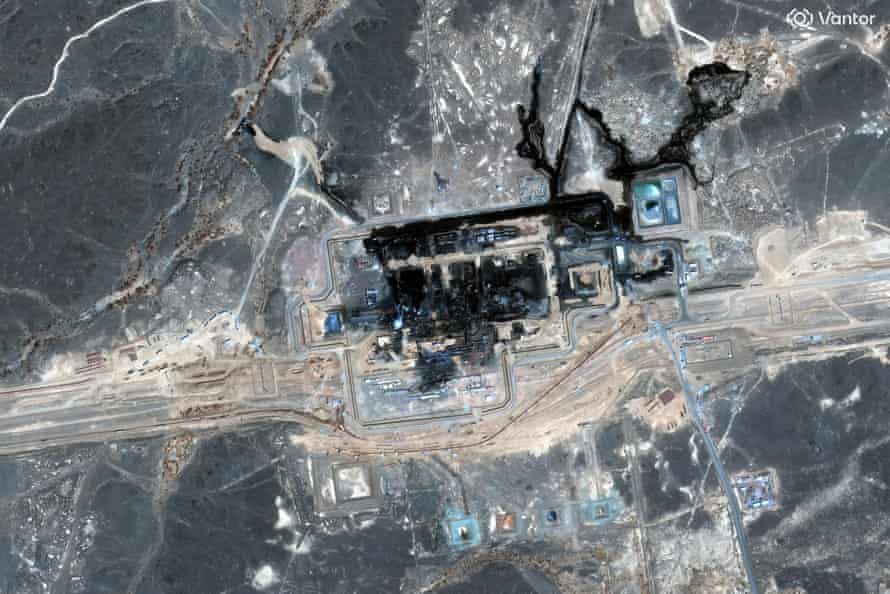
Satellite Images Reveal Extent of Pipeline Damage
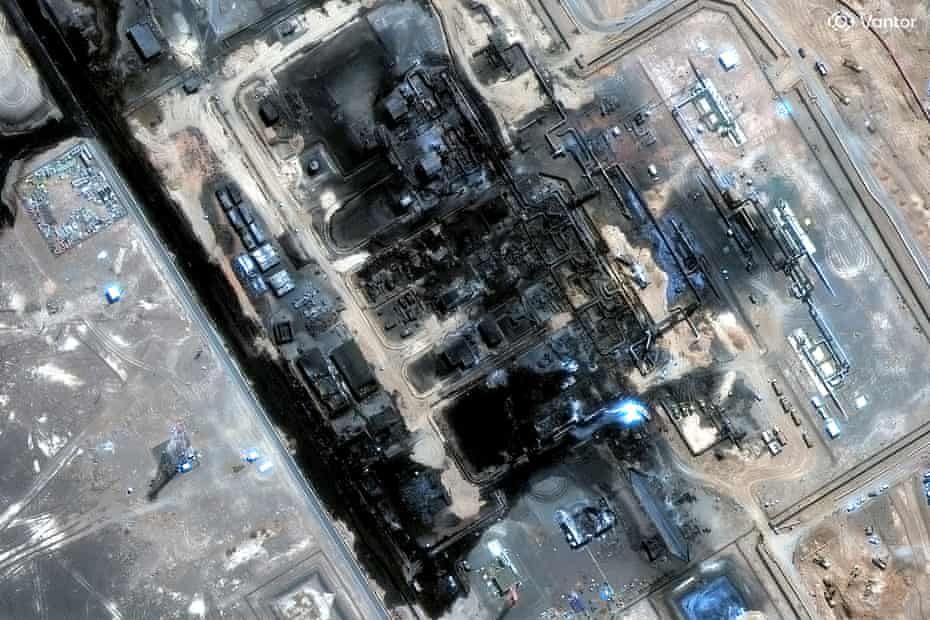
Satellite photographs released on Sunday appeared to show a pumping station along the Saudi east-west pipeline badly charred and damaged after the drone attacks.
The pipeline stretches approximately 745 miles across the Arabian Peninsula and carries Saudi crude to Yanbu, a major Red Sea export port.
Saudi Arabia, the world’s largest oil exporter, has been using the route to bypass the Strait of Hormuz, where shipping has been severely disrupted by the ongoing conflict.
The pipeline has reportedly allowed Riyadh to reroute around 4 million barrels of oil per day to Yanbu, equivalent to about 4% of global oil supply.
However, the attacks forced the pipeline to shut down, raising concerns over how long Saudi Arabia can maintain exports using existing stocks.
Saudi Oil Stocks Could Run Out
Three industry sources familiar with Saudi exports said Yanbu currently has enough stocks to maintain exports for only five to seven days.
Another source said Saudi Arabia also has several days of supply available from Egyptian ports, including Ain Sukhna on the Red Sea and Sidi Kerir on the Mediterranean.
But those stocks are not full and would eventually run out if the east-west pipeline remains out of operation, according to the sources.
The uncertainty has intensified concerns in global energy markets because Saudi Arabia depends on the pipeline to move millions of barrels of crude to the Red Sea.
Repairs Could Take Up to Six Weeks
The Saudi government has not announced how badly the pipeline was damaged or when pumping operations could resume.
Sources who spoke to Reuters provided different estimates about the repair timeline.
One source said repairs could take up to six weeks, while another suggested the pipeline could be restored sooner and might even resume partial pumping while repairs continue.
The Saudi government media office and energy ministry did not immediately respond to requests for comment.
The lack of clarity has added to concerns among oil traders and buyers, particularly because any prolonged reduction in Saudi exports could further tighten global supplies.
Oil Prices Rise Above $108 a Barrel
The Saudi oil pipeline attack has already contributed to renewed pressure in global energy markets.
Brent crude, the international oil benchmark, rose by more than 3.4% on Sunday to $108 a barrel, its highest level since May.
The disruption is also affecting refined fuel markets.
Diesel prices in the United States climbed above $6 a gallon on average on Friday, reaching a record level as the wider Middle East conflict continues to disrupt energy supplies and transportation routes.
A prolonged shutdown of the Saudi pipeline could push crude prices even higher, increasing the cost of petrol, diesel and other petroleum products.
Higher energy prices could also feed into transportation and production costs, adding to inflationary pressures in economies already facing elevated fuel costs.
Houthis Intensify Attacks on Saudi Arabia
The pipeline crisis comes as Iran-aligned Houthi forces in Yemen intensify their attacks on Saudi targets and shipping routes.
The Houthis have recently captured the strategic island of Perim in the Bab al-Mandab strait, expanding their presence around one of the world’s most important maritime chokepoints.
The group has also launched attacks against targets in Saudi Arabia and declared a blockade as its forces advance along Yemen’s Red Sea coast.
The latest Houthi advances have brought the group closer to a major US military base in Djibouti.
The developments have raised concerns about the security of both oil infrastructure and international shipping in the Red Sea region.
Bab al-Mandab Becomes Increasingly Important
The Bab al-Mandab strait connects the Red Sea to the Gulf of Aden and provides a crucial maritime route between Europe, Asia and the Middle East.
Any prolonged disruption could force shipping companies to consider longer alternative routes, increasing transportation costs and putting further pressure on global supply chains.
For Saudi Arabia, the security of the Red Sea route has become even more important because the Strait of Hormuz has been severely affected by the war.
The east-west pipeline had helped Riyadh bypass the troubled waterway and continue exporting significant volumes of crude.
Saudi Arabia Blames Drones Launched From Iraq
Saudi Arabia has blamed Friday’s attack on drones launched by militants in Iraq.
Riyadh previously announced the shutdown of the east-west pipeline after the attacks but has not released a comprehensive assessment of the damage.
The incident has increased tensions involving several actors across the region, including Saudi Arabia, Iran, Yemen, Iraq, Israel and the United States.
The attacks on Saudi infrastructure are occurring alongside the wider conflict that has already disrupted oil production, shipping and trade across the Middle East.
Diplomatic Efforts Suffer Fresh Setback
As oil prices climbed, hopes for an immediate diplomatic breakthrough also weakened.
Oman’s foreign minister, Sayyid Badr Albusaidi, announced late Sunday that a regional meeting scheduled for Monday had been postponed “in the interests of consensus”.
Iranian officials had planned to attend the meeting with Gulf Arab states after discussing an agreement with Oman concerning shipping routes through the Strait of Hormuz.
Before the conflict, vessels could transit the strait without seeking special permission.
Iran now requires vessels to obtain permission to pass through the waterway and is considering a system for imposing service fees.
The dispute has become a major concern for global energy markets because Hormuz is one of the world’s most important routes for oil transportation.
Read also: British monarchy slave trade: New research reveals royals’ deep role in enslavement
Global Energy Supply Faces Growing Threat
The Saudi oil pipeline attack has created another major threat to global energy supplies at a time when markets are already dealing with severe disruption across the Middle East.
For the past six months, Saudi Arabia has used its east-west pipeline to reduce the impact of the Strait of Hormuz shutdown and maintain exports through Yanbu.
But if repairs take several weeks, the country could face increasing difficulty maintaining its normal export volumes.
The combination of the damaged Saudi pipeline, Houthi attacks, restrictions around the Strait of Hormuz and rising crude prices has left the global energy market increasingly vulnerable.
The wider Middle East conflict has now entered its seventh month after the United States and Israel launched attacks on Iran on 28 February.
US President Donald Trump had initially said the war would last four to six weeks, but continued attacks on energy infrastructure and shipping routes suggest the crisis remains unresolved.
About The Author