

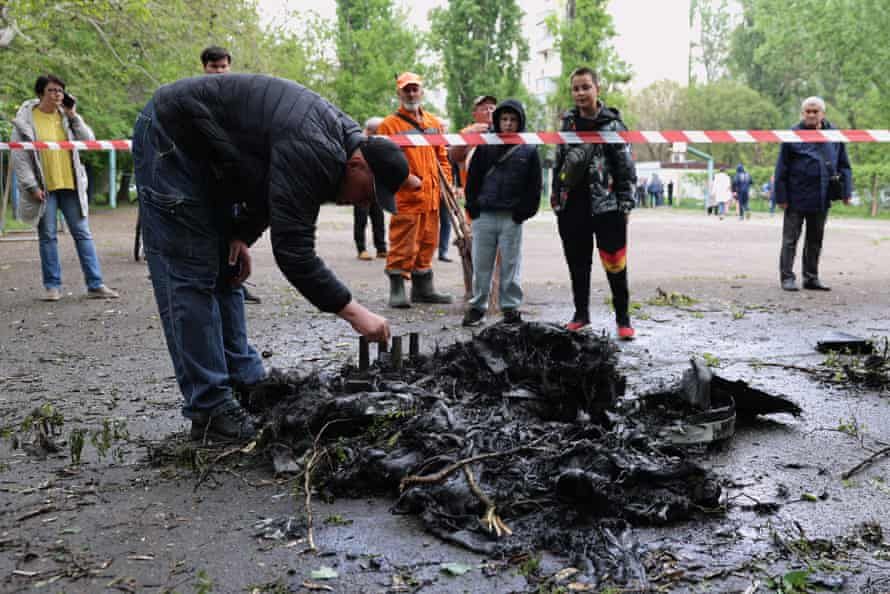
Russia launches 800 drones at Ukraine in one of the most intense daytime aerial assaults of the war, killing at least six people and causing widespread destruction across multiple regions.
The coordinated wave of drone strikes hit critical infrastructure, residential areas, and transport networks, as Ukrainian President Volodymyr Zelenskyy warned that Russia is significantly escalating its military campaign despite growing international pressure for a negotiated settlement.
Ukrainian officials said the attacks stretched across several hours, with multiple waves of drones entering Ukrainian airspace from different directions, including areas near Belarus.
Air defence systems were activated nationwide as authorities attempted to intercept incoming threats, but the scale and intensity of the assault overwhelmed local defences in several regions.
The strikes come amid renewed political debate over the future of the war, following comments by US President Donald Trump suggesting that peace negotiations could be approaching a breakthrough. On the ground in Ukraine, however, the reality remains continued bombardment and rising civilian casualties.
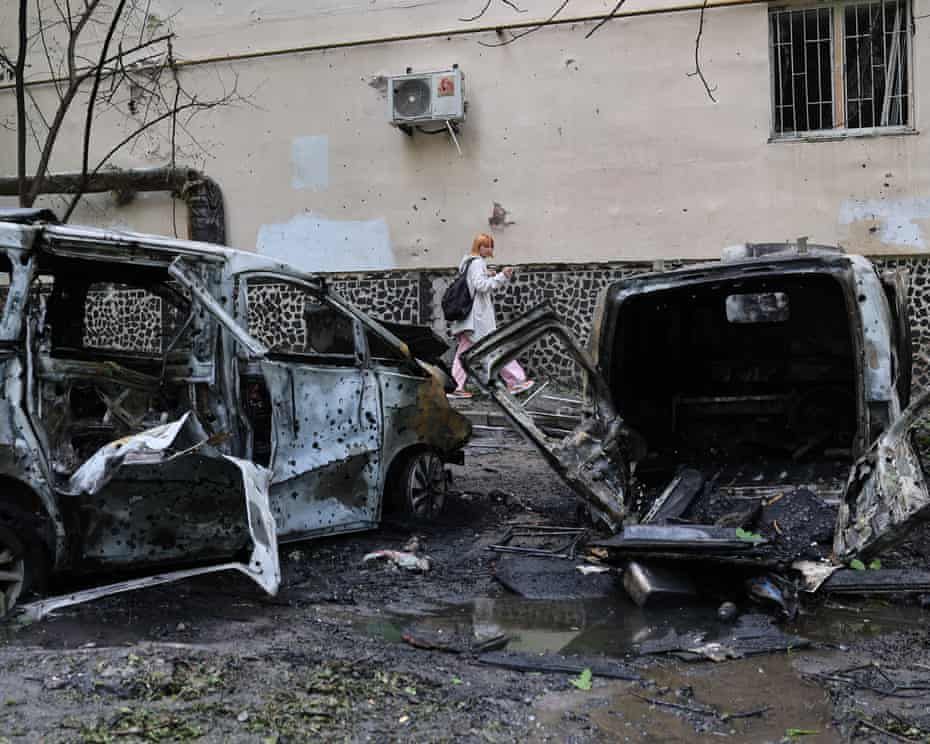
Massive coordinated drone assault targets multiple regions
Ukrainian military officials reported that the attack involved at least eight separate waves of drones, targeting both frontline and inland regions. Kyiv and surrounding areas were placed under repeated air raid alerts as explosions were heard across parts of the capital.
Authorities confirmed damage to energy infrastructure, rail networks, industrial facilities, and residential buildings. In southern Ukraine, port facilities were also affected, raising concerns about disruptions to grain exports and maritime logistics.
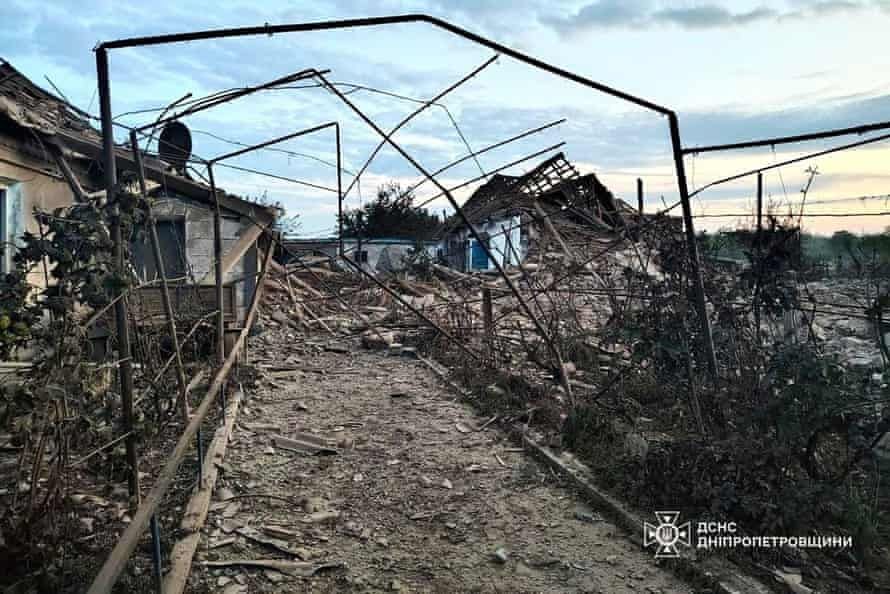
Emergency services worked through the day to rescue trapped civilians, extinguish fires, and clear debris. In several cities, residential blocks were left partially destroyed, with shattered windows, collapsed roofs, and damaged vehicles lining the streets.
Local officials described the scale of destruction as one of the most severe drone-related attacks in recent months, highlighting the growing reliance on unmanned aerial systems in the conflict.
Zelenskyy warns of escalating Russian strategy
President Volodymyr Zelenskyy condemned the assault and warned that Russia is deliberately intensifying its air campaign to weaken Ukraine’s infrastructure and morale.
Speaking on social media, Zelenskyy said:
“Since midnight, at least 800 Russian drones have already been launched, and the attack is ongoing.”
He added that the targeting pattern suggested a coordinated strategy aimed at critical infrastructure near population centres and key transport corridors.
Ukrainian officials believe Russia is attempting to stretch Ukraine’s air defence systems by launching large-scale simultaneous drone waves from multiple directions. Analysts say this tactic is designed to increase the likelihood of successful strikes by overwhelming interception capacity.
Zelenskyy also reiterated that Ukraine remains committed to defending its territory but warned that continued escalation increases the risk of further regional instability.
Civilian areas and infrastructure under pressure
The drone strikes hit a wide range of civilian infrastructure, including housing districts, energy grids, and transportation systems.
In central Ukraine, railway lines were disrupted after explosions damaged tracks and nearby facilities. In the eastern regions, industrial zones suffered significant structural damage, while emergency power outages were reported in several cities.
Eyewitnesses described scenes of panic as repeated air raid sirens forced residents into shelters throughout the day. Many civilians reported hearing continuous explosions as air defence systems engaged incoming drones.
Humanitarian organisations have raised concerns that sustained attacks on infrastructure are compounding existing shortages in electricity, heating, and medical services.
Regional security concerns grow near Nato borders
Neighbouring countries expressed concern over the proximity of some drone incursions to Nato territory. Ukraine’s western regions, which border several European Union states, have seen increased military activity in recent weeks.
Hungarian officials condemned strikes near areas inhabited by ethnic Hungarian communities, while Slovakia temporarily tightened border controls, citing security risks linked to the escalating attacks.
Security analysts say the expansion of drone operations closer to Nato borders raises the risk of miscalculation or accidental cross-border incidents, which could significantly widen the conflict.
Trump comments on Ukraine war draw global attention
The latest escalation comes shortly after US President Donald Trump suggested that the war in Ukraine may be approaching a resolution.
Speaking before diplomatic engagements in Beijing, Trump said:
“The end of the war in Ukraine I really think is getting very close.”
However, the statement was made without detailed explanation, and Ukrainian officials have expressed caution about such predictions.
Trump has previously claimed he could help broker a peace deal between Russia and Ukraine, but diplomatic progress has remained limited. His comments have often been met with scepticism from analysts who point to continued large-scale fighting on the ground.
Despite ongoing violence, diplomatic discussions between global powers continue behind the scenes, with some attempts focused on reducing escalation risks and restoring limited negotiation channels.
Drone warfare reshapes the battlefield
The conflict between Russia and Ukraine has increasingly shifted toward drone warfare, fundamentally changing military strategy on both sides.
Ukraine has developed a growing domestic drone production capability, enabling long-range strikes on Russian military infrastructure. These operations have reportedly disrupted fuel depots, logistics hubs, and industrial facilities inside Russian territory.
In response, Russia has expanded its use of mass drone attacks designed to saturate Ukrainian air defences. Military experts describe this as a war of attrition, where both sides attempt to exhaust the other’s resources through sustained aerial pressure.
Analysts note that drones are now central to reconnaissance, targeting, and direct strike operations, replacing many traditional battlefield roles previously carried out by manned aircraft or artillery.
The Institute for the Study of War has previously reported shifts in frontline momentum, suggesting that neither side has achieved decisive territorial advantage in recent months, despite heavy losses.
Political pressure inside Ukraine increases
The military escalation also comes amid political pressure within Ukraine following corruption allegations involving former senior officials.
Andriy Yermak, a former head of the presidential office and key negotiator in international talks, has been named in a money-laundering investigation linked to a luxury construction project reportedly worth millions of dollars.
Yermak has denied wrongdoing, telling reporters he owns only a single apartment and one car. His legal team has dismissed the allegations as politically motivated.
The case has added internal pressure on Zelenskyy’s administration at a time when maintaining public trust and international support is critical.
Diplomacy faces uncertainty amid continued strikes
Despite ongoing diplomatic efforts involving global powers, the latest drone assault highlights the gap between political discussions and battlefield realities.
China is expected to play a role in upcoming diplomatic engagements involving the United States, while Western governments continue to push for measures aimed at reducing escalation.
Read also: Trump gets red carpet welcome in China as Americans struggle with rising costs
However, with large-scale attacks continuing, analysts warn that meaningful negotiations remain difficult without a significant shift in military conditions or political incentives.
For civilians in Ukraine, the immediate reality remains persistent air raid alerts, damaged infrastructure, and ongoing uncertainty about the future.
Escalation overshadows peace expectations
The large-scale drone assault underscores the continuing intensity of the conflict, even as international leaders speak about possible diplomatic breakthroughs.
While political statements suggest potential movement toward negotiations, the situation on the ground tells a different story—one defined by sustained strikes, expanding drone warfare, and deepening humanitarian strain.
As Ukraine continues to defend its territory under increasing pressure, the war shows few signs of de-escalation, with both sides investing heavily in technologies that extend the reach and frequency of attacks.
About The Author

https://shorturl.fm/rvzPW