US strikes on Iran were authorised because Washington believed an imminent Israeli assault would trigger retaliation against American forces, according to Secretary of State Marco Rubio.
The administration insists the US strikes on Iran were necessary to prevent higher US casualties and protect troops stationed across the Middle East.
President Donald Trump ordered the military campaign without first seeking congressional approval, arguing that intelligence assessments showed Israel was preparing to strike Iran.
Officials believed Tehran would respond directly against American assets and personnel, prompting what Rubio described as a defensive and pre-emptive response.
Speaking at the Capitol following a classified briefing, Rubio said it was “abundantly clear” that Iran would retaliate against the United States if attacked.
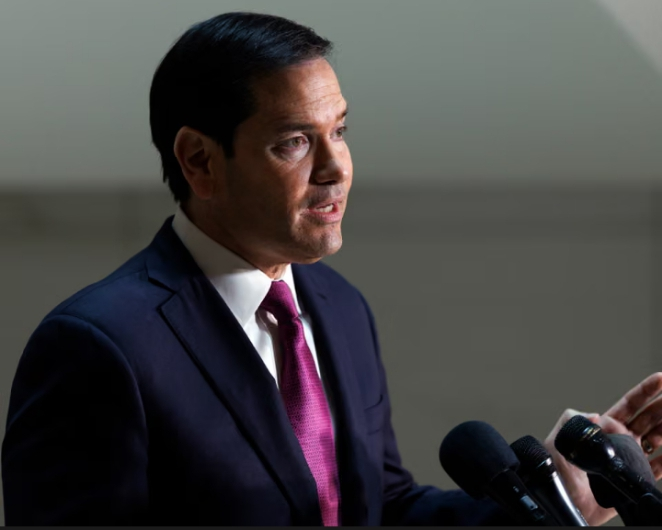
He maintained that failing to act before Iranian missiles and drones were launched would have resulted in greater American losses. The US strikes on Iran, he said, targeted ballistic missile systems and naval capabilities viewed as immediate threats.
Rubio was joined in the briefing by CIA director John Ratcliffe and Joint Chiefs chair Dan Caine, who addressed lawmakers behind closed doors. The session marked Congress’s first detailed update since the air campaign began and came as the House prepared to consider a war powers resolution that could attempt to limit the president’s authority.
Vice-president JD Vance framed the broader strategy in terms of nuclear non-proliferation, stating that the administration’s ultimate objective is to ensure Iran cannot acquire a nuclear weapon.
While Rubio focused publicly on degrading missile and naval assets, Trump has also referenced dismantling broader military infrastructure and curbing Tehran’s regional influence.
The US strikes on Iran have intensified an already volatile regional confrontation. Since the campaign began, US and Israeli aircraft have carried out coordinated operations against Iranian military sites.
Tehran has responded with drone and missile attacks aimed at US-aligned countries, raising fears of a widening Middle East conflict.
Iranian authorities report hundreds of casualties from the airstrikes, while the US military has confirmed American service member deaths.
The campaign has also reportedly killed senior Iranian leaders, including supreme leader Ali Khamenei, dramatically altering Iran’s political landscape. Tehran continues to deny seeking nuclear weapons, despite repeated accusations from Washington and Jerusalem.
Democratic lawmakers have sharply criticised the administration’s rationale for the US strikes on Iran. Senate minority leader Chuck Schumer described the conflict as a war of choice and questioned whether there was any imminent threat to the United States itself. After attending the classified briefing, he said many questions about objectives and exit strategy remain unanswered.
Senator Mark Warner, vice-chair of the Senate intelligence committee, warned that equating a threat to Israel with an imminent threat to the United States could set a far-reaching precedent. He argued Congress must carefully evaluate the legal and constitutional basis for pre-emptive military action.
Republican leaders have defended the president’s decision. House speaker Mike Johnson described the operation as defensive and aligned with Israel’s security concerns.
Israeli prime minister Benjamin Netanyahu has argued that Iran was rapidly expanding underground facilities that could soon make its missile and nuclear infrastructure immune from future attacks.
The looming war powers vote underscores the broader constitutional debate triggered by the US strikes on Iran. With Republicans controlling both chambers of Congress, the resolution faces long odds, and even passage would likely be met with a presidential veto requiring a two-thirds majority override.
As military operations continue, pressure is mounting on the White House to define clear goals, establish measurable outcomes and outline a credible path toward de-escalation.
Read also: UK distances itself from Iran war as Starmer defends legal limits on military action
About The Author