Pakistan and Afghanistan have agreed to maintain a ceasefire for another week amid a growing border conflict, as negotiations in Turkiye seek to prevent further escalation between the two neighbors.
The Turkish Ministry of Foreign Affairs confirmed that both sides will meet again in Istanbul on November 6 to finalize how the ceasefire will be implemented, with mediation from Turkiye and Qatar.
“All parties have agreed to establish a monitoring and verification mechanism to enforce peace and impose penalties on violations,” the joint statement said, aiming to contain the border conflict.
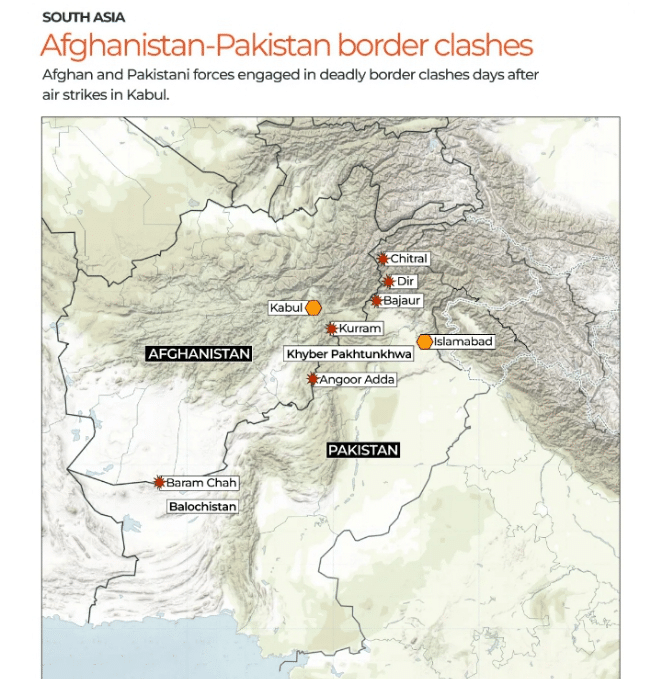
Earlier this month, explosions in Afghanistan triggered retaliatory strikes from Pakistan, leading to a weeklong escalation widely described as the most serious border conflict since the Taliban returned to power in Kabul in 2021.
Pakistan’s military claimed it killed over 200 Afghan fighters during the skirmishes, while Afghanistan said 58 Pakistani soldiers were killed, illustrating the intensity and human cost of the border conflict.
The initial ceasefire, brokered by Qatar and Turkiye, was signed on October 19 by both countries’ defense ministers in Doha, aiming to halt hostilities and restore calm amid the conflict.
A second round of talks in Istanbul collapsed on Wednesday when Islamabad demanded that Kabul crack down on Tehreek-e-Taliban Pakistan, an armed group accused of launching deadly attacks in Pakistan, a key issue fueling the border conflict.
Talks resumed on Thursday, resulting in the extension of the ceasefire until the next scheduled meeting on November 6, reflecting cautious optimism but continued volatility in the conflict.
Afghan government spokesperson Zabihullah Mujahid confirmed the conclusion of talks, emphasizing ongoing discussions and a commitment to prevent further escalation of the border conflict, while Pakistan has remained mostly silent publicly.
Despite the ceasefire, the border has remained closed for over two weeks, causing economic disruptions and mounting losses for traders, with the closure considered one of the severe consequences of the ongoing conflict.
In Kandahar, Afghan cloth trader Nazir Ahmed told AFP that prolonged border closures have drained local resources, warning that without sustained dialogue, the border conflict could deepen economic and humanitarian strain.
Abdul Jabbar, a vehicle spare parts trader in Chaman, Pakistan, described the impact on commerce as severe, noting that the border conflict has disrupted the livelihoods of ordinary citizens and regional trade flows.
Analysts say the extended ceasefire is fragile and temporary, as repeated skirmishes and unresolved disputes over militant safe havens continue to fuel the Pakistan-Afghanistan border conflict despite ongoing mediation efforts.
Regional observers warn that failure to address the root causes of the border conflict, including militant activity and political mistrust, risks destabilizing the wider region, affecting both countries’ security and economic stability.
The border conflict has also strained diplomatic ties, with accusations flying between Islamabad and Kabul, further complicating efforts to negotiate a lasting peace and highlighting the mistrust that underpins repeated clashes.
Pakistan has repeatedly accused Afghanistan of harboring the Pakistan Taliban, a charge Kabul denies, underscoring how militant groups and historical grievances continue to drive the border conflict between the neighboring states.
Afghan officials insist they do not provide safe haven to Tehreek-e-Taliban Pakistan and emphasize that both nations must focus on diplomacy to prevent the border conflict from escalating into a full-scale war.
Local traders on both sides express frustration, warning that the border conflict is taking a toll on ordinary citizens, disrupting trade, and fueling resentment that could undermine longer-term peace efforts in the region.
The economic impact is particularly severe for small businesses, transporters, and traders dependent on cross-border commerce, demonstrating how the border conflict is not only military but also an economic challenge for both nations.
International mediators, including Turkiye and Qatar, continue to facilitate talks, urging Pakistan and Afghanistan to sustain dialogue, enforce the ceasefire, and prevent the border conflict from spiraling into renewed military confrontations.
Observers note that the upcoming Istanbul meeting on November 6 will be crucial in determining whether a durable mechanism can be implemented to enforce peace, monitor violations, and reduce tensions surrounding the border conflict.
While the truce offers temporary relief, experts warn that without addressing the causes of the Pakistan-Afghanistan border conflict, including militant activity and historical disputes, future clashes are likely to occur.
The conflict remains a delicate test for both governments, regional mediators, and the international community, highlighting the complex interplay of security, politics, and economic interests along the 2,600-kilometre frontier.
For now, both nations face mounting pressure to sustain dialogue, prevent escalation, and mitigate the humanitarian and economic effects of the conflict, as traders and communities continue to bear the brunt of uncertainty.
About The Author