FG Targets 2,322 CNG Stations by 2027 as Nigeria Expands Shift Away From Petrol
Nigeria’s federal government plans to establish 2,322 compressed natural gas stations nationwide by 2027 as part of an aggressive push to expand alternative fuel infrastructure, reduce petrol dependence and lower transportation costs following the removal of fuel subsidies.
The target was disclosed by Ismaeel Ahmed, executive chairman of the Presidential Initiative on Compressed Natural Gas and Electric Vehicles, during the Nigerian Oil and Gas Midstream and Downstream Summit organised by the Nigerian Content Development and Monitoring Board in Lagos.
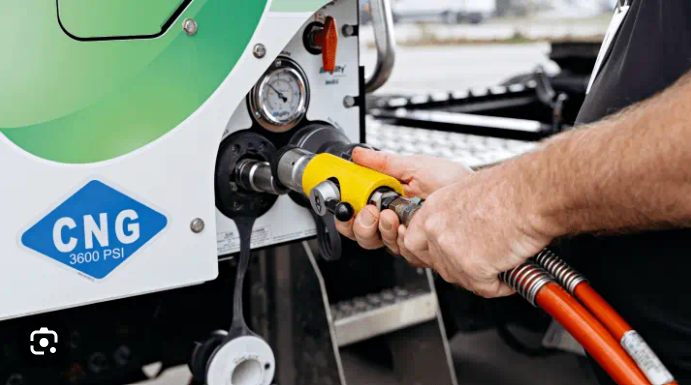
The announcement signals one of Nigeria’s most ambitious attempts yet to restructure its transport fuel system after decades of dependence on petrol.
The government’s aggressive push toward compressed natural gas also comes at a politically sensitive moment, as Nigerians continue grappling with rising transportation and living costs following the removal of petrol subsidies in 2023.
For Nigeria, the transition carries significant economic implications. Despite being one of Africa’s largest crude oil producers, the country continues to spend large amounts of foreign exchange importing refined petroleum products, leaving transport costs vulnerable to global fuel price shocks and currency instability.
Government officials say expanding compressed natural gas infrastructure could help reduce fuel costs for millions of Nigerians while supporting broader energy transition goals.
Why Nigeria is accelerating investment in CNG infrastructure
The government’s push for CNG adoption gained momentum after the removal of petrol subsidies triggered sharp increases in transportation and living costs across the country.
Authorities have increasingly promoted compressed natural gas as a cheaper alternative to petrol and diesel for commercial transportation, particularly for buses, taxis and tricycles used by ordinary Nigerians.
Nigeria consumes tens of millions of litres of petrol daily, making fuel imports one of the country’s largest sources of foreign exchange demand despite the country’s status as one of Africa’s largest crude oil producers.
Analysts say reducing petrol consumption through gas-powered transportation could help ease pressure on the naira, lower import costs and reduce exposure to international fuel price volatility.
Vehicle conversion costs, however, remain a challenge for many consumers, with some conversions costing several hundred thousand naira depending on vehicle type and technology requirements.
Speaking at the summit, Ahmed said Nigeria had expanded commercially available CNG infrastructure from a limited presence in a single state to operations across 24 states within less than three years.
“Today, in less than three years, we now have 24 states active,” he said.
He described the pace of expansion as unusually rapid compared with similar gas mobility transitions globally, particularly given Nigeria’s economic challenges and infrastructure limitations.
Industry analysts say the government’s focus on gas mobility reflects growing pressure to reduce the economic burden created by higher petrol prices after subsidy reforms.
Compressed natural gas currently sells for between N380 and N450 per standard cubic metre, according to government figures, compared with petrol prices ranging between N1,300 and N1,350 per litre.
That pricing gap has become one of the strongest drivers behind rising interest in vehicle conversion.
Nigeria expands CNG stations and vehicle conversion centres
According to officials, Nigeria currently has 72 operational CNG refuelling stations and another 175 under development.
The country also has 28 compression stations in operation and 65 additional facilities being developed to support virtual gas pipeline distribution networks.
Ahmed said the government expects current infrastructure capacity to triple within the next 18 months as investment accelerates.
“We expect to triple it in less than 18 months, which will increase supply capacity and drive greater demand,” he said.
The government has also established more than 350 vehicle conversion centres nationwide, most of them operated by small Nigerian businesses.
Over 100,000 vehicles have already been converted to run on compressed natural gas, according to officials, with commercial transport operators accounting for the majority of conversions.
Authorities say prioritising commercial vehicles was intended to create broader economic relief for commuters affected by rising transportation costs.
The initiative has also attracted more than $1bn in direct investment into Nigeria’s emerging gas mobility sector, Ahmed said.
Government projections aim to increase nationwide gas mobility infrastructure several times over current levels within the next two years, reflecting the scale of investment required to support large-scale adoption.
How CNG adoption could affect Nigeria’s economy
The government believes large-scale adoption of compressed natural gas could eventually reduce pressure on Nigeria’s foreign exchange reserves by lowering petrol import demand.
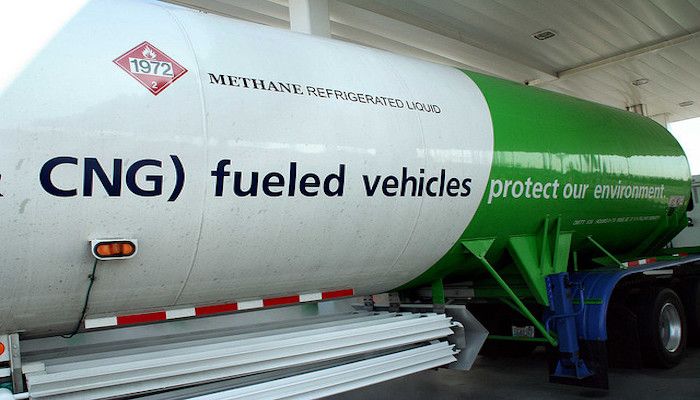
Fuel imports remain one of Nigeria’s largest sources of foreign currency demand and have historically contributed to pressure on the naira during periods of elevated global oil prices.
Nigeria’s continued dependence on imported petrol has persisted despite years of refinery rehabilitation efforts involving billions of dollars in spending on state-owned facilities that frequently operated below installed capacity.
Expanding domestic gas utilisation could also strengthen energy security by diversifying transportation fuel sources away from imported refined products.
Analysts say the transition may additionally stimulate industrial growth through increased demand for vehicle assembly, engineering services, conversion technologies and gas distribution infrastructure.
Ahmed said local manufacturing activity linked to gas mobility was already increasing, particularly in the assembly of motorcycles and tricycles.
“It may interest you to know that the largest motorcycle assembly plant in Africa is here in Lagos,” he said.
Government projections show the initiative aims to achieve one million vehicle conversions by 2027 alongside the creation of 75,000 direct jobs and 300,000 indirect jobs.
Nigeria trains technicians as gas mobility sector expands
A major part of the government’s strategy involves developing technical manpower capable of supporting converted vehicles nationwide.
Officials said more than 5,600 Nigerian technicians have already been trained and certified in compressed natural gas conversion technologies.
Ahmed said widespread technical training became necessary because millions of mechanics across the country were unfamiliar with maintaining CNG-powered vehicles.
“You can convert vehicles, but when those vehicles are on the road, mechanics must understand the technology,” he said.
Industry stakeholders say technician development will be critical to maintaining consumer confidence as adoption expands.
Without adequate maintenance networks, analysts warn that vehicle owners could hesitate to transition away from petrol-powered systems despite lower operating costs.
Government plans EV rollout alongside CNG expansion
Officials also said the government plans to expand electric vehicle deployment alongside compressed natural gas adoption.
Ahmed disclosed that pilot electric vehicle projects and charging infrastructure programmes are expected to begin across parts of the country as authorities pursue broader energy transition objectives.
While compressed natural gas is currently viewed as Nigeria’s most commercially viable short-term alternative fuel due to existing gas reserves, policymakers increasingly see electric mobility as part of the country’s longer-term transport strategy.
Still, analysts note that Nigeria’s immediate energy transition priorities remain closely tied to affordability.
For many consumers and commercial transport operators, the economic appeal of compressed natural gas currently outweighs environmental considerations.
Challenges could slow Nigeria’s CNG transition
Analysts warn that infrastructure gaps, financing constraints and inconsistent policy implementation could slow adoption despite the government’s ambitious targets.
Some industry stakeholders also caution that expanding compressed natural gas infrastructure nationwide will require sustained private-sector investment, stable regulation and significant improvements in gas distribution networks.
Despite rapid growth projections, significant infrastructure and financing challenges remain.
Nigeria still faces limited nationwide gas distribution infrastructure, uneven station availability and high upfront vehicle conversion costs for many consumers.
Analysts also warn that sustaining investor confidence will require stable policy implementation, regulatory clarity and long-term infrastructure funding.
The success of the transition may ultimately depend on whether the government can scale infrastructure quickly enough to meet rising demand while maintaining affordable pricing.
For policymakers, the broader challenge extends beyond fuel substitution.
The government is attempting to reshape one of Africa’s largest transportation fuel markets while simultaneously managing inflation pressures, energy security concerns and public dissatisfaction following subsidy removal.
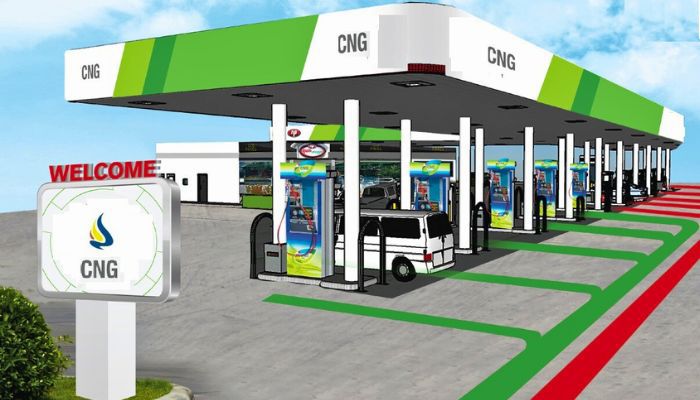
Whether Nigeria can successfully deliver more than 2,300 compressed natural gas stations by 2027 may ultimately depend on how effectively authorities balance infrastructure expansion, affordability and investor confidence in a sector still at an early stage of development.
For millions of Nigerians facing rising transportation costs, the success or failure of the transition could shape not only fuel choices, but also the broader affordability of daily life in Africa’s largest economy.
Read more @ireport247news
About The Author