

FX Inflows Strengthen External Position
Nigeria external reserves have climbed to $46.7bn, marking their strongest level in years as the country experiences one of its highest foreign exchange inflow cycles in six months.
Despite moderate volatility in the official market, the naira maintained relative stability on Monday, supported by renewed investor appetite, Eurobond proceeds, and expanding capital inflows.
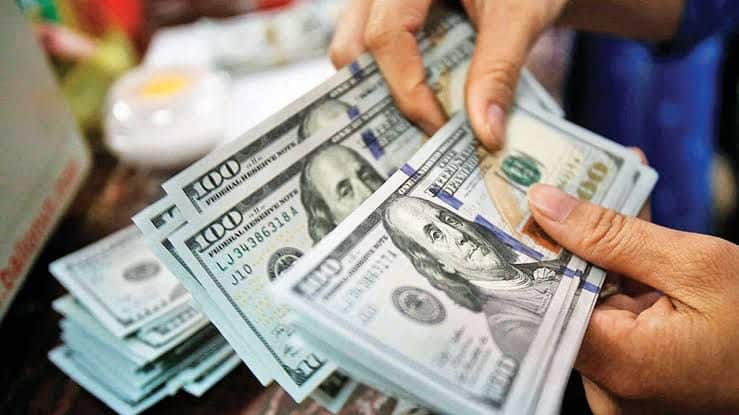
Data released by the Central Bank of Nigeria (CBN) on Monday confirmed that the local currency closed at N1,448.03 per dollar at the Nigerian Foreign Exchange Market (NFEM), weakening slightly by 0.4 percent from N1,442.43 recorded on Friday.
In the parallel market, the naira gained marginally, appreciating by N2 to close at N1,455/$, reflecting improving liquidity conditions driven by stronger inflows.
The new reserve milestone underscores the impact of recent financial reforms, external borrowing strategies, and broader confidence from offshore investors who have re-engaged the Nigerian market after months of cautious sentiment.
Reserves Rise to $46.7bn on Stronger FX Inflows
Africa’s largest economy has seen a sharp uptick in foreign exchange inflows, with official data showing that October 2025 delivered the highest monthly FX inflow since May.
Analysts attribute the growth to improved macroeconomic stability, higher real returns in Nigeria’s debt market, and increased investor participation following the successful Eurobond issuance.
Tilewa Adebajo, CEO of CFG Advisory, noted that the reserves hitting $46.7bn represent an eight-year high, highlighting the impact of renewed global investor confidence.
Data from the FMDQ Exchange showed that total FX inflows jumped by 91 percent month-on-month to reach $6.1bn, a significant rise from September’s figures. This volume approaches the record inflow of $6.7bn recorded earlier in May.
Economists and market analysts described the surge as a sign of Nigeria’s strengthened market fundamentals, further aided by investor positioning ahead of potential policy adjustments and the favourable interest rate environment.
Eurobond Success and Investor Sentiment Fuel FX Momentum
The Federal Government’s Eurobond issuance has also been a powerful catalyst for the fresh FX momentum.
Nigeria recently issued a $2.35bn Eurobond, which recorded a remarkable 400 percent oversubscription, sending a strong signal to global markets about returning confidence in the country’s fiscal and monetary direction.
S&P Global’s upward revision of Nigeria’s outlook from stable to positive further strengthened sentiment.
The rating agency also affirmed the country’s B-/B rating, noting improvements in liquidity conditions, greater clarity in policy direction, and the restoration of more predictable FX operations.
Samuel Sule, CEO of Renaissance Capital Africa, said investors are returning not only because of the stability in the foreign exchange market but because Nigeria now offers some of the most attractive real returns compared to other frontier markets.
“Their participation going forward will depend on how consistent the policy environment remains and how stable the FX becomes,” he said.
Foreign Investors Dominate Inflows, but FDI Still Weak
According to fresh FMDQ figures, foreign portfolio investors (FPIs) accounted for more than half of total FX inflows during the period.
FPIs rose by 161 percent, contributing $3.5bn to the total inflows. Investments in fixed-income instruments alone reached $3.4bn, demonstrating strong demand for Nigeria’s high-yield government and corporate bonds.
Local participation also strengthened as individual investor inflows jumped to $602m, up from just $104m in the previous month, signalling deeper retail engagement and increased access to FX investment windows.
However, Foreign Direct Investment (FDI) fell by 25 percent month-on-month, settling at $222m.
Analysts say persistent structural issues—including insecurity, inconsistent regulatory frameworks, and concerns over long-term policy direction—continue to discourage long-term capital inflows even as short-term investors return aggressively.
Stable Naira, High Interest Rates, and the Policy Outlook
The naira’s unusual stability at both the official and parallel market segments is supported by the growing liquidity and improved investor confidence.
Although the Monetary Policy Committee (MPC) lowered the benchmark interest rate by 50 basis points to 27 percent in September—its first rate cut since 2020—the country still maintains one of the highest interest rates globally, reinforcing its attractiveness for carry-trade opportunities.
Analysts at FBNQuest Merchant Bank believe that even with prospects of another rate cut later in the month, Nigeria will continue to attract foreign portfolio inflows, as the wide interest rate differential between Nigeria and major economies—particularly the United States—remains a key incentive.
Inflation has also continued its downward trajectory, easing for the seventh consecutive month to 16.1 percent in October, further increasing the appeal of Nigerian assets as real returns improve.
FBNQuest noted: “Despite the potential for another policy rate reduction, sustained inflows are expected due to the still-favourable rate differentials and the overall moderation in inflation.”
Nigeria’s FX Market Remains on Recovery Path
Market experts say the combination of rising reserves, stable currency performance, and strong investor participation places Nigeria on a firmer path toward exchange rate stability.
The improved liquidity conditions could help ease pressure on importers, support the government’s fiscal targets, and reinforce confidence in the broader economy.
For businesses and consumers, the rare price stability in the FX market offers a temporary relief from months of volatility, though analysts caution that sustained stability will depend on a consistent policy framework and continued reforms within the CBN.
As Nigeria strengthens its reserve buffers and leverages renewed global investor interest, the coming months will be crucial in determining whether the current momentum translates into long-term currency stability or remains a short-term liquidity cycle driven largely by portfolio inflows rather than structural capital investment.
About The Author