Nigeria’s public finance structure has come under renewed scrutiny after official data showed that the Federal Government spent significantly more on debt obligations than on capital projects over the past two years.
Information released by the Federal Ministry of Finance indicates that the government spent about N27.2 trillion servicing public debt between 2024 and 2025.
The figures highlight the growing strain on government finances as rising borrowing costs and currency depreciation push up the cost of managing existing debt.
According to the ministry, the surge in debt service payments was largely influenced by macroeconomic factors rather than fresh borrowing.
Nigeria debt servicing vs capital spending gap widens
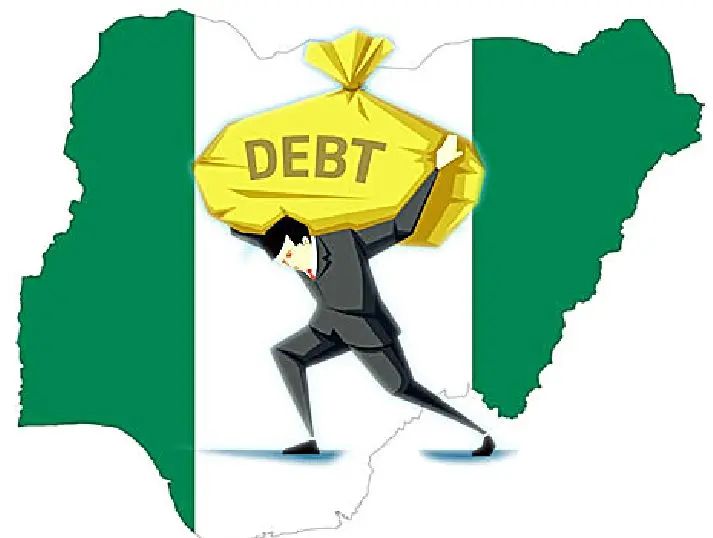
The fiscal data reveals a widening gap in Nigeria debt servicing vs capital spending, raising concerns about the government’s ability to sustain infrastructure investments while meeting financial obligations.
In 2024, the Federal Government spent about N12.63 trillion on debt servicing, exceeding the N8.56 trillion initially allocated in the national budget.
During the same period, capital expenditure stood at approximately N11.59 trillion.
This meant that debt payments surpassed spending on infrastructure and development projects by roughly N1.04 trillion.
The gap widened further in 2025 as debt service payments increased to about N14.57 trillion.
Capital expenditure during the year reached approximately N11.7 trillion.
As a result, debt servicing exceeded development spending by nearly N2.87 trillion.
When combined, the two-year figures show that Nigeria’s debt servicing vs capital spending gap reached about N3.91 trillion.
Fiscal analysts say this trend highlights the growing share of government revenue that is being used to meet debt commitments instead of financing economic expansion.
Debt service spending exceeds budget estimates
Another key finding from the finance ministry’s data is that debt servicing costs consistently exceeded government projections.
In 2024, actual payments overshot the approved budget by more than N4 trillion.
While the overshoot declined slightly in 2025, the government still spent around N1.45 trillion above the amount initially budgeted.
Across both years, total debt service payments exceeded projections by approximately N5.52 trillion.
Officials explained that these increases were driven mainly by exchange rate movements and rising interest rates.
Currency depreciation raises external debt costs
According to the ministry, Nigeria’s external debt is largely denominated in foreign currencies such as the United States dollar.
When the naira weakens, the local currency value of these obligations rises automatically.
This exchange rate effect significantly increased the cost of servicing Nigeria’s foreign debt.
Officials emphasised that this does not necessarily mean the government borrowed more money during the period.
Instead, the rise in the naira value of debt payments reflects changes in exchange rates rather than new loans.
Interest rate hikes push domestic debt higher
Another factor contributing to the rising cost of debt servicing is the increase in domestic interest rates.
Nigeria’s monetary authorities have tightened policy in recent years to control inflation and stabilise the exchange rate.
These measures led to higher interest rates on government securities, which in turn raised the cost of servicing domestic debt instruments.
Economists note that such policy adjustments often create short-term fiscal pressure for governments that rely heavily on domestic borrowing.
Revenue consumed by debt payments
An analysis of federal government revenue shows that debt obligations now consume a significant portion of annual income.
Government revenue increased from about N12.48 trillion in 2023 to roughly N20.98 trillion in 2024.
However, with debt servicing reaching N12.63 trillion that year, approximately 60 per cent of government revenue was used to repay debt.
By November 2025, revenue had climbed to about N22 trillion while debt service payments stood at N14.57 trillion.
This pushed the debt service-to-revenue ratio to roughly 66 per cent.
Financial experts warn that such ratios limit the government’s fiscal flexibility and reduce funds available for development spending.
Government highlights fiscal reforms
Despite the pressures highlighted by the Nigeria debt servicing vs capital spending trend, officials say several reforms have been introduced to strengthen fiscal management.
One of the major changes involved the restructuring of overdrafts previously obtained from the Central Bank of Nigeria.
These overdrafts, known as Ways and Means advances, had accumulated to nearly N30 trillion over several years.
The government has now converted these advances into formal debt instruments, allowing them to be reflected transparently in public debt statistics.
According to the finance ministry, this move improves fiscal accountability and aligns Nigeria’s debt reporting with international standards.
Oil revenue shortfalls add to fiscal strain
The ministry also noted that lower-than-expected oil revenues have contributed to the pressure on government finances.
For instance, projections for oil and gas federation revenue in 2025 stood at about N37.4 trillion.
However, actual inflows amounted to roughly N7 trillion, representing only about 19 per cent of expected revenue.
Because oil earnings contribute significantly to federal government income, such shortfalls have a direct impact on fiscal performance.
Experts warn about long-term implications
Economic analysts say the rising Nigeria debt servicing vs capital spending gap could affect long-term economic growth if the trend continues.
According to experts, high debt servicing costs limit the government’s ability to fund infrastructure projects, social programmes, and economic development initiatives.
They argue that boosting revenue generation, improving tax collection, and expanding non-oil income sources will be essential to reduce fiscal pressure.
Nevertheless, the finance ministry maintains that recent reforms are designed to move Nigeria toward a more transparent and sustainable fiscal framework.
Officials say the shift from hidden deficits and monetary financing toward structured borrowing will strengthen the country’s financial stability in the long run.
About The Author