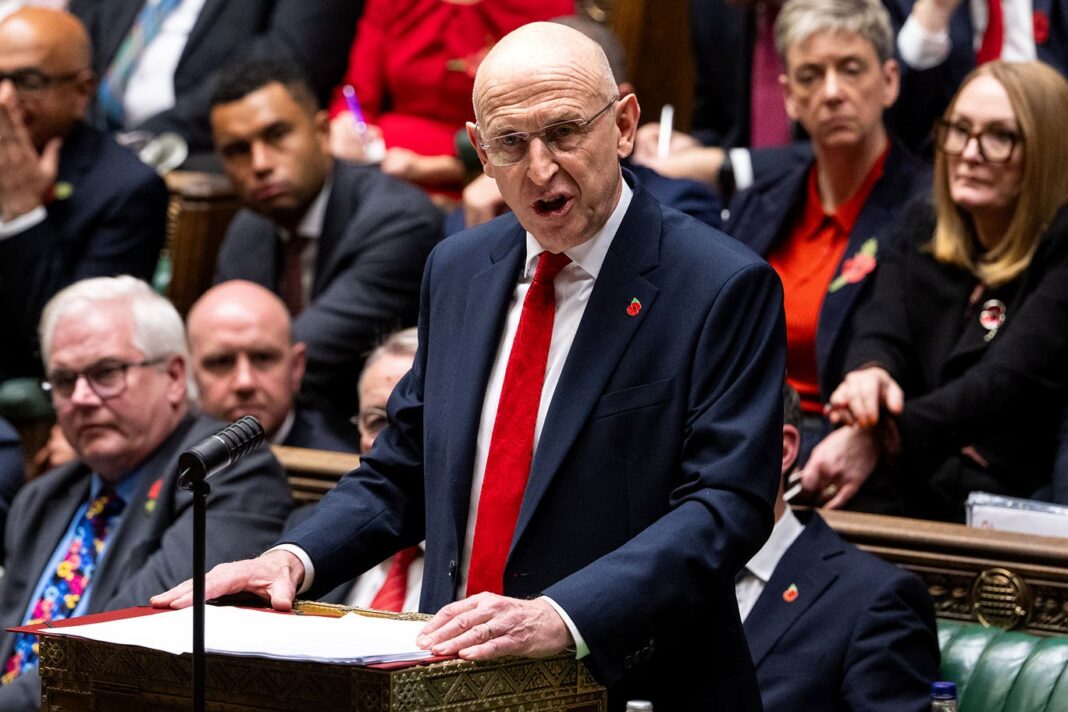

The UK Budget crisis has intensified after the Institute for Fiscal Studies (IFS) criticised Chancellor John Healey’s spending plans, warning that temporary cost-of-living support will not resolve Britain’s prolonged economic stagnation or the weak growth in household incomes.
The influential think tank said the chancellor’s first Budget leaves the country vulnerable to future economic shocks while failing to address the underlying problems holding back living standards. Its assessment adds to mounting criticism of the government’s approach to public spending, economic growth and the rising cost of welfare.
The criticism comes after Healey announced measures intended to ease financial pressure on households, including a £100 energy bill payment for approximately 20 million homes. However, the IFS argued that such temporary assistance cannot compensate for years of weak growth in real household incomes.
IFS warns against relying on temporary cost-of-living support
The IFS expressed concern that the government was concentrating on short-term relief rather than implementing policies capable of strengthening the wider economy and improving living standards over the long term.
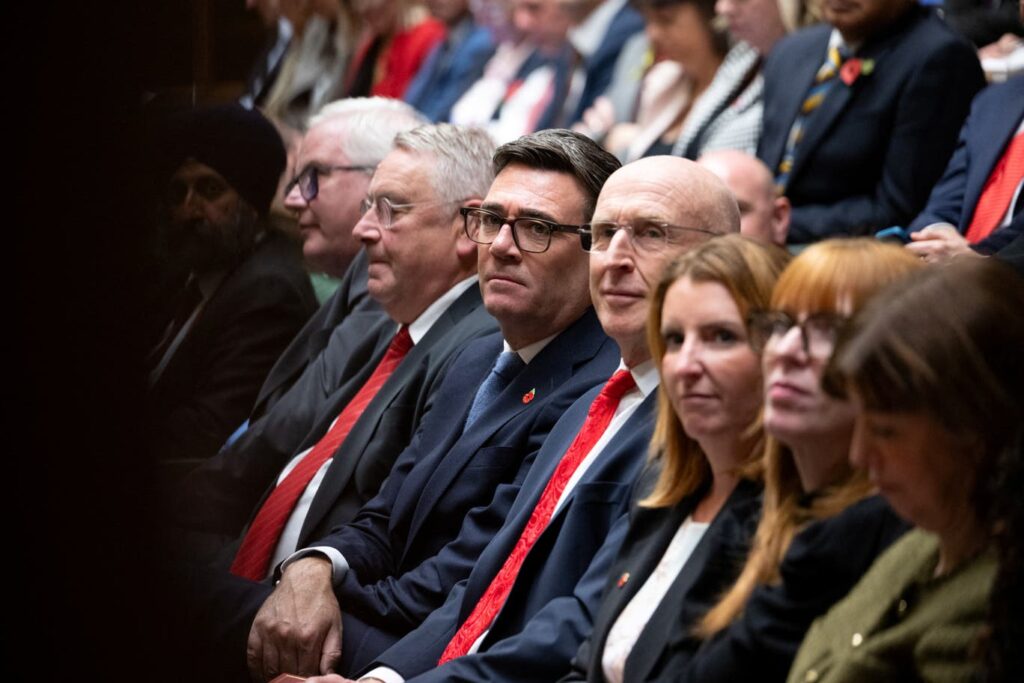
Helen Miller, the think tank’s director, said the chancellor’s decision to reduce his financial buffer to accommodate higher borrowing costs was understandable but carried significant risks.
“Higher borrowing will need to be paid for. A lower buffer leaves the Chancellor more exposed to future bad news. There are risks to this approach,” she said.
Her warning reflects concerns that the government has less room to respond if the economy experiences another major setback, borrowing costs increase further or public spending pressures intensify.
The chancellor’s remaining fiscal headroom has fallen to approximately £15 billion for the 2029/30 financial year, compared with the £24 billion estimate made by the Office for Budget Responsibility (OBR) in March under Rachel Reeves.
The reduction means the government has less financial flexibility than previously anticipated, making future economic developments particularly important to its spending plans.
Miller also criticised the government’s emphasis on temporary household assistance, arguing that it does little to address the deeper economic challenges confronting the country.
“It’s depressing. No amount of temporary cost of living packages will fix that. We need a stronger economy,” she said.
Her comments place economic growth at the centre of the debate over whether the Budget can deliver lasting improvements to household finances.
Britain faces a prolonged period of weak household income growth
The IFS highlighted the unusually poor performance of real household disposable income per person, describing the period as one of the most disappointing in modern British economic history.
Professor David Miles of the OBR’s Budget Responsibility Committee also warned that the country’s economic and fiscal position remained difficult after almost two decades of economic shocks and stagnation.
He described the outlook as a “pretty grim picture”.
Miles said that comparing the current situation with the period immediately before the COVID-19 pandemic revealed how little progress had been made in household living standards.
“If you go back to just before Covid and take that as your base, where we are right now which is what some seven years later, is virtually no growth in per person real household disposable income,” he said.
“That’s pretty unusual in the history of the UK.”
He added: “It’s been a dismal period in British economic history.”
The assessment underlines the difficulty facing the government as it attempts to improve living standards while balancing competing demands for public expenditure.
Weak household income growth can leave families struggling to absorb higher living costs, even when the government introduces targeted payments intended to provide immediate relief.
For the IFS, the central challenge is therefore not simply how much financial assistance households receive in the short term, but whether the economy can generate stronger and more sustainable income growth.
Resolution Foundation and business leaders criticise the Budget
The IFS was not the only organisation to question the government’s economic strategy.
The Resolution Foundation, a think tank focused on people on low and middle incomes, said the Budget would do little to address what it described as “the sharp challenges facing Britain”.
The criticism carries additional significance because the organisation was previously led by Torsten Bell, who subsequently became a pensions minister.
The Confederation of British Industry (CBI) also criticised the Budget, describing it as a “nothing” Budget that failed to match the scale of the government’s stated ambitions.
The responses suggest that the measures announced by Healey have not convinced all economic commentators or business representatives that the government has established a credible route towards stronger growth.
Although the £100 energy payment could provide some immediate assistance, the broader concerns centre on productivity, household earnings, the sustainability of public finances and the capacity of government spending to support economic development.
The government must also contend with rising demands on public services and its commitments to increase defence expenditure.
These pressures create a difficult balancing act: supporting households and essential services while keeping borrowing under control and retaining enough financial capacity to respond to unexpected events.
Tax changes criticised as unnecessarily complicated
Miller also questioned the chancellor’s approach to taxation, arguing that repeated adjustments had made the tax system more complicated and less predictable.
She criticised what she described as “small, unhelpful fiddling with the tax system”, warning that the cumulative effect of successive changes was leaving businesses and investors facing unnecessary complexity.
The IFS director specifically attacked the newly introduced Founders’ Relief, a capital gains tax measure intended to benefit founders and early investors in high-growth British companies.
Describing the policy as “bonkers”, Miller argued that the government’s approach lacked a coherent guiding principle.
“It is far more complex than it should be,” she said.
“And that is because, Budget after Budget, chancellors make seemingly small tweaks that lack principle and don’t systematically move us to a better place. This approach gives us more complexity and more instability. Both have real economic costs.”
The criticism raises questions about whether the government’s tax changes will encourage investment and business expansion or create additional uncertainty for companies making long-term decisions.
A complicated tax system can increase compliance costs and make it more difficult for businesses to assess the financial consequences of investing, hiring staff or expanding operations.
For the IFS, the problem extends beyond any individual measure to the cumulative impact of successive policy adjustments.
Defence spending puts additional pressure on government departments
Another major concern is the government’s commitment to increase defence expenditure while working within increasingly constrained budgets.
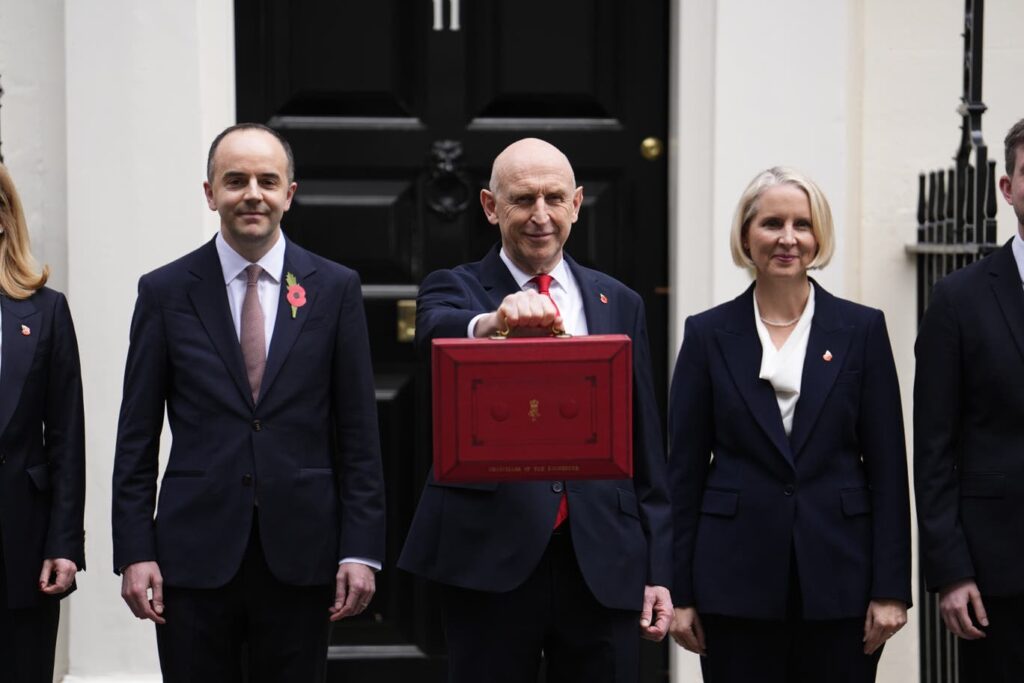
In his Budget speech to the House of Commons, Healey committed to spending three per cent of economic output on defence by 2030.
He also pledged to fully fund a £4.7 billion shortfall in the defence investment plan, known as the DIP, which had been left unresolved by Sir Keir Starmer.
The government intends to raise approximately £3 billion by requiring departments to reduce their capital budgets by one per cent annually between 2027/28 and 2029/30.
The remaining £1.7 billion is expected to come from an unallocated contingency in the Treasury’s capital reserve.
According to the Budget document, the shortfall will be addressed through the reprioritisation of capital budgets.
However, the IFS warned that redirecting funds towards defence could leave other departments with less money to maintain services and invest in essential infrastructure.
Miller said the spending plans effectively suggested that some public services would experience real-terms cuts in the following Spending Review.
She also warned that avoiding reductions caused by inflation and restricted spending allocations could require an additional £17 billion by 2030/31, even before accounting for the £11 billion needed to finance defence plans.
The figures illustrate the scale of the challenge confronting the Treasury as it attempts to meet its commitments without significantly increasing available resources.
IFS warns that spending reserves weakens Britain’s financial protection
Miller was particularly concerned about the decision to use government reserves to cover part of the defence funding shortfall.
She argued that reserves were intended to provide protection against unexpected developments rather than serve as a routine source of funding for planned expenditure.
“I am grumpy about how the chancellor decided to fund the relatively small hole in the defence investment plan – that’s the plan that gets defence spending to 2.7 per cent of GDP next year and keeps it there until 2029-30,” she said.
“Much of it came from further cuts to the capital budgets of other government departments. Fine. Priorities change but the rest came from raiding reserves in future years.”
Miller said the chancellor had already used a significant proportion of the financial protection set aside for the coming years.
“This is worth drawing out: John Healey has now spent 25 per cent of the capital reserve set aside for the next three years. He’s also spent 40 per cent of the day-to-day reserve.”
“This is categorically not what the reserves are for. Drawing down reserves is another way the government has reduced its buffer against future shocks.”
The warning suggests that although the government may be able to meet its immediate commitments, doing so could make it more difficult to respond to future crises without introducing additional borrowing, raising taxes or cutting other expenditure.
Public services face difficult spending decisions
The IFS also warned that leaving departmental spending allocations largely unchanged would effectively reduce their purchasing power if inflation continued to rise.
Even where budgets remain unchanged in cash terms, higher prices can mean that departments can afford fewer services, employ fewer staff or postpone planned investments.
Bee Boileau, a research economist at the IFS, said the combination of inflation, slow spending growth and increased defence commitments pointed towards a difficult period for public services.
She said: “The government could deliver these, but these will imply setting out lots of real terms cuts to departments over the coming years, and there’ll be huge pressure to put in some top-ups.”
Boileau added: “Next year’s spending review will be the real crunch point for this government.”
The next Spending Review is therefore expected to be a critical test of the government’s ability to reconcile its policy promises with the resources available to departments.
Ministers could face growing pressure to provide additional funding if existing allocations prove insufficient to maintain services in real terms.
However, increasing departmental budgets could further strain the government’s fiscal position, particularly if economic growth remains weak and borrowing costs stay elevated.
Welfare spending adds to the government’s economic challenge
The Budget has also attracted criticism over its failure to introduce immediate, substantial changes to the rising cost of welfare.
Conservative Party leader Kemi Badenoch criticised the government’s approach, arguing that Britain was “drowning in an out-of-control welfare system”.
Healey postponed major changes to the benefits bill until 2027, saying the government would wait for the findings of Alan Milburn’s review into youth unemployment.
The review is expected next month and could influence the government’s subsequent approach to employment support and welfare policy.
Meanwhile, the OBR forecasts that the total cost of health-related benefits, including sickness benefits and Personal Independence Payments, will reach £105 billion in the 2028/29 financial year.
The projected increase adds to concerns about the long-term affordability of public expenditure at a time when the government is also attempting to improve household living standards and meet defence commitments.
The challenge for ministers will be to address rising welfare expenditure without undermining support for people who depend on disability-related and sickness benefits.
UK Budget crisis leaves government facing a difficult economic test
The criticism of Healey’s Budget highlights the difficult choices facing the government as it attempts to improve living standards, strengthen public finances and meet growing demands for public spending.
The IFS has questioned whether temporary cost-of-living measures can make a meaningful difference without stronger economic growth, while warning that reduced fiscal headroom could leave Britain more exposed to future shocks.
Its concerns also extend to tax complexity, pressure on public services and the decision to use reserves to finance defence commitments.
The government’s next Spending Review will provide an important opportunity to demonstrate how it intends to fund its priorities while managing inflation and limited financial resources.
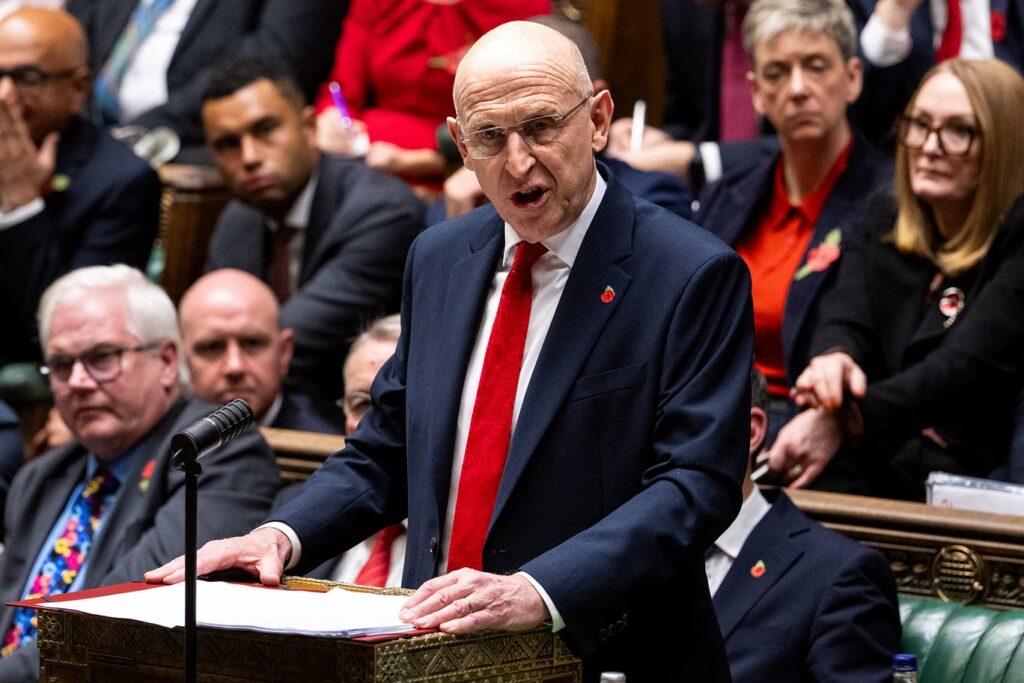
For households, businesses and public service providers, the key question is whether the government can move beyond short-term support and establish conditions for sustained improvements in incomes and economic performance.
The IFS’s assessment suggests that without a stronger economy and a more coherent long-term fiscal strategy, Britain could continue to face the consequences of weak household income growth, difficult spending decisions and limited capacity to respond to future crises.
About The Author