

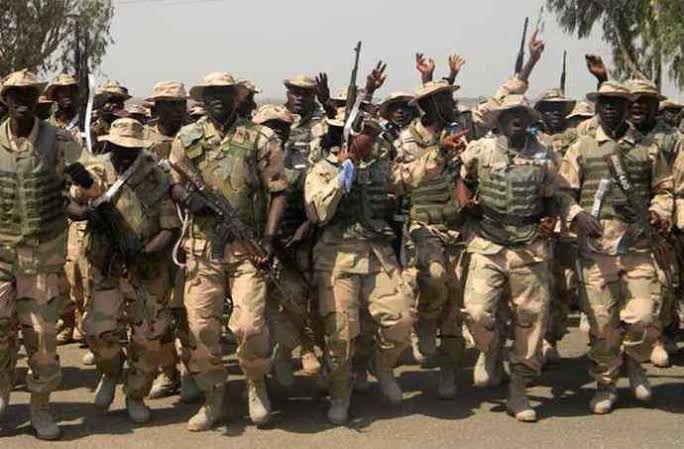
Nigerian military forces have dealt a reported blow to the operational structure of the Islamic State West Africa Province (ISWAP) following an airstrike that left 15 fighters dead in Borno State, including two senior commanders of the extremist group.
The operation, carried out by troops of Operation Hadin Kai (OPHK), also destroyed structures suspected of serving as a logistics facility for improvised explosive devices (IEDs).
Several other fighters reportedly sustained serious injuries during the offensive, including the group’s Wali, or governor, in the area.
The military identified the two commanders killed in the operation as Abu Musanna and Hassan Abu Huraira.
Their deaths were confirmed following an assessment of the damage caused by the airstrike, according to the military’s account.
The strike took place at approximately 9:20 p.m. on Wednesday, October 28, in Kerenoa, Marte Local Government Area of Borno State. The location was targeted after security intelligence indicated the presence of suspected ISWAP operatives.
Intelligence leads to night operation
Providing details of the mission, Captain Mohammed Goni, Acting Information Officer of Operation Hadin Kai, said the military relied on intelligence reports and aerial surveillance to identify the suspected terrorist gathering.
According to him, surveillance assets first observed two suspected fighters riding a motorcycle towards a makeshift structure beneath a tree.
The movement attracted further attention from military personnel monitoring the area. Subsequent surveillance reportedly revealed additional activity around the structure, suggesting that the location was being used by more than the two individuals initially detected.
The military then launched precision strikes against the identified target.
The operation was part of continuing efforts to identify and dismantle locations believed to support the activities of insurgent groups operating across the North-East.
Rather than limiting its campaign to direct confrontations with armed fighters, the military has also focused on suspected supply points and other facilities that could enable terrorist groups to sustain attacks.
Two senior ISWAP commanders among those killed
A post-strike Battle Damage Assessment (BDA) reportedly established that 15 fighters had been neutralised during the operation.
The assessment also indicated that Abu Musanna and Hassan Abu Huraira, both described as prominent ISWAP Qayids, were among the casualties.
Goni further disclosed that several other members of the group suffered severe injuries. Among them was the ISWAP Wali in the affected area, who was reportedly in critical condition after the strike.
The reported casualties could affect the group’s activities in the immediate area, particularly if the commanders played important roles in coordinating fighters and managing operational activities.
However, the extent to which their reported deaths and injuries will affect ISWAP’s wider command structure was not immediately established.
The military’s announcement comes amid continued counter-insurgency efforts aimed at weakening armed groups responsible for attacks and other security threats in Nigeria’s North-East.
Suspected IED facility destroyed
Beyond the reported casualties, the destruction of the targeted structures was another significant aspect of the operation.
Military personnel reportedly observed a secondary fire following the airstrike. According to Goni, the development suggested that the structure might have contained materials associated with the group’s improvised explosive device activities.
The military therefore suspects that the location was being used to store materials needed for terrorist operations involving explosive devices.
IEDs have remained a security concern in conflict-affected parts of the North-East, where explosive attacks can threaten military patrols, security installations and civilian movement.
Facilities used to store explosive materials or prepare devices can provide armed groups with the resources needed to carry out attacks.
Destroying such locations is consequently regarded as an important element of efforts to disrupt their operations.
Nevertheless, the suspected function of the structure was based on the military’s initial assessment, and the statement did not provide further details about the specific materials believed to have been stored there.
Military intensifies pressure on insurgent networks
Operation Hadin Kai continues to coordinate military activities against insurgent groups operating in Borno and other parts of the North-East.
The campaign involves intelligence gathering, surveillance and targeted operations against suspected terrorist positions and facilities believed to support their activities.
The military’s approach also seeks to disrupt the networks that allow insurgents to obtain supplies, move equipment and organise attacks.
The latest strike in Kerenoa reflects this wider strategy, with the operation reportedly targeting both personnel and infrastructure associated with ISWAP.
By attacking suspected logistics locations alongside the fighters believed to be using them, the military aims to reduce the group’s ability to sustain its activities and threaten communities across the region.
However, the long-term impact of individual operations depends on several factors, including whether surviving members can regroup, whether replacement commanders emerge and whether the group retains access to alternative supply routes.
The reported deaths of senior figures may create difficulties for local operations, but the broader security situation will continue to depend on sustained pressure against insurgent networks and efforts to prevent renewed attacks.
OPHK vows to sustain operations
Goni reaffirmed the military’s determination to continue intelligence-led offensives against terrorist hideouts and logistics networks throughout the operational theatre.
He said Operation Hadin Kai would maintain coordinated operations against insurgent elements as part of ongoing efforts to restore lasting peace and security in the North-East.
The military has continued to pursue strategies aimed at weakening the operational capabilities of armed groups and reducing the threats they pose to residents and security personnel.
For communities in Borno State, the effectiveness of these efforts will ultimately be reflected in improved security, fewer attacks and safer movement across affected areas.
Although the full implications of Wednesday night’s operation remain to be established, the military’s reported elimination of 15 fighters, including two senior commanders, alongside the destruction of a suspected IED logistics facility, marks another development in its campaign against ISWAP.
Security operations are expected to continue as troops work to disrupt insurgent activities and support the restoration of stability across Nigeria’s North-East.
About The Author
