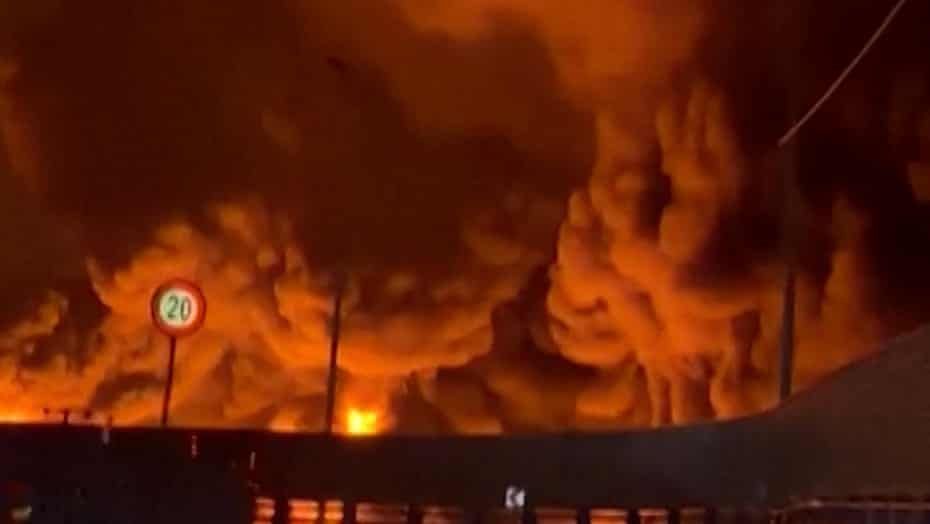
Iran has threatened to launch retaliatory strikes on oil facilities across the Gulf following Israeli airstrikes that targeted several key energy depots in and around Tehran.
The attacks have sent thick black smoke over the Iranian capital, killed at least four employees at the facilities, and escalated fears of severe disruptions to the global oil supply.
The confrontation comes as tensions between Iran, Israel, and the United States intensify, and as Iran simultaneously navigates the historic transition of supreme leadership to Mojtaba Khamenei, the son of the late Ali Khamenei.
“If you can tolerate oil at more than $200 per barrel, continue this game,” a spokesperson for the Islamic Revolutionary Guard Corps warned on Sunday, highlighting Iran’s willingness to escalate attacks on Gulf energy infrastructure if its own facilities continue to be targeted.
The statement was seen as a direct threat to countries such as Saudi Arabia, United Arab Emirates, Qatar, Bahrain, and Kuwait, all of which host foreign military bases and are major energy exporters.
Satellite images of the affected Tehran depots show large plumes of black smoke rising into the sky, covering nearby residential areas. Witnesses described the scene as apocalyptic, with explosions shaking the city and a lingering smell of burning oil permeating the air.
Emergency crews worked through the day and night to contain the fires, which threatened to spread to additional storage tanks. Local authorities confirmed the deaths of four workers, while several others sustained injuries from blast waves and smoke inhalation.
The strikes coincided with ongoing exchanges between Israeli forces and Iranian-backed groups across the region.
The Israel Defense Forces said it had targeted storage facilities linked to Iran’s energy logistics that were allegedly used to support hostile operations, framing the attack as a preventive measure against further threats to Israel’s security. While Israel did not provide specific operational details, its statements indicated that additional strikes may follow if Iran escalates.
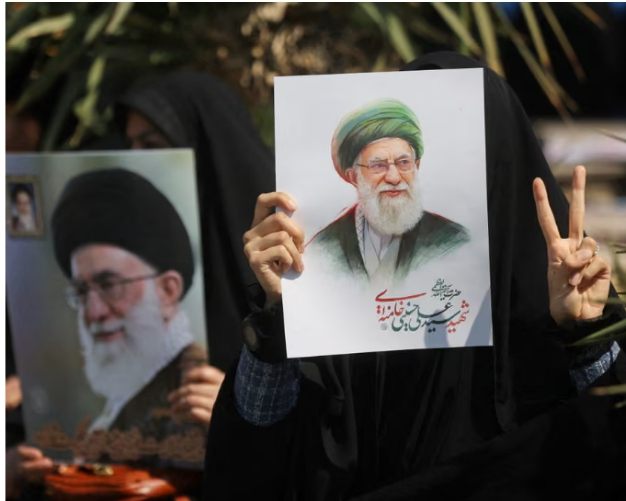
The geopolitical stakes are heightened by Iran’s leadership transition. On Sunday, the Assembly of Experts confirmed that Mojtaba Khamenei would succeed his father as Iran’s supreme leader.
State media described the decision as a “decisive vote” aimed at ensuring continuity and national unity during a critical moment for the country. The appointment represents the first hereditary-style succession since the 1979 Islamic Revolution, a move likely to spark debate within Iran about the emergence of dynastic succession in a system that was founded to reject hereditary rule.
Analysts say that Mojtaba Khamenei’s elevation comes at an extremely volatile moment. Iran is under heavy international scrutiny, its military is engaged on multiple fronts, and the country faces domestic pressure to respond firmly to perceived external threats.
Observers note that the combination of political transition and active military engagement could result in unpredictable policy decisions, especially regarding Iran’s energy and strategic infrastructure.
In parallel, Donald Trump expressed strong disapproval, stating that Iran’s new supreme leader would face consequences if attacks on Israeli or US interests continued. Trump’s statements underscore the high level of international tension surrounding the leadership change, as global powers monitor Tehran’s next moves closely.
Meanwhile, the United States attempted to calm markets amid the surge in oil prices. US Energy Secretary Chris Wright said that Washington would not target Iran’s energy infrastructure and predicted that disruptions to the petroleum supply would be brief, lasting only a few weeks at most.
Despite these reassurances, crude oil prices have surged, with some benchmarks exceeding $115 per barrel due to fears of ongoing regional escalation and potential threats to maritime transport routes in the Gulf.
The threat to Gulf oil infrastructure has prompted heightened alert levels across several countries. Saudi Arabia reported intercepting 15 drones on Sunday, while strikes in Bahrain damaged a major desalination plant.
United Arab Emirates has reinforced security around oil terminals, and Qatar, Kuwait, and Bahrain have activated emergency response protocols to protect critical energy assets.
Analysts warn that the potential for attacks on Gulf facilities could have far-reaching consequences. Any disruption to production or shipping could ripple across global markets, affecting not only oil prices but also shipping insurance premiums, supply chains, and energy-dependent industries.
Markets remain highly sensitive, and even temporary closures of ports or refineries could exacerbate inflationary pressures worldwide.
In addition to the energy threats, military exchanges continue across multiple fronts. Iranian forces have launched intermittent ballistic missile barrages toward Tel Aviv and central Israel, resulting in at least one serious injury.
Most missiles were intercepted by Israeli air defence systems, though civilian populations remain on high alert. In Lebanon, Israeli strikes targeted positions linked to Hezbollah, resulting in casualties, including four deaths in a hotel in Beirut and additional fatalities in southern regions.
Lebanon’s health ministry reports at least 394 people have died in the conflict so far, while humanitarian organizations say roughly 300,000 people have fled their homes.
Violence has also surged in the occupied West Bank and Gaza Strip. Israeli settlers killed three Palestinians in the West Bank, while airstrikes in Gaza City killed at least two residents. The escalation highlights how Iran’s energy conflict and political transition intersect with broader regional instability, affecting multiple countries and civilian populations.
Adding another layer of complexity, US military sources reported that a service member died of injuries sustained during an Iranian attack on US troops stationed in Saudi Arabia, bringing the US death toll in the conflict to seven.
Media reports also indicate that Russia has been providing Iran with intelligence potentially useful for targeting US assets in the region, though independent verification remains limited.
The escalation has exposed internal divisions within Iran’s political elite. President Masoud Pezeshkian recently suggested that attacks on Gulf states could end if their airspace and US bases were not used against Iran, appearing to contradict more hardline elements within the government.
Analysts say these rare public disagreements reveal strain within Iran’s ruling apparatus as officials scramble to reconcile military actions with diplomatic messaging.
As the crisis continues, both Iran and Israel appear committed to maintaining pressure across multiple fronts. Israel’s ongoing airstrikes in Lebanon, combined with Iranian missile attacks on Israel and the Gulf, underscore the potential for a broader regional conflict.
Gulf nations have placed their defence forces on maximum alert, while civilian authorities advise populations near energy installations to remain vigilant.
In Tehran, the appointment of Mojtaba Khamenei as supreme leader represents a symbolic assertion of continuity amid chaos. State media emphasizes unity and loyalty to the new leader, urging citizens and elites alike to safeguard Iran’s sovereignty and national security.
At the same time, military planners across the region are reassessing risk scenarios for oil depots, refineries, and transportation networks, reflecting the intersection of energy, politics, and security in this rapidly evolving crisis.
As the day ended, emergency crews in Tehran continued to combat fires at the damaged oil depots, while residents remained confined indoors due to poor air quality. Analysts warn that further escalation could trigger wider disruptions to both regional energy supply and global markets.
The combination of leadership transition, active military engagement, and energy threats makes this one of the most precarious moments in Middle Eastern geopolitics in recent years, with consequences likely to resonate far beyond the region.
Read more here:Israel Iran conflict escalates as Tehran oil depots burn and Israel threatens next Supreme leader
About The Author