


Cooking Gas Prices Surge Above N1,500/kg as Nigerian Marketers Warn of Supply Crisis
Cooking gas prices in Nigeria have risen above N1,500 per kilogramme as marketers warn that worsening supply shortages and rising operational costs could trigger a broader Liquefied Petroleum Gas crisis across the country.
The warning was issued by the Nigerian Association of Liquefied Petroleum Gas Marketers, which said mounting supply disruptions and escalating depot prices were pushing cooking gas beyond the reach of millions of households already struggling with rising living costs.
The development adds fresh pressure to household budgets in Africa’s largest economy, where inflation and higher energy prices have continued to erode consumer purchasing power following the removal of petrol subsidies and repeated currency depreciation.
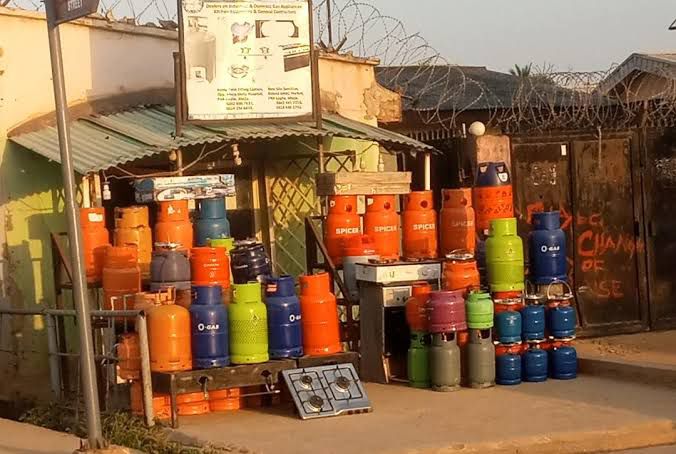
Rising cooking gas prices have become a growing source of frustration for households already struggling with elevated food, transportation and electricity costs amid persistent inflationary pressures.
For Nigeria, the situation also threatens broader clean-energy goals.
For millions of Nigerians, cooking gas is no longer just an energy product — it has become another test of household survival in an economy battling persistent inflation.
After years of government campaigns encouraging households to transition away from firewood and charcoal, rising LPG prices now risk reversing progress in clean cooking adoption, with marketers warning that vulnerable households are increasingly returning to traditional fuels despite environmental and health concerns.
Why cooking gas prices are rising in Nigeria
According to marketers, cooking gas prices have climbed sharply due to supply shortages, high depot costs, logistics bottlenecks and rising operational expenses across the LPG distribution chain.
The association said marketers currently pay between N25.2m and N26.2m for 20 metric tonnes of LPG depending on location, while retail prices in some areas now range between N1,600 and N2,000 per kilogramme.
Checks across parts of Lagos and other cities showed cooking gas prices have risen significantly from levels below N1,000 per kilogramme recorded earlier in the year.
Industry stakeholders say volatility in foreign exchange markets, import-related costs and infrastructure limitations continue to affect pricing within Nigeria’s LPG market.
Nigeria has spent years promoting LPG adoption to reduce reliance on biomass fuels such as charcoal and firewood, but affordability remains one of the biggest barriers to wider household penetration.
Analysts say the domestic market remains vulnerable because parts of Nigeria’s LPG supply chain still depend heavily on imports and foreign exchange-sensitive pricing structures despite the country’s large natural gas reserves.
Rising inflation and currency depreciation have also increased transportation, storage and distribution costs across the energy sector, contributing to higher retail prices.
Nigeria’s dependence on imported LPG supply despite being one of Africa’s major gas producers has also left domestic prices vulnerable to global energy market fluctuations and currency instability.
Marketers warn of scarcity and rising hardship
In a statement signed by Edu Inyang and Bassey Essien, the association described the current market situation as “sad and rather very pathetic”.
The group warned that continued supply disruptions could lead to severe shortages and intensify hardship for households, food vendors and small businesses dependent on cooking gas for daily operations.
“We feel that if the situation is not immediately checked, the citizens may rise against the owners of gas filling stations,” the association said.
Analysts say sustained increases in cooking gas prices could worsen food inflation as restaurants, roadside food vendors and small-scale food processors pass higher energy costs on to consumers.
The association also warned that small LPG retailers could face business closures if supply conditions continue deteriorating.
Clean energy transition faces setback
The rising cost of cooking gas is increasingly threatening Nigeria’s clean cooking transition strategy, which has aimed to reduce reliance on biomass fuels such as charcoal and firewood.
Government agencies and private-sector operators have spent years promoting LPG adoption as part of broader efforts to improve public health, reduce indoor air pollution and slow deforestation.
Nigeria has increasingly promoted cooking gas as part of broader clean-energy policies designed to reduce indoor air pollution and dependence on traditional biomass fuels commonly used in lower-income households.
NALPGAM warned that many households are already struggling to refill gas cylinders due to rising prices.
“Many families are reverting to firewood and charcoal despite the serious implications for public health, environmental degradation and deforestation,” the association said.
Energy analysts say a prolonged affordability crisis could undermine years of investment designed to expand LPG penetration across lower-income communities.
For Nigeria, the implications extend beyond household energy costs.
Increased reliance on firewood and charcoal could accelerate environmental degradation while worsening health risks linked to smoke exposure in poorly ventilated cooking environments.
Read Also: 63-Year-Old Chinese woman arrested at Lagos Airport with 31kg of synthetic cannabis
Why Nigeria’s LPG market remains vulnerable
Despite Nigeria’s large natural gas reserves, the domestic LPG market continues facing supply and infrastructure challenges that limit price stability.
Industry participants have repeatedly called for stronger domestic supply allocation, expanded storage infrastructure and improved distribution networks to reduce dependence on imports and lower logistics costs.
Analysts say bottlenecks across transportation, storage and coastal distribution systems frequently contribute to supply disruptions and regional price disparities.
The sector has also faced periodic foreign exchange pressures because parts of the LPG value chain remain exposed to dollar-denominated costs.
Experts note that exchange-rate instability often feeds directly into depot pricing and retail market volatility.
Government urged to intervene in LPG market
The marketers’ association called on the Federal Government, the Nigerian Midstream and Downstream Petroleum Regulatory Authority, the Nigerian National Petroleum Company Limited, terminal operators, domestic producers and international suppliers to take urgent coordinated steps to stabilise the market.
The association recommended:
- increased domestic LPG allocation,
- transparent supply distribution,
- reduced importation bottlenecks,
- expanded storage infrastructure,
- and policy measures aimed at improving affordability.
NALPGAM also warned that failure to stabilise prices could weaken investor confidence in Nigeria’s LPG sector and threaten long-term growth within the clean-energy market.
Rising gas prices add to Nigeria’s inflation pressures
The latest increase in cooking gas prices comes as Nigerian households continue facing elevated costs across transportation, electricity, food and other essential goods.
Inflationary pressures have remained a major economic challenge following subsidy reforms and currency depreciation, with energy costs emerging as one of the biggest drivers of rising living expenses.
Analysts say cooking gas affordability is becoming increasingly important because LPG has evolved from a luxury household product into a widely used urban cooking fuel.
For lower-income families and small businesses, sustained price increases could significantly affect daily consumption patterns and operating costs.
The development may also complicate broader government efforts to encourage cleaner household energy usage while reducing dependence on environmentally harmful fuels.
Challenges could slow efforts to stabilise the LPG market
Analysts say repeated supply disruptions highlight deeper structural weaknesses in Nigeria’s domestic gas distribution and pricing system despite the country’s vast natural gas reserves.
Some industry stakeholders also argue that inconsistent supply policies, infrastructure gaps and continued dependence on imported LPG have limited the country’s ability to maintain stable retail pricing.
Despite growing calls for intervention, analysts warn that resolving Nigeria’s LPG pricing challenges may prove difficult without broader structural reforms across the gas supply chain.
Industry experts say infrastructure limitations, foreign exchange instability, import dependence and inconsistent domestic supply policies continue to constrain the sector.
Some stakeholders also caution that without expanded storage capacity and stronger investment in distribution infrastructure, supply shortages and regional price volatility could persist even if short-term interventions are introduced.
For Nigeria, the broader challenge extends beyond temporary price increases.

The current LPG crisis highlights the difficulties of building an affordable clean-energy market in an economy where currency instability, infrastructure deficits and rising operating costs continue to affect energy supply chains.
Whether authorities can stabilise cooking gas prices may therefore become an important test of Nigeria’s wider energy transition and household affordability strategy.
More broadly, the crisis underscores the difficulty of building an affordable clean-energy market in an economy where inflation, currency instability and infrastructure deficits continue to place pressure on everyday living costs.
Read more @ireport247news
About The Author
