Nigeria recorded a significant improvement in fiscal execution in 2024, achieving an 85 per cent performance in capital spending expenditure following the extension of the budget implementation period, the Minister of Finance and Coordinating Minister of the Economy, Wale Edun, has revealed.
Edun made the disclosure on Thursday in Lagos at the 2026 Macroeconomic Outlook event organised by the Nigerian Economic Summit Group, where government officials, economists, investors, and private sector leaders assessed the country’s fiscal direction ahead of the new budget cycle.
The minister attributed the improved performance to deliberate policy choices, legislative support from the National Assembly, and a strategic focus on completing ongoing projects rather than spreading limited resources across new initiatives.
According to him, the decision to extend the 2024 budget timeline enabled the government to deepen project execution and avoid the inefficiencies associated with rushed capital releases at the tail end of fiscal years.
Nigeria capital spending improved through budget extension
Edun explained that capital budgets are legal instruments governed by timelines approved by the National Assembly, noting that lawmakers extended the 2024 budget for the full year to allow ministries, departments, and agencies to complete priority infrastructure projects.
“In terms of the capital budget, the budget at the end of the day is a law of the National Assembly,” he said.
“They extended the 2024 budget for the full year to ensure that projects were completed, and that decision resulted in strong execution levels.”
He added that, in aggregate, Nigeria capital spending reached an 85 per cent performance level in 2024, a notable improvement compared to previous fiscal years where implementation gaps often undermined development outcomes.
The extension of the budget implementation deadline to December 2025, however, sparked controversy, with some civil society organisations raising concerns about constitutional compliance and fiscal discipline.
A coalition under the Nigerian Civil Society Economy Action had criticised the move, describing it as a breach of fiscal rules following the passage of revised 2024 and 2025 budgets in December.
Despite the backlash, government officials have consistently defended the decision as necessary to safeguard public investments.
Focus shifts from new projects to completing existing ones
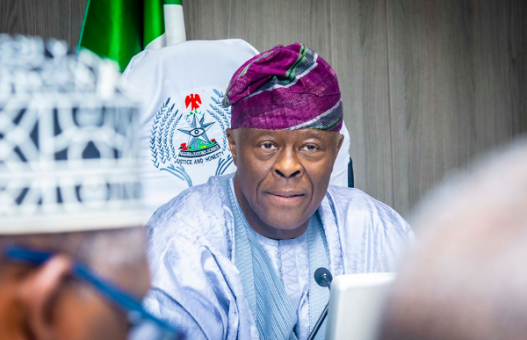
Edun acknowledged that capital expenditure levels in 2025 would likely be lower, explaining that the government deliberately scaled back new capital commitments to concentrate on finishing ongoing projects across critical sectors.
According to him, this approach reflects a more disciplined fiscal strategy aimed at improving value for money and reducing the burden of abandoned or duplicated projects.
He stressed that despite fiscal pressures, the Federal Government met all its statutory obligations throughout the period.
“Despite these fiscal challenges, all the statutory obligations, foreign debt service, domestic debt service, and salaries were all met by the government,” Edun said.
He described the improved Nigeria capital spending outcome as part of broader reforms anchored on fiscal discipline, transparency, and improved public financial management.
Nigeria capital spending linked to economic stabilisation
Edun noted that Nigeria’s fiscal position showed resilience and marked improvement in 2024, reflecting reforms designed to stabilise the economy after years of macroeconomic volatility.
“Nigeria’s fiscal position did demonstrate resilience, and I would say marked improvement, reflecting discipline, management, and transparency-focused reforms,” he said.
He added that capital expenditure remains a critical policy tool for addressing structural challenges in the economy, particularly in areas that directly affect household welfare and business productivity.
According to the minister, Nigeria capital spending plays a vital role in improving food supply chains, easing inflationary pressures, reducing the cost of capital, expanding mortgage access, boosting electricity generation, and accelerating road construction nationwide.
These investments, he said, are essential to sustaining the country’s transition from crisis management to a phase of economic stabilisation and consolidation.
From stabilisation to long-term growth
Edun emphasised that while stabilisation had been achieved, sustained reforms were required to translate macroeconomic improvements into long-term growth and shared prosperity.
He said the government’s objective was to ensure that fiscal stability delivers tangible benefits to ordinary Nigerians, rather than remaining a set of abstract economic indicators.
“We cannot overemphasise that it is not the metrics, it’s not the percentages,” the minister said. “It is the experience and the improvement in the lives of everyday Nigerians.”
Looking ahead, Edun disclosed that the 2026 budget, tagged Budget of Consolidation, Renewed Resilience, and Shared Prosperity, is designed to convert recent fiscal gains into inclusive and job-rich growth.
He reaffirmed the government’s commitment to sustaining Nigeria capital spending within a framework that prioritises efficiency, transparency, and social impact.
Balancing fiscal discipline with development needs
Economic analysts say the reported 85 per cent capital expenditure performance represents a positive signal for investors and development partners, particularly at a time when Nigeria faces rising debt service obligations and limited fiscal space.
They argue that completing existing infrastructure projects—rather than launching new ones without adequate funding—could improve public confidence in government budgeting and reduce long-standing inefficiencies in capital project execution.
However, analysts also caution that sustained progress will depend on consistent revenue mobilisation, improved coordination among government agencies, and adherence to fiscal rules going forward.
As Nigeria prepares for the implementation of the 2026 budget, the spotlight is expected to remain on how effectively Nigeria capital spending can be translated into visible improvements in infrastructure, service delivery, and economic opportunity.
For the Federal Government, the challenge lies not only in sustaining high capital execution rates, but in ensuring that public spending delivers measurable value and supports the country’s long-term development objectives.
About The Author