International sources reveal that Nicolas Maduro rejected multiple asylum offers while the United States secretly planned his capture, exposing failed diplomacy, misread signals, and months of intricate international negotiations before the operation.
On Christmas Eve 2025, Cardinal Pietro Parolin, the Vatican’s Secretary of State, personally contacted Brian Burch, the US ambassador to the Holy See, seeking clarification on whether regime change was a formal objective of the Trump administration.
Parolin’s intervention reflected deep concerns about Venezuela’s stability, emphasizing that a mismanaged exit for Maduro could provoke violence, disrupt regional security, and complicate international relations while highlighting the Vatican’s role as a mediator.
During the meeting, Parolin reportedly relayed that Russia was ready to offer Maduro asylum, including guarantees of personal security from President Vladimir Putin and permission to maintain access to his assets outside Venezuela.
Despite these high-level offers, Maduro repeatedly declined to leave Venezuela, showing a consistent pattern of overconfidence in his ability to remain in power and misjudging both US intentions and international willingness to negotiate.
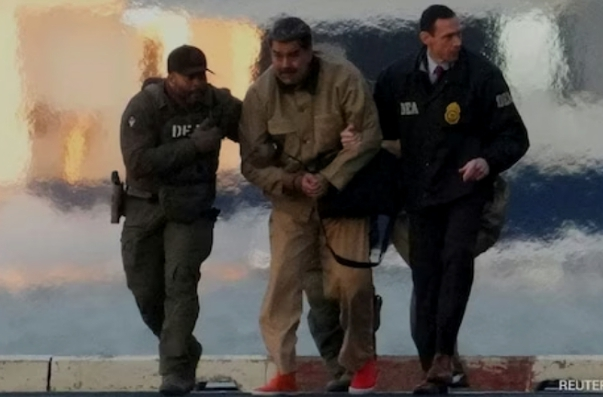
A week after the Vatican meeting, American Special Operations forces conducted a raid that captured Maduro and his wife, transporting them to New York to face drug trafficking charges, demonstrating months of meticulous planning by US intelligence and military units.
Documents and interviews with nearly twenty officials reveal that Russia, Qatar, Turkey, and intermediaries from the Catholic Church all attempted to secure Maduro’s voluntary exile to prevent military confrontation, yet each proposal was rejected.
A senior source described Maduro’s approach as defiant, saying, “He wasn’t taking the deal. He was just going to sit there and watch people create a crisis, ignoring repeated opportunities to leave peacefully.”
Following these rejections, US strategy shifted toward working with Maduro’s deputy, Delcy Rodriguez, rather than opposition figures such as Maria Corina Machado, guided by a classified CIA report suggesting loyalists could maintain stability better than opposition actors.
Rodriguez, known for pragmatism in dealings with foreign oil representatives and her previous residence in Santa Monica, California, provided Washington with a cooperative point of contact capable of helping stabilize Venezuela after Maduro’s removal.
Despite repeated warnings, Maduro misread signals from Washington, believing that a November 2025 call with Trump had gone favorably, failing to realize that the US had offered safe passage in exchange for his immediate departure from power.
A senior White House official said, “The president said you can go the easy way or the hard way. Maduro chose to ignore advice and continued gambling with his position and personal safety.”
Alternative exit routes were explored, including asylum offers from Turkey and negotiation efforts by intermediaries such as Brazilian billionaire Joesley Batista, all designed to prevent confrontation while providing Maduro a secure path out of Venezuela.
Cardinal Parolin repeatedly urged patience and restraint in dealings with Maduro, warning US officials that hasty action could provoke violence, demonstrating the Vatican’s role in advocating diplomacy over force in a high-stakes political situation.
Senator Marco Rubio highlighted Maduro’s choices, stating, “The president was provided very, very generous offers and chose instead to act like a wild man, ignoring repeated opportunities to leave and avoid crisis.”
Following Maduro’s removal, Delcy Rodriguez consolidated authority, though governance remains fragmented. The White House expressed confidence in her leadership, citing her cooperation in releasing political prisoners and exporting Venezuelan oil to the United States.
The operation underscored meticulous coordination between US intelligence agencies and military units, including detailed reconnaissance of Maduro’s security arrangements and timing the raid to minimize international fallout while ensuring capture.
Russian asylum offers were tied to broader negotiations between Moscow and Washington over global issues such as Ukraine, illustrating how geopolitical interests intersected with the Venezuelan crisis and planning of Maduro’s capture.
Internally, Maduro overestimated domestic support and underestimated US resolve. Sources indicate he believed he could maintain power until the next election cycle, a misjudgment that ultimately led to his capture and extradition to New York.
The Vatican press office emphasized that confidential discussions during Christmas 2025 were misrepresented in some reports, clarifying that officials provided guidance and context rather than attempting to dictate US policy toward Maduro.
Analysts argue that the Maduro case illustrates limits of diplomacy when leaders refuse compromise, demonstrating that even repeated and generous offers of asylum may fail if political survival is prioritized over negotiation.
Ultimately, Nicolas Maduro rejected multiple asylum offers from Russia, Turkey, and other intermediaries, while US forces meticulously prepared his capture, exposing diplomatic failures, strategic miscalculations, and the consequences of misreading international signals.
Delcy Rodriguez’s consolidation of power illustrates how post-crisis stabilization often relies on pragmatic local actors rather than opposition figures, highlighting lessons in diplomacy, intelligence, and strategic planning in high-stakes international affairs.
Read also: Khamenei warns of ‘decisive’ action as Iran nationwide protests escalate despite internet blackout
The episode shows how diplomacy, intelligence, and political miscalculations can converge, emphasizing that even generous offers of asylum may be insufficient when leaders overestimate personal resilience and international leverage.
About The Author