Nigeria’s local currency, the naira, has reached its highest level in 10 months, buoyed by strong foreign exchange inflows and renewed investor optimism.
According to data from the Central Bank of Nigeria (CBN), the naira closed at ₦1,455.17 per dollar last week at the official market, representing a 0.72 per cent gain — its best performance since December 2024.
Market analysts attributed this impressive rebound to sustained foreign portfolio investments (FPIs), improved remittance inflows, and better liquidity across the FX market.
Foreign Inflows Drive the Naira’s 10-Month High
The naira hits 10-month high milestone after a period of volatility earlier in the year, when inconsistent supply and speculative pressures weakened the local currency.
However, analysts now say the tide appears to be turning in Nigeria’s favour.
At the parallel market, the naira appreciated further to ₦1,475/$, strengthening by 0.88 per cent, supported by increased inflows and lower demand pressures.
AIICO Capital Limited, in its weekly market report, observed that the renewed strength of the naira was a reflection of improved U.S. dollar supply and the CBN’s strategic policy alignment to attract offshore investments.
“The naira is likely to remain stable in the near term, supported by improved dollar liquidity, consistent CBN interventions, and rising reserves,” the firm said.
Cowry Assets Management Limited also shared a positive outlook, noting that consistent foreign exchange inflows had helped reduce market pressure.
“We expect the naira to stay stable in the near term, backed by steady FX inflows. However, rising import demand or weaker dollar supply could slow further gains,” the firm cautioned.
Stronger External Reserves Support Currency Stability
Data from the apex bank showed that Nigeria’s external reserves increased to $42.57 billion, reflecting higher inflows from oil exports, diaspora remittances, and portfolio investments.
This growth, analysts say, has strengthened the CBN’s capacity to manage short-term currency volatility and maintain FX market stability.
“The steady rise in reserves provides a safety net that boosts investor confidence and supports the sustainability of naira gains,” an analyst at Chapel Hill Denham told our correspondent.
Policy Reforms and FTSE Watchlist Status Fuel Optimism
A major boost to the currency’s resurgence came after FTSE Russell, a global index provider, announced that Nigeria had been added to its Watch List for potential reclassification to Frontier Market status.
FTSE Russell had downgraded Nigeria to “Unclassified” in 2023 due to severe delays in foreign capital repatriation and liquidity shortages.
However, recent reforms under the current administration — including the unification of exchange rates and market-driven FX policy — have significantly improved transparency and access to foreign exchange.
According to FTSE Russell, Nigeria now meets all five Quality of Markets criteria required for Frontier Market status.
The country will remain under observation until March 2026, when a possible upgrade could take effect.
Financial experts believe the move could attract a wave of new investments.
Analysts at Meristem Securities noted that the development “repositions Nigeria back on the radar for global funds and active investors who benchmark against the FTSE Frontier Market Index.”
They added, “Active funds will begin pre-positioning to capture potential upside ahead of the official re-entry, while passive funds will prepare for mandatory future allocations.
This translates to potentially significant inflows of Foreign Portfolio Investment over the next year.”
Such inflows, if sustained, are expected to further strengthen the naira, increasing dollar supply and stabilising the market in the long term.
CBN’s Steady Intervention and Market Outlook
The Central Bank of Nigeria has continued to deploy a mix of policy tools aimed at deepening market liquidity.
These include periodic dollar interventions, enhanced transparency in FX reporting, and collaboration with the Nigerian Export Promotion Council to improve non-oil exports.
Economists have commended the CBN’s recent efforts, saying they have helped restore market confidence and reduced speculative activities that had plagued the FX market earlier in the year.
“The CBN’s approach of combining reform with consistent intervention is paying off,” said an economist with CardinalStone Partners.
“If the current momentum continues, we could see the naira consolidate around ₦1,450/$ in the coming weeks.”
However, experts have also cautioned that global oil price volatility remains a key risk factor. “If crude oil prices fall or import demand rises sharply, it could exert downward pressure on the naira,” Cowry Assets warned.
Despite potential headwinds, analysts maintain a positive short-term outlook for the naira. The combination of robust inflows, strengthened external reserves, and improved fiscal discipline is seen as a strong foundation for currency stability.
“The fact that the naira hits 10-month high reflects growing investor confidence in Nigeria’s economic reforms,” said a Lagos-based economist.
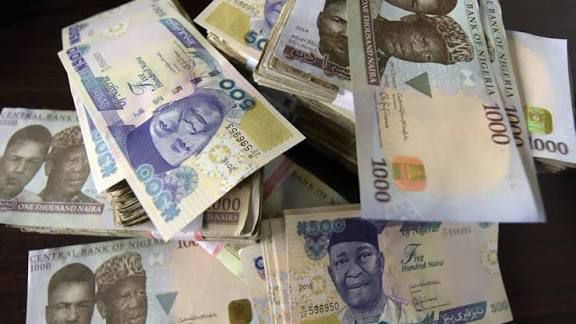
“It shows that the policies aimed at liberalising the FX market and attracting capital inflows are yielding tangible results.”
With continued policy consistency, improved market transparency, and growing international investor interest, Nigeria’s currency appears to be on a sustainable recovery path.