The US attack on Venezuela has plunged the country into its deepest political crisis in decades, reshaping power dynamics as Nicolás Maduro faces justice abroad.
The dramatic operation removed Maduro from Caracas and transported him to New York, triggering shock, celebration, fear and international condemnation across continents.
Within hours, images and videos flooded social media, blurring reality and fabrication, complicating public understanding of what unfolded during the US military raid.
Verified footage eventually confirmed Maduro’s capture, while fabricated AI images had already gone viral, amplifying confusion and fueling misinformation worldwide.
The operation’s scale and symbolism marked a rare instance of a sitting president seized by foreign forces and brought before a US federal court.
Maduro’s appearance in Manhattan stunned observers, as the longtime Venezuelan leader greeted the courtroom with defiance and an unexpected New Year message.
US officials framed the action as law enforcement, not war, insisting longstanding indictments justified the extraordinary cross-border military intervention.
Many nations rejected that explanation, warning the US attack on Venezuela violated international law and established a dangerous precedent for global relations.
At the United Nations, allies and rivals alike condemned Washington’s actions, with several calling the raid a “crime of aggression” threatening global stability.
Brazil, China, Russia, South Africa and Mexico joined criticism, while UN Secretary General António Guterres voiced deep concern over regional destabilisation risks.
Inside Venezuela, uncertainty spread quickly as security forces mobilised, drones were reported near the presidential palace, and gunfire echoed across Caracas.
Protests erupted from both supporters and opponents of Maduro, while journalists covering demonstrations faced detention, highlighting press freedom concerns.
Amid the turmoil, opposition leader María Corina Machado re-emerged as a central political figure following months abroad.
Machado confirmed she had not spoken to Donald Trump since October, despite praising the removal of Maduro as a victory for freedom.
She pledged to return to Venezuela as soon as possible, framing her homecoming as a moral duty rather than a coordinated political transition.
Trump, however, appeared dismissive of Machado’s domestic influence, questioning her support within Venezuela and signalling reluctance to elevate her leadership.
Reports suggested US intelligence believed Maduro loyalists were better positioned to maintain immediate stability, complicating opposition expectations.
Meanwhile, Maduro’s capture in New York became a global spectacle, blending courtroom drama with geopolitical consequences.
Court sketches showed a restrained but defiant former president, accompanied by his wife, as proceedings began with remarkable normalcy.
Read also: Blizzard conditions forecast as Met Office warns of snow and ice across the UK
Maduro entered a plea of not guilty, reinforcing claims that his removal constituted an illegal kidnapping rather than lawful arrest.
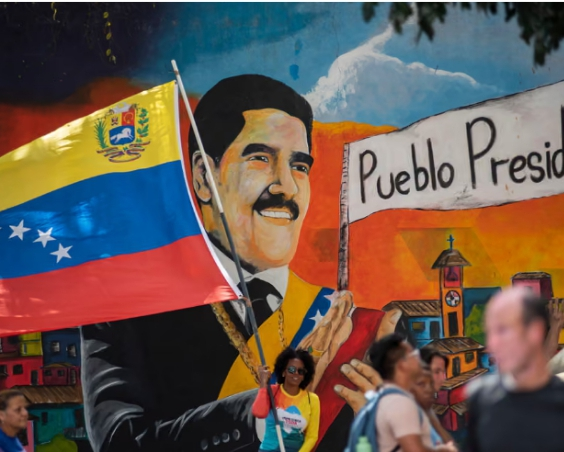
His supporters echoed that narrative, staging demonstrations across Caracas and denouncing what they described as foreign occupation.
The Trump Venezuela crisis widened further as the former president suggested US involvement in rebuilding Venezuela’s oil infrastructure.
Critics warned such remarks reinforced fears that economic interests, not democracy, underpinned the intervention.
European leaders reacted cautiously, with Denmark and Greenland openly rejecting Trump’s renewed territorial rhetoric following the Venezuelan operation.
Danish officials warned that attacking a NATO ally would dismantle post-war security architecture, underlining mounting transatlantic unease.
As images of celebration circulated in parts of Latin America, others mourned the erosion of sovereignty and the fragility of international norms.
Analysts noted the US attack on Venezuela may redefine how powerful nations justify unilateral actions against adversarial governments.
Within Venezuela, interim leadership moved quickly to consolidate authority, swearing in Delcy Rodríguez amid heightened security.
Markets reacted nervously, oil prices fluctuated, and regional governments braced for potential refugee movements.
Machado’s promised return now carries immense symbolic weight, but practical influence remains uncertain without institutional backing.
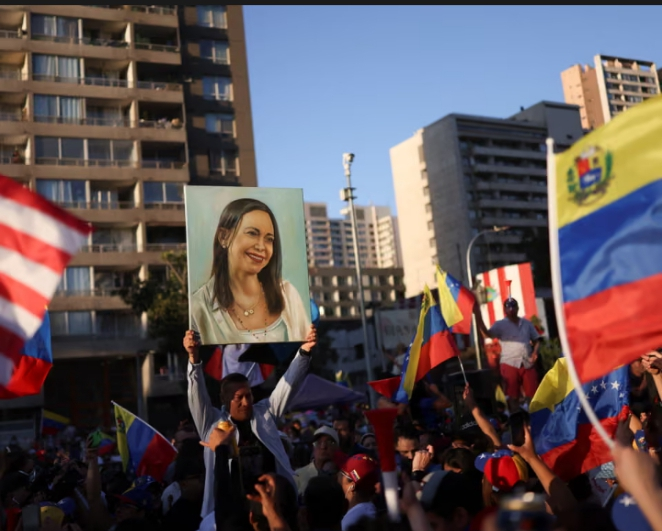
For many Venezuelans, hope, fear and exhaustion coexist as the country stands at a crossroads shaped by foreign intervention.
Whether the crisis leads to democratic transition or prolonged instability may depend less on rhetoric than restraint.
As the world watches closely, Venezuela’s future remains unresolved, suspended between liberation claims and warnings of irreversible damage.