

Liverpool improving gameplay is sparking debate as fans analyze seven unbeaten games. Despite points accumulating, questions remain over consistency, defense, and whether results truly reflect progress under Arne Slot’s leadership.
The Reds climbed to fourth in the Premier League after victories over Brighton, Tottenham, and Wolves. Wins have restored confidence, but performances remain inconsistent and fragile under pressure.
Mohamed Salah’s public criticism of Arne Slot highlighted early-season tensions. Benchings and defensive mistakes left Liverpool tenth after ten games, demonstrating challenges in managing high-profile players effectively.
Summer signings are gradually adapting. Hugo Ekitike has emerged as a key scorer, registering eight non-penalty Premier League goals, showcasing finishing, movement, and influence in crucial attacking positions.
Alexander Isak’s injury removed a key attacking option. Ekitike’s rise compensates, giving Liverpool consistent forward threat. Fitness improvements and starting opportunities are essential for his Premier League adaptation.
Florian Wirtz scored his first goal against Wolves, demonstrating technical quality and intelligence. His movement and pace complement Liverpool’s attack, reflecting his Bayer Leverkusen form before joining the Reds.

Wirtz added muscle and endurance, adapting to Premier League physicality. His performances indicate gradual integration into Liverpool’s system, balancing technical skill with energy and pressing efficiency on the field.
Jeremie Frimpong returned from hamstring injuries, contributing assists and pace.
The Dutch full-back enhances Liverpool’s width, helping break down organized defenses, particularly against low-block teams in congested areas.
Slot praised Frimpong’s speed as critical for offensive transitions. His ability to stretch defenses adds tactical variety, complementing other attacking threats like Ekitike and Wirtz in Liverpool’s forward line.
Liverpool’s set-piece defense remains a major vulnerability. Twelve goals have been conceded from dead-ball situations, representing 46% of total goals against, highlighting organizational and concentration deficiencies across matches.
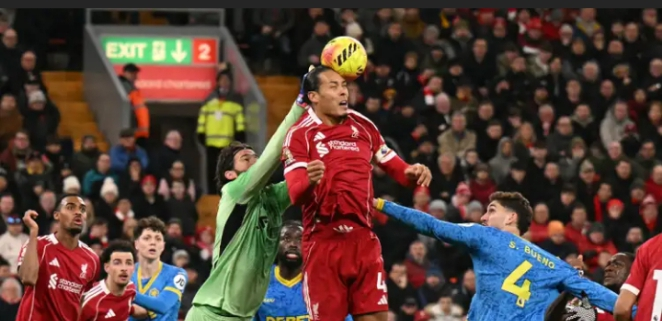
Van Dijk emphasized the second-phase danger in set-piece situations. Winning aerial duels is insufficient when loose balls remain uncollected, allowing opponents to score from rebounds and poorly cleared deliveries.
Set-piece coach Aaron Briggs was dismissed following persistent struggles. Slot and assistants now oversee dead-ball preparation, but immediate improvements remain uncertain ahead of challenging fixtures against top teams.
Leeds United have excelled from set-pieces this season, including an injury-time equalizer against Liverpool. The threat is tangible, and defensive lapses must be corrected for consistent results.
Recent victories often relied on fortunate circumstances. Inter, Brighton, and Tottenham wins involved late penalties, red cards, and defensive mistakes by opponents, masking Liverpool’s underlying inconsistencies and structural weaknesses.
Even against Wolves, Liverpool narrowly avoided dropping points. Last-minute interventions were necessary, emphasizing defensive fragility, psychological strain, and the need for composure during high-pressure situations across multiple competitions.
Possession statistics show Liverpool’s strength. They lead the Premier League in passes into the final third and penalty area, demonstrating control, but dominance has not guaranteed match-winning efficiency.
Read also: Nigeria vs Uganda: Super Eagles Soar to 3-1 AFCON 2025 Victory
High possession does not eliminate nerves. Matches often end closely, exposing mental fragility. Players’ confidence in critical moments, particularly during defensive transitions, requires improvement to maintain consistent performance levels.
Key midfielders, including Alexis Mac Allister and Ryan Gravenberch, struggle to maintain pressing intensity. Imbalance affects transitions and counter-pressing, forcing reliance on fitter players like Szoboszlai, Ekitike, and Wirtz.
Ekitike’s scoring consistency and movement are vital. He drives Liverpool’s attack with intelligent runs, positioning, and finishing, proving the recruitment strategy effective despite Isak’s absence and challenging Premier League adaptation.
Wirtz brings creativity and pace, improving attacking fluidity. His contributions are increasingly decisive, as goals and assists demonstrate growing confidence and understanding of Liverpool’s tactical demands under Slot.
Frimpong adds width, pace, and defensive coverage, balancing the squad. His presence allows more versatile offensive and defensive transitions, critical against teams defending with compact formations and counter-attacking strategies.
Defensive lapses, particularly in set-piece situations, remain a concern. Van Dijk and teammates win duels, but poorly cleared second-phase balls consistently compromise defensive stability and allow avoidable goals.
Slot has attempted tactical adjustments to mitigate vulnerabilities, yet results show inconsistency persists. Structural issues, including coordination and decision-making under pressure, require sustained coaching intervention to ensure lasting improvement.
Liverpool improving GFX is evident in points, attacking output, and squad adaptation. However, defensive frailty and inconsistency highlight the gap between temporary resurgence and sustainable dominance in top-tier competition.
The mental component influences results significantly. Conceding late goals and nervous defending reflect confidence issues.
Psychological resilience must improve to complement tactical adjustments and fitness progress across all positions.
January fixtures will test Liverpool’s progress. Maintaining form against Premier League and Champions League opponents, while integrating returning players and managing injuries, is crucial for continued success and momentum.
Recent victories, though encouraging, sometimes mask deeper issues. Lucky breaks, individual brilliance, and opponents’ mistakes can inflate perception of improvement. Consistency, composure, and cohesion remain key challenges.
Ekitike and Wirtz’s performances are encouraging signs. Goals, assists, and creative contributions show that summer recruitment is yielding tangible benefits, bolstering Liverpool’s attacking capabilities and team balance.
Frimpong’s pace and versatility enhance tactical options. His ability to exploit space, support attacking transitions, and contribute defensively strengthens Liverpool’s overall formation against compact defensive units.
Liverpool’s pressing game is effective in parts, but imbalance exists. Some midfielders cannot sustain intensity, leaving gaps for opponents. Coordination between pressing, defensive shape, and ball recovery remains crucial.
Set-piece vulnerability remains Liverpool’s Achilles heel. Conceded goals disproportionately originate from corners, long throws, and free-kicks, requiring urgent structural corrections to prevent recurring points lost in tight matches.
Van Dijk stresses the importance of reaction to second-phase balls. Winning the first contact is insufficient; defenders must clear loose balls decisively to avoid repeated goal concessions.
Slot and staff now handle set-piece preparation. While expertise may improve defensive organization, immediate transformation is unlikely, and upcoming fixtures will reveal whether structural weaknesses persist under pressure.
Recent streak highlights progress in results, but performance quality is uneven. Wins reflect potential rather than dominance, emphasizing the need for sustained tactical refinement and strategic adjustments across competitions.
Liverpool’s offensive threat relies heavily on Ekitike’s positioning, finishing, and intelligent movement. He is central to the team’s attacking fluidity and increasingly capable of producing decisive contributions in high-pressure matches.
Wirtz complements Liverpool’s attack with skill, speed, and vision. His goal involvement and mobility enhance link-up play, assisting in breaking defensive lines and creating scoring opportunities from multiple positions.
Frimpong’s reintegration improves squad balance. Speed, decision-making, and assist potential allow Liverpool to exploit transitional opportunities, particularly against compact teams, reinforcing the importance of healthy, fit key players.
Inconsistencies persist despite unbeaten run. Defensive lapses, set-piece weaknesses, and tactical fragility suggest that victories do not yet reflect overall team quality or sustainable performance levels.
Mental resilience remains a priority. Psychological strain, repeated mistakes, and nervy match conclusions indicate that confidence and composure must improve to consolidate recent gains.
Liverpool’s ability to control possession does not guarantee dominance. Teams exploiting transitional moments or set-piece opportunities continue to threaten points accumulation, highlighting tactical and structural vulnerabilities requiring urgent attention.
Integrating summer acquisitions and injured players improves potential. Ekitike, Wirtz, and Frimpong provide attacking, creative, and transitional balance, but systemic defensive issues must also be addressed for consistent results.
The team’s pressing and passing metrics are strong, but physical and tactical imbalances persist. Sustained intensity across midfield and forward lines is required to maximize efficiency in offensive and defensive phases.
Slot’s tactical adjustments aim to improve cohesion, but inconsistencies remain. Victory streaks provide breathing space but do not yet ensure that Liverpool are capable of sustained top-level performances.
Psychological, physical, and tactical factors combine to define Liverpool’s current form. Addressing these holistically is essential for converting temporary good results into long-term improvement and consistent Premier League performance.
January will test Liverpool’s development. Fixture congestion, returning players, and the need for defensive solidity are critical variables affecting the team’s ability to maintain progress and challenge for titles.
Recent successes have improved confidence but not eliminated vulnerabilities.
Overreliance on individual moments, fortunate breaks, and opponent errors can obscure structural weaknesses that may be exploited in crucial matches.
Ekitike’s scoring consistency is vital. Goals, positioning, and intelligent movement enhance Liverpool’s attacking threat and compensate for other players’ struggles or injuries, reflecting recruitment strategy success.
Wirtz adds creativity, skill, and dynamism. Goal involvement and pace improve attacking patterns, linking midfield and forward play, and increasing opportunities to break defensive lines efficiently.
Frimpong enhances flexibility, pace, and offensive coverage. Tactical balance improves, allowing Liverpool to adapt to different formations while maintaining attacking and defensive transitions effectively across all areas.
Defensive frailty and set-piece issues remain significant. Van Dijk’s aerial dominance helps, but clearances and coordination during second-phase situations are inconsistent, leading to avoidable goals and points lost.
Slot’s interventions aim to stabilize performances. Tactical, fitness, and psychological adjustments are key to translating recent good results into consistent dominance, minimizing the risk of fragile victories.
Liverpool improving gameplay is evident in results, attacking output, and integration of new signings.
Yet defensive and tactical inconsistencies show that significant work remains to achieve sustainable success.
Sustaining unbeaten runs requires cohesion, fitness, and mental resilience. Achieving these elements is crucial for Liverpool to transform recent streaks into consistent, reliable performances capable of challenging for the title.
Liverpool improving gameplay is visible in points, attacking productivity, and squad integration. Ekitike, Wirtz, and Frimpong are central, but structural issues and defensive vulnerabilities must be addressed.
Slot’s leadership will determine whether improvements are permanent. Tactical, psychological, and fitness adjustments must align to ensure Liverpool can maintain progress and compete at the highest level consistently.

