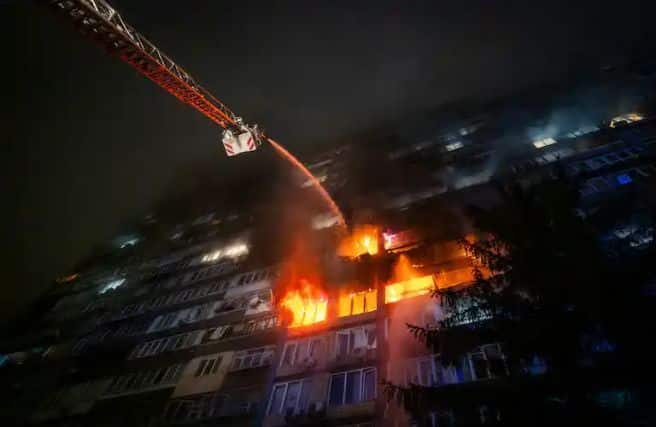
Kyiv endured severe blackouts on Friday after a large-scale Russian drone and missile attack targeted Ukraine’s energy infrastructure, leaving over 800,000 residents without power and sparking public concern.
President Volodymyr Zelensky described the strikes as “one of the largest concentrated attacks against our energy system,” noting that winter approaches and such aggression threatens civilian safety across the capital.
The Ukrainian leader said he held a “very positive and productive” call with former U.S. President Donald Trump to discuss Ukraine’s air defence and measures to secure critical energy systems amid escalating conflict.
“I informed President Trump about Russia’s attacks on our energy system—and I appreciate his willingness to support us,” Zelensky wrote on X, highlighting concrete agreements being explored with Washington.
The overnight attacks caused widespread damage, injuring at least 20 people and tragically killing a seven-year-old boy in southeastern Ukraine, underscoring the human cost of Moscow’s ongoing aggression.
In addition to Kyiv’s energy grid, Russian forces reportedly targeted other strategic sites, though Ukraine’s rapid response helped limit further casualties and infrastructure destruction, according to DTEK, the country’s largest private energy firm.
“The main work to restore the power supply has been completed,” DTEK said on Saturday, though some localized outages persisted across the Ukrainian capital following Friday’s strikes and emergency repairs continued.
Meanwhile, in a diplomatic breakthrough, eight Ukrainian children kidnapped by Russian forces have been returned to Kyiv after back-channel negotiations led by former First Lady Melania Trump, marking a major humanitarian achievement.
Trump confirmed the children were rescued following letters and communications with Russian President Vladimir Putin, providing details on Ukrainian minors held in Russia during the invasion, emphasizing careful diplomacy.
“Since then, President Putin and I have had an open channel of communication regarding the welfare of these children,” Melania Trump said, describing the outcome as a significant milestone for child protection.
Zelensky praised the initiative, noting that it complements broader efforts to secure Ukraine’s sovereignty and protect civilians, particularly children forcibly displaced or confined in Russian-occupied areas of the country.
Ukraine estimates Russia has illegally deported more than 19,500 children to Russia and Belarus, a violation of the Geneva Conventions; research suggests the actual number could be closer to 35,000, highlighting the scope of the crisis.
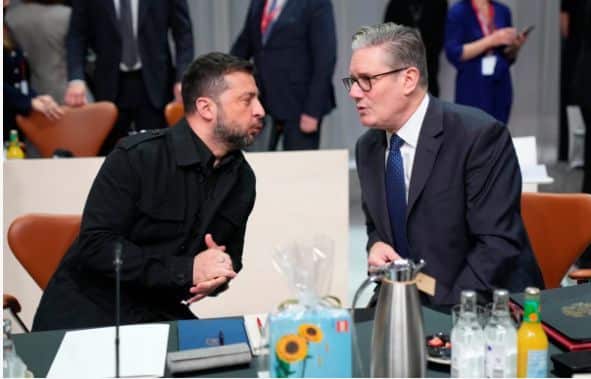
On the European front, UK Labour leader Sir Keir Starmer expressed readiness to use frozen Russian sovereign assets to fund a loan supporting Ukraine’s armed forces, combining financial pressure with diplomatic leverage.
Starmer, alongside German Chancellor Friedrich Merz and French President Emmanuel Macron, co-signed a statement signalling coordinated action: “We are ready to progress towards using immobilised Russian assets to support Ukraine’s armed forces.”
The initiative, discussed during a European leaders’ meeting in Copenhagen, aims to pressure Russia into negotiations while providing Ukraine with resources to maintain security and counter further aggression from Moscow’s forces.
Zelensky welcomed Starmer’s support, describing international collaboration as critical in deterring Russian attacks and ensuring Ukraine can defend its infrastructure and citizens during the harsh winter months.
Russian President Vladimir Putin has meanwhile criticised the Nobel Peace Prize committee while praising Trump’s diplomatic efforts, claiming the U.S. leader “genuinely seeks” to end conflicts, including the Ukraine war and broader regional crises.
Putin added: “I think the Nobel Committee was hardly interested in the opinion of the Kiev regime’s leader,” mocking the link between weapons supplies and peace accolades, while noting Trump’s Gaza ceasefire initiatives as noteworthy.
The Alaska summit in August between Trump and Putin remains a reference point for ongoing discussions, with both sides agreeing to follow frameworks for peaceful resolution while addressing broader regional security concerns.
Ukraine also demonstrated offensive capabilities, with drones striking Russia’s Bashneft oil refinery in Ufa, Bashkortostan, signalling Kyiv’s reach and the vulnerability of Russian infrastructure deep in the country’s rear territory.
“This is the third SBU deep strike in Bashkortostan in the last month, 1,400 kilometres from Ukraine,” a Ukrainian security source said, emphasising that no area in Russia’s rear is fully secure or immune to strategic Ukrainian operations.
In Kyiv, residents contend with intermittent power, ongoing threats from Russian missile attacks, and heightened vigilance, yet morale remains bolstered by international support, successful child rescues, and visible diplomatic engagement.
Prime Minister Yulia Svyrydenko said Ukraine continues to strengthen its energy infrastructure while responding to humanitarian crises, asserting the government’s commitment to protect civilians and maintain critical services for all residents.
The combined diplomatic, military, and humanitarian efforts reflect a multifaceted approach by Ukraine and allies to counter Russian aggression, maintain civilian safety, and leverage international cooperation across multiple fronts.
Zelensky’s public statements highlight both gratitude and strategic planning: “There are good options and solid ideas on how to truly strengthen us,” he said, referencing air defence upgrades and cooperation with the U.S. in protecting key infrastructure.
Starmer’s stance on using frozen Russian assets marks a significant European policy shift, providing Ukraine with financial resources to sustain military operations and support civilian infrastructure repair amid ongoing attacks.
Meanwhile, Trump’s role in facilitating the return of kidnapped children and engaging in dialogue with Putin underscores the ongoing influence of back-channel diplomacy in resolving complex humanitarian issues within the region.
The intertwined political, humanitarian, and military developments demonstrate the high stakes in Ukraine, where energy security, child welfare, and international coordination intersect amid persistent Russian attacks on civilians and infrastructure.
Zelensky, Trump, and Starmer’s coordinated actions send a clear signal to Moscow that international support for Ukraine is robust, multidimensional, and prepared to counter further aggression with both military and financial measures.

As winter approaches, the restoration of Kyiv’s energy grid, alongside ongoing diplomatic efforts and humanitarian interventions, remains a top priority for Ukraine and its allies to maintain safety and national stability.
The recent series of events emphasizes the importance of global cooperation in crises, combining political strategy, military readiness, and humanitarian action to safeguard Ukraine’s sovereignty, civilian population, and critical infrastructure.
Zelensky concluded: “We remain vigilant, prepared, and united with our international partners to defend our people, protect our children, and secure our future for generations to come.”
About The Author