Kostiantynivka battle dominates headlines on 4 July 2026 after Moscow declared it had captured the key eastern city, while Kyiv rejected the claim as “fake” and vowed to hold the line.
The clash comes two days after Russia’s largest aerial attack on Kyiv this year, with President Vladimir Putin ordering strikes to continue against Ukraine’s military-industrial complex.
As missiles and drones pound frontline towns, both sides are using Kostiantynivka as a symbol of momentum in a war that has already cost over 2 million casualties.
Moscow Declares Control Over a Strategic Hub
Russia’s Claim of a Liberated City
Russia’s General Staff told Putin on Friday that troops had “liberated the city of Kostiantynivka, one of the main defensive hubs of the enemy within the Sloviansk-Kramatorsk-Kostiantynivka fortified area,” according to Chief of Staff General Valery Gerasimov.
Moscow has long described the city as vital for advancing through Donetsk. “We all know that this city is a key transport and large industrial centre of Donbas,” Putin said during the briefing.
Russian state media framed the advance as a breakthrough after months of grinding combat. For the Kremlin, taking Kostiantynivka would open routes toward Sloviansk and Kramatorsk, tightening pressure on Ukraine’s remaining strongholds in the region.
Gerasimov also reported “another massive strike using long-range precision-guided weapons and strike unmanned aerial vehicles against military-industrial complex facilities in Kyiv,” linking battlefield gains to deep strikes.
Kyiv’s Firm Denial
Ukraine rejected the narrative within hours. “We deny this. These are more fake claims,” the military said on Saturday. Officials insist fighting continues in and around the city and that Russian forces have not secured full control.
The denial matters because Kostiantynivka sits at a logistics crossroads. Losing it would threaten Ukrainian supply lines and morale. For now, Kyiv maintains its defensive positions and is reinforcing nearby units.
Escalation in the Air War
Putin Orders Continued Strikes
The timing of the claim coincided with renewed aerial attacks. “Massive, coordinated strikes against the infrastructure of Ukraine’s military-industrial complex and the facilities supporting its operation must continue,” Putin said. Two nights ago, Russia launched its deadliest strike on Kyiv in 2026, killing 30 people and damaging residential blocks. Overnight attacks added four more deaths and 10 injuries.
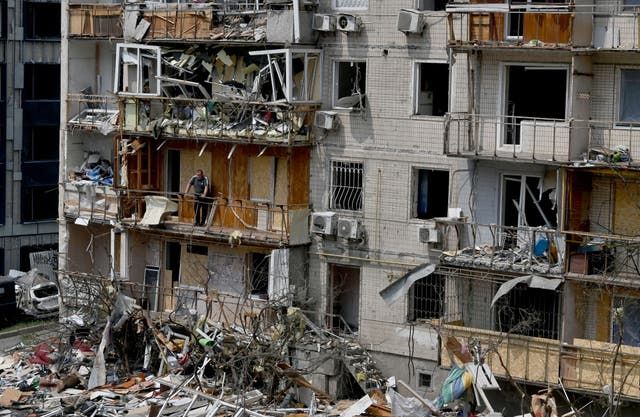
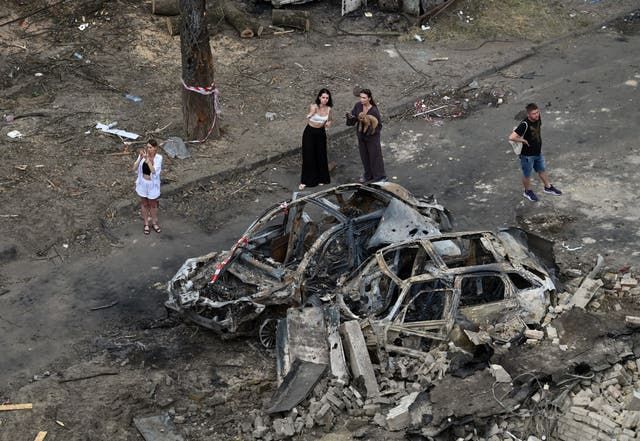
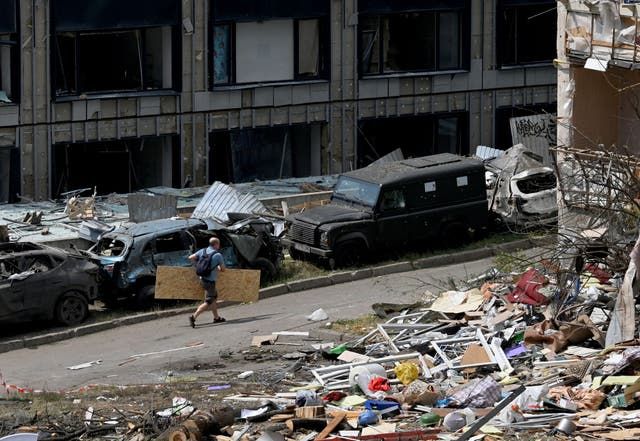
Images from Kyiv showed burnt cars, shattered balconies, and rescue crews pulling debris from collapsed apartments. “We will rebuild,” residents told reporters amid the rubble. The strikes targeted fuel depots, rail yards, and plants tied to munitions production, according to Russian briefings.
Fuel Shortages and Ukrainian Counterpressure
Ukraine is pressing back asymmetrically. Drones hit an oil terminal in St Petersburg on Saturday, part of a campaign to disrupt Russian logistics. Despite queues at stations in 20 Russian regions, Putin downplayed the impact. He called fuel shortages “non-critical” and said strikes on oil facilities had “absolutely no effect on the situation at the front.”
Kyiv is also lobbying the EU to block gasoline exports to Russia as shortages deepen. “Ukraine pushes EU to block gasoline exports to Russia as fuel shortages deepen,” officials said, seeking to compound pressure on Moscow’s war economy.
Diplomacy, Defence, and Regional Risk
Talks in Washington and Kyiv’s Outlook
Diplomatic activity continues alongside combat. President Volodymyr Zelensky said senior defence official Rustem Umerov met Jared Kushner in the past two days, and he still hopes envoy Steve Witkoff will visit Ukraine. “I hope to have a meeting with Trump on the sidelines of a Nato summit in Ankara next week,” Zelensky said, as peace efforts remain stalled.
At the same time, Europe is adjusting to a reduced U.S. footprint. NATO’s top commander, Gen. Alexus Grynkewich, said European allies “have largely filled the gaps left by U.S. reductions to the NATO Force Model” in recent weeks, with workarounds for remaining shortfalls. A NATO source told Reuters that European members have covered almost all U.S. gaps ahead of the Ankara summit.
Warning Signs on NATO’s Eastern Flank
Tensions are spilling beyond Ukraine. U.S. officials reportedly warned Warsaw that Russia is planning a possible “provocation” against Poland to test NATO’s resolve. Scenarios include missile or drone attacks on infrastructure, or a small border incursion Moscow could call an accident.
Polish security services acknowledge a limited ground incursion is possible. “The US systematically informs Poland about ever-new Russian plans for a conventional attack on NATO’s eastern flank,” a source close to President Karol Nawrocki said.
The Human Cost and Battlefield Math
Casualties and Limited Gains
The war’s toll is staggering. Reports put total casualties above 2 million, yet territorial change remains incremental. Analysts note “half a million dead but just 40sqkm gained in six months,” highlighting the war’s attritional nature. In Kyiv, grief is visible. “People examine burnt cars parked outside a residential building damaged following a Russian air attack,” photo captions show, as locals carry plywood to board broken windows.
Propaganda vs. Reality on the Ground
Both sides are fighting a perception war. Moscow touts Kostiantynivka as a turning point. Kyiv calls it information warfare. On the ground, control is contested and fluid. Without independent verification, the claim of capture remains disputed, but the narrative itself shapes morale, aid flows, and negotiating leverage.
What Comes Next for Kostiantynivka
Military Implications
If Russia does secure the city, it gains a launchpad for operations toward Sloviansk-Kramatorsk, Ukraine’s last major defensive belt in Donetsk. If Ukraine holds, it blunts Moscow’s summer offensive and preserves a key logistics node. Either outcome will influence the tempo of strikes, troop rotations, and Western aid decisions heading into the Ankara summit.
Read also: Trump’s Mount Rushmore speech targets the Communist menace on America’s 250th birthday
Strategic Stakes
Putin’s directive to keep striking “must continue” signals no pause for diplomacy. Zelensky’s push for high-level meetings shows Ukraine is still seeking leverage.
Meanwhile, NATO’s ability to plug U.S. gaps and Poland’s vigilance on the border will test alliance cohesion. The Kostiantynivka battle is thus more than a local fight. It is a barometer for escalation, sanctions, and the war’s next phase.
About The Author