Israeli strikes kill dozens as both sides say the other breached Gaza truce, leaving communities on edge and raising fears of renewed violence in the region.
Civilians were caught in the crossfire as air raids and retaliatory attacks escalated following reports of violations from both the Israeli military and Palestinian factions.
The Israeli military said in a statement, “Our forces conducted a massive and extensive wave of strikes on dozens of targets after troops were fired upon in Rafah,” a claim Hamas strongly denies.
Palestinian authorities reported that at least 42 people were killed in the latest raids, and hospitals are struggling to treat hundreds more wounded since the ceasefire took effect on October 10.
Dr. Leila Al-Masri of Al-Aqsa Hospital said, “We are overwhelmed. Families are arriving with severe injuries, and we cannot treat everyone. The air strikes have destroyed what little calm had returned.”
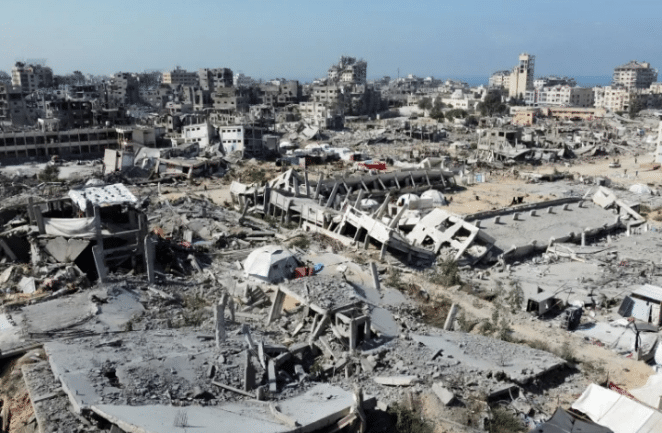
Medical sources confirmed five deaths in az-Zawayda and three in the Nuseirat refugee camp, leaving dozens injured and worsening Gaza’s already dire humanitarian situation.
The Gaza Media Office said 97 Palestinians have been killed and 230 others wounded since the ceasefire began, highlighting how fragile the agreement is under continuous pressure from military escalations.
Two Israeli soldiers died in combat on Sunday, prompting the army to respond with artillery fire after troops were allegedly targeted by Hamas fighters, marking a dangerous escalation along Gaza’s southern border.
Hamas’s armed wing, the Qassam Brigades, issued a statement saying, “We have no knowledge of any incidents in Rafah. We are committed to the ceasefire and are working to protect civilians, not escalate violence.”
Residents reported that fear and panic dominate the streets. One man said, “We cannot sleep. Every sound makes us think another strike is coming. Children are crying constantly.”
Residents said the return of captives to Israel has raised tensions. One man said, “Now that Israel has the captives, they are back at killing us. That is the fear we feel every day.”
Israeli attacks in central Gaza killed additional Palestinians, while northern areas also suffered air raids, showing the spread of military operations beyond previously targeted zones in southern Gaza.
Prime Minister Benjamin Netanyahu consulted with security officials before ordering strikes, stating, “We will take strong action against any violation of the ceasefire to protect Israeli citizens and soldiers.”
Israeli media suggested operations in Rafah aimed to protect armed proxies supported by Israel during the war, fearing Hamas retaliation following the truce, a claim criticized by analysts as a pretext for further escalation.
Once reports of clashes in Rafah emerged, the mood in Israel shifted immediately, officials said, with a sense that the government would act decisively, regardless of the ceasefire terms.
Far-right Israeli ministers have openly called for war. National Security Minister Itamar Ben-Gvir tweeted, “The army must fully resume combat with maximum force,” while Finance Minister Bezalel Smotrich posted simply: “War!”
Opposition leaders, including former security official Benny Gantz, said all options should remain on the table. Gantz said, “We must be prepared for all scenarios, including a return to military manoeuvres, to protect civilians and national security.”
Yossi Mekelberg, senior consulting fellow at Chatham House, said, “This ceasefire was never a full end to hostilities. Any small incident can tilt it into a renewed conflict. The situation remains extremely fragile.”
The US State Department alleged credible reports that Hamas could soon violate the ceasefire, but Hamas responded: “These allegations are false, align with Israeli propaganda, and serve as cover for continued aggression against Palestinians.”
Hamas also called on Washington to pressure Israel to halt support for armed groups in Israeli-controlled areas. A spokesperson said, “Israel’s actions are hindering recovery and preventing us from helping civilians and retrieving bodies safely.”
A Hamas delegation led by Khalil al-Hayya traveled to Cairo to coordinate with mediators and Palestinian factions. The group said, “We remain committed to the ceasefire and are working to implement all agreements despite Israeli obstacles.”
The Israeli army identified the remains of two captives recently returned by Hamas, including Ronen Engel, a father of three, and Thai worker Sonthaya Oakkharasri. Netanyahu’s office said, “Israel demands the return of all remaining captives.”
Hamas confirmed the location of another captive’s body but said delivery would only occur under safe conditions. A Qassam Brigades statement said, “Escalation by Israel is slowing recovery operations, and civilians continue to suffer.”
Israel continues to pressure Hamas to return the remaining captives. Hamas stressed heavy machinery and cooperation are required to recover bodies trapped under rubble caused by Israeli strikes, emphasizing humanitarian constraints.
“The ceasefire is extremely fragile,” said Palestinian political analyst Rania Khalil. “Civilians are caught in the middle. One misstep can reignite the war, undoing months of fragile progress.”
Residents in Gaza are fearful for their lives. One woman in Khan Younis said, “We cannot sleep. Every sound makes us think another strike is coming. Children are crying constantly.”
International concern is growing over civilian casualties, as continued attacks threaten humanitarian aid delivery. Agencies warn that immediate action is needed to prevent further deaths and destruction.
Disruptions to healthcare, electricity, and sanitation continue, as Israeli operations impede safe passage for relief teams. Aid agencies warn that the fragile truce will collapse without proper monitoring.
The conflict’s escalation comes just after the partial return of captives, a move meant to reduce tensions, now overshadowed by renewed air strikes that complicate efforts to maintain stability in the region.
Hamas’s insistence on adhering to the ceasefire contrasts with Israel’s claims of violations, highlighting a complex information battle and the difficulty of distinguishing between military targets and civilian areas.
Observers warn that without sustained international mediation and accountability, the fragile truce may collapse, risking a return to large-scale conflict that devastated Gaza over the past two years.
Both sides blaming each other for ceasefire breaches leaves civilians facing uncertainty, fear, and the prospect of renewed military violence, with families struggling to recover from years of conflict.
Diplomats stress that only sustained pressure, humanitarian aid, and monitoring can prevent further casualties and protect civilians in the war-torn region.
The delicate ceasefire remains under constant threat, with Israeli strikes highlighting the difficulties of enforcing agreements in a region plagued by mistrust, political divisions, and decades of unresolved conflict.
International humanitarian agencies have urged both Israel and Hamas to respect the ceasefire fully, warning that any further escalation could result in additional civilian deaths and destabilize southern Gaza.
Families report ongoing trauma from war, with homes destroyed and children growing up amidst the uncertainty of sporadic violence, restricted movement, and disrupted schooling, emphasizing the human cost of continued conflict.
Analysts warn that recent escalations could mark a turning point in Gaza’s fragile stability. Renewed attacks may erode confidence in the ceasefire and make future diplomatic solutions increasingly difficult.
The returning captives’ remains, combined with ongoing air strikes, create a tense environment in which both Israel and Hamas face domestic pressure to act decisively, risking renewed confrontations and civilian suffering.
Even as international mediators work to maintain the ceasefire, fear, mistrust, and political tensions make Gaza highly unstable, with civilians facing renewed violence and humanitarian uncertainty.
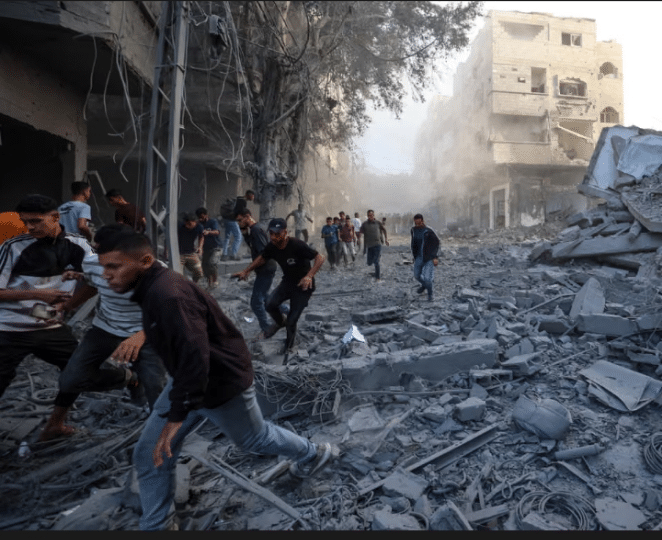
Robust monitoring of ceasefire agreements, clear humanitarian corridors, and diplomatic pressure are essential to prevent further escalation and protect civilians in Gaza and southern Israel.
Israeli strikes kill dozens as both sides say the other breached Gaza truce, highlighting the fragility of the US-brokered ceasefire, the humanitarian consequences for Palestinians, and the challenges of maintaining peace.
As tensions continue to mount, Israeli strikes kill dozens as both sides say the other breached Gaza truce, highlighting the fragile nature of the ceasefire and the urgent need for renewed diplomatic efforts to prevent further bloodshed.
About The Author