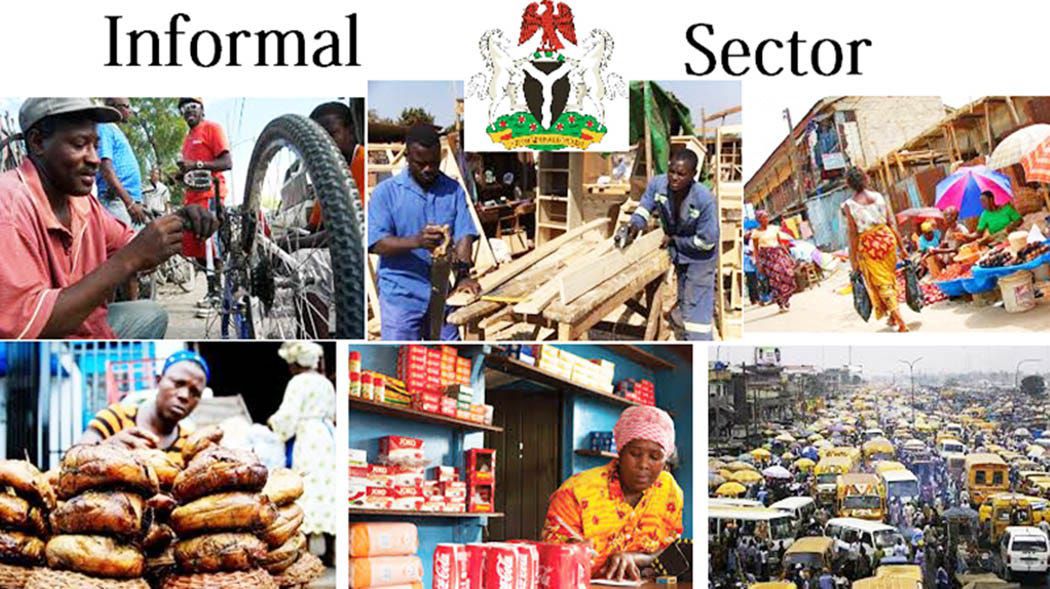

As Nigeria’s economy continues to evolve under tightening reforms and persistent inflation, a silent majority of the workforce has found refuge in what economists call “the business of survival.”
Across Lagos markets, Abuja parks, and rural towns, informal traders, gig workers, and small artisans are sustaining millions—despite limited government support and policy neglect.
Nigeria’s Hidden Economic Engine
According to the Nigerian Economic Summit Group (NESG), over 93% of Nigeria’s workforce is engaged in informal employment.
Another report by Jobberman and the Mastercard Foundation (2024) puts the figure at 76.7% of total employment, highlighting the informal economy as Nigeria’s true labour backbone.
From roadside vendors and commercial motorcyclists to POS operators and online freelancers, this sector contributes an estimated 60% of Nigeria’s GDP, yet remains largely excluded from formal policy frameworks.
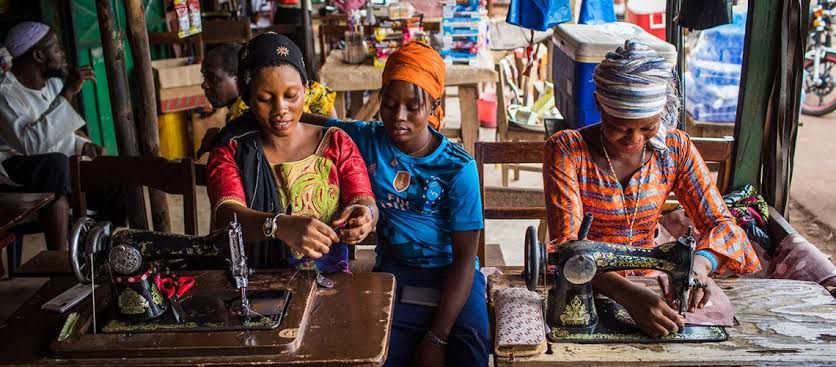
For many, it’s not about choice—it’s survival.
“I left my teaching job when the school couldn’t pay salaries for three months,” says Foluke, a 29-year-old graduate who now runs a food delivery business in Ibadan.
“With prices going up daily, I can’t depend on anyone. I just have to survive.”
Unemployment and the Rise of the Hustle Economy
Data from Nairametrics (2024) reveals that 51.6% of informal businesses in Nigeria were started out of unemployment.
With limited formal job creation and inflation eroding wages, millions are finding livelihood in self-employment.
In Lagos, Tunde, a POS operator and phone-accessory trader, describes his daily grind:
“If I make ₦10,000 profit, half goes into transport and restocking. But at least I’m not idle. Hustle never sleeps.”
Economic analysts note that Nigeria’s “hustle economy” now extends beyond street trading.
Digital gig work—such as ride-hailing, freelance services, and social-commerce—has become a vital part of the informal landscape.
A Moniepoint 2025 report found that 65% of informal businesses recorded higher revenues, though only 47% realised higher profits, as operational costs soared.
Women and the Informal Burden
Women constitute a significant share of informal workers.
An International Labour Organization (ILO, November 2024) policy brief estimates that 96% of Nigerian women are employed informally—mostly in food trade, tailoring, caregiving, and small manufacturing.
In Ibadan, Mama Kemi, a market trader for over 15 years, shares her frustration:
“Every day I sell pepper and tomatoes, but profit is small. Rent, transport, everything don cost. Government no dey see us at all.”
For women like her, informal work provides autonomy but comes with insecurity. Without access to pensions, healthcare, or credit, they remain economically vulnerable despite being vital contributors.
Innovation Amid Scarcity
Despite economic pressure, Nigeria’s informal economy thrives on innovation.
Mobile money, micro-savings apps, and social media have redefined business survival strategies.
From Abuja to Aba, small vendors now rely on WhatsApp groups, Instagram pages, and POS banking to reach customers and receive payments.
Digital tools have created micro-efficiencies that help traders adapt to naira volatility and supply disruptions.
“I use my WhatsApp status to advertise and get orders,” says Aisha, a Lagos-based home-service tailor.
“Even if I don’t have a shop, my phone is my shop now.”
This shift underscores a broader digital transformation—one that’s happening from the bottom up, not driven by big corporations but by ordinary citizens finding new ways to stay afloat.
The Policy Blind Spot
Economists argue that Nigeria’s policymakers have consistently underestimated the informal sector’s importance.
The NESG estimates that the informal economy contributes roughly ₦60 trillion in value, yet receives minimal institutional recognition.
Poor access to credit, limited skills training, and punitive local levies hinder growth.
The cost of doing business has surged—79% of informal businesses reported increased expenses in 2025, largely due to higher fuel costs, inflation, and foreign exchange fluctuations.
Dr. Ifeanyi Eze, a development economist, explains:
“Nigeria’s informal sector is both a symptom and a solution—symptom of unemployment, solution to poverty. But without policy inclusion, it will remain trapped in survival mode.”
The Human Cost of Economic Reforms
The removal of fuel subsidies and the naira float policy, while aimed at fiscal stability, have disproportionately affected informal workers.
Rising transport costs and inflation have eroded micro-profits and reduced consumer spending.
Still, these workers persist. They innovate, diversify, and adjust prices daily.
For some, a second or third hustle has become standard practice. As one gig driver put it, “You can’t depend on one job in this country anymore. You need three.”
The resilience is inspiring, but it also reflects a lack of structural opportunity.
With the formal economy struggling to absorb new entrants, informal work will likely remain Nigeria’s dominant employment channel for years to come.
Formalising Without Killing the Hustle
Experts say the way forward lies in inclusive formalisation—recognising and supporting the informal sector without imposing suffocating bureaucracy.
Proposals include:
Simplified business registration processes.
Access to microcredit and digital-financial literacy.
Portable social protection (pensions, insurance).
Fair taxation that encourages growth rather than penalises survival.
Countries like Kenya and Ghana have piloted similar approaches with notable success, showing that informal enterprises can thrive when given structured support.

A Future Built on the Hustle
Nigeria’s informal economy is a paradox—unregulated yet indispensable, improvised yet highly innovative.
For millions, it represents hope in hardship, independence in uncertainty, and community in chaos.
The “business of survival” is not a fringe economy. It is the beating heart of Nigeria’s productivity—keeping families fed, cities alive, and youth engaged. Recognising its power could be the first real step toward inclusive growth.
As Foluke, the food vendor, concludes:
“We’re not lazy. We just work where the government forgets to look.”