

The ongoing India Pakistan blasts investigations have intensified as both countries open separate probes into deadly explosions that struck Islamabad and New Delhi within hours of each other.
Authorities in both capitals have heightened security measures while intelligence agencies work to uncover possible connections between the two incidents, which have already reignited political and military tensions.
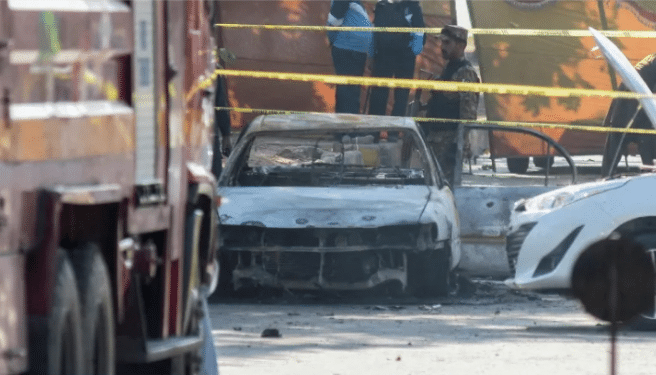
In New Delhi, investigators reported that a car packed with explosives detonated near the Red Fort metro station, killing thirteen people and injuring twenty others.
Prime Minister Narendra Modi described the attack as a “cowardly attempt to destabilize the nation,” and ordered the National Investigation Agency to lead the India Pakistan blasts investigations.
In Islamabad, a suicide bomber struck outside a court building, killing twelve and wounding dozens more, an attack Pakistan’s interior minister linked to “foreign involvement” without presenting immediate evidence.
Pakistan’s prime minister condemned what he described as “acts of state-sponsored terrorism,” accusing Indian proxies of orchestrating the Islamabad bombing and the Wana assault in South Waziristan.
India’s foreign ministry, in response, called the claims “baseless,” arguing that Pakistan’s leadership was deflecting from internal political and constitutional challenges it currently faces.
The India Pakistan blasts investigations are now being closely followed by international observers concerned about renewed hostilities between two nuclear-armed neighbors that share a volatile history.
Both governments have summoned their respective envoys for consultations as security agencies tighten surveillance across borders and major cities.
Officials in Delhi have sealed border checkpoints and ordered random inspections of vehicles across major highways connecting to Haryana and Uttar Pradesh.
Meanwhile, Pakistani authorities have increased troop presence in key urban areas and deployed counterterrorism units to regions considered vulnerable to infiltration or cross-border militancy.
The latest incidents mark the most serious escalation since the 2021 ceasefire agreement, which had temporarily reduced violence along the Line of Control.
Military analysts warn that if the India Pakistan blasts investigations reveal cross-border links, both sides could return to aggressive posturing that might threaten regional stability.
Security experts also believe that militant networks could exploit the tension between the two countries, as competing political narratives deepen distrust and hinder cooperation.
For decades, both India and Pakistan have accused each other of harboring and supporting groups responsible for violence targeting civilians and security forces.
The Islamabad blast, according to police sources, was carried out using a vehicle loaded with high-intensity explosives parked near the main gate of the court complex.
Eyewitnesses reported scenes of panic as emergency teams rushed to evacuate the injured and extinguish the flames consuming nearby vehicles.
In Delhi, forensic specialists are analyzing fragments of the car and metal residue collected from the explosion site to determine the origin of the explosives used.
The India Pakistan blasts investigations have prompted calls from several human rights groups for transparency and restraint, urging both governments to avoid politicizing the tragedy.
Families of victims in both countries have expressed frustration at how the attacks have quickly become subjects of blame rather than coordinated security reform.
Opposition parties in Pakistan accuse the ruling coalition of using the tragedy to divert attention from economic difficulties and internal unrest.
Similarly, critics in India have questioned the speed at which authorities invoked anti-terror laws, suggesting that investigators should focus on facts rather than framing narratives.
International organizations, including the United Nations, have urged both sides to maintain communication and share intelligence to prevent miscalculation or escalation.
A UN spokesperson stated that peace in South Asia requires “responsible leadership and a commitment to evidence-based cooperation.”
The India Pakistan blasts investigations have also drawn attention from global security think tanks monitoring the region for any sign of destabilization.
Diplomatic sources in Washington and Beijing reportedly reached out privately to both governments, encouraging restraint and collaboration.
Observers note that the timing of the attacks—coming during heightened military exercises in Kashmir—adds to the complexity of the investigations.
Defense experts argue that maintaining a hotline between military officials remains crucial to avoid misinterpretation of troop movements near contested borders.
In recent months, cross-border trade discussions and humanitarian initiatives had shown progress, making the sudden surge in hostility particularly concerning for mediators.
The India Pakistan blasts investigations could determine whether regional diplomacy continues or collapses under the weight of renewed accusations and security fears.
Local residents in Islamabad described the attack as the most devastating since the Marriott bombing years ago, expressing deep anxiety over recurring insecurity.
In New Delhi, shop owners near the Red Fort area remain fearful, saying they have witnessed increased police patrols but limited communication about safety procedures.
Authorities in both cities have declared high-alert status, banning large gatherings near government buildings and religious sites for the coming weeks.
Regional analysts say that domestic politics in both countries often amplify external blame, complicating efforts to address shared security challenges.

The India Pakistan blasts investigations are thus seen not only as criminal inquiries but also as tests of political maturity and diplomatic endurance.
Energy and trade analysts warn that further escalation could disrupt fragile economic ties, particularly cross-border energy supply routes under discussion since early 2024.
Foreign investors are reportedly monitoring the situation closely, as uncertainty threatens confidence in the subcontinent’s already fragile markets.
In Kashmir, where communities often bear the consequences of political strain, locals expressed renewed fear that peace efforts might once again be derailed.
Many young people in the region have called for both governments to prioritize dialogue rather than confrontation following the India Pakistan blasts investigations.
Despite calls for calm, social media platforms in both countries have seen an increase in nationalist rhetoric, prompting authorities to monitor online misinformation.
Civil society leaders argue that cooperation between investigative agencies could send a positive message that terrorism is a shared enemy, not a political weapon.
Religious leaders from both sides have also condemned the attacks, emphasizing that innocent lives should never become collateral in political conflicts.
Analysts predict that the findings of the India Pakistan blasts investigations will shape not only domestic security policies but also future diplomatic engagement.
Until then, citizens in both nations remain caught between fear and fatigue, yearning for stability in a region long defined by cycles of suspicion and retaliation.
Whether cooperation or confrontation prevails depends on how both governments choose to interpret the facts and prioritize their people’s safety over political gain.


