President Donald Trump moves to suspend immigration from “Third World” nations and reviews green card applications following a Washington, DC, National Guard shooting incident.
President Donald Trump announced Thursday that he will suspend immigration from “all Third World countries,” following the naming of an Afghan national as the suspect in the shooting of two National Guard members in Washington, DC.
The move represents the latest escalation in Trump’s immigration restrictions, which began earlier this year with a review of green card applications from 19 “countries of concern.”
“I will permanently pause migration from all Third World Countries to allow the US system to fully recover, terminate all of the millions of Biden illegal admissions,” Trump wrote on Truth Social.
While he did not define “Third World,” the term typically refers to developing countries in the Global South. He added that anyone “not a net asset to the United States, or incapable of loving our Country” will be removed.
Trump also stated that federal benefits and subsidies to “noncitizens” will end. “We will denaturalize migrants who undermine domestic tranquillity and deport any foreign national who is a public charge, security risk, or non-compatible with Western civilization,” he said. The president’s statements signal a hardline approach to both legal and illegal immigration.
US Citizenship and Immigration Services Director Joseph Edlow confirmed that, “at the direction” of President Trump, his office has begun “a full-scale, rigorous re-examination of every green card for every alien from every country of concern.”
He stressed that protecting Americans remains the administration’s priority. “The American people will not bear the cost of the prior administration’s reckless resettlement policies,” Edlow said.
Edlow did not specify all countries under review but referred to a June 4 presidential proclamation restricting citizens from 19 nations, including Afghanistan, Haiti, Iran, Myanmar, Venezuela, and Yemen.
Citizenship and Immigration Services earlier announced that all Afghan immigration requests would be suspended indefinitely, pending a security and vetting review.
The heightened restrictions follow the identification of the National Guard shooting suspect as Rahmanaullah Lakanwal, a 29-year-old Afghan national who previously worked with US forces in Afghanistan.
US Attorney for the District of Columbia Jeanine Pirro said federal authorities, including the FBI, will review Lakanwal’s immigration history and vetting process. Lakanwal came to the US under “Operation Allies Welcome” after the US withdrawal from Afghanistan in 2021.
Trump’s administration has already implemented aggressive measures to limit immigration. In October, it announced a cap of 7,500 refugees for 2026—the lowest since 1980.
A memo signed by Edlow also orders a review of approximately 200,000 refugees admitted under President Joe Biden’s administration, suspending green card applications from those arrivals during that period.
The decision has drawn both support and criticism. Republican leaders hailed the move as necessary for national security. “America must prioritize citizens and ensure only vetted individuals enter our country,” said Senator Tom Cotton. Critics argue the measures unfairly target entire populations, emphasizing that the majority of immigrants contribute positively to the US economy and society.
Analysts warn that the green card review could cause significant delays in immigration processing. “Thousands of lawful applicants may face months-long waits,” said immigration lawyer Priya Ramesh. “The administration’s broad approach risks punishing individuals who pose no threat.”
Trump defended the sweeping policy on Truth Social, insisting that past administrations “weakened America’s borders and jeopardized our security.” He reiterated that his administration is focused on ensuring “only those compatible with Western civilization and American values” are allowed entry.
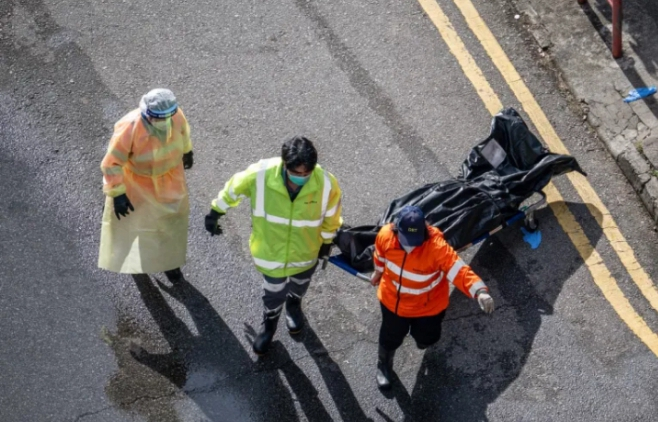
The National Guard shooting in Washington, DC, which triggered these actions, claimed the life of Specialist Sarah Beckstrom and left Staff Sergeant Andrew Wolfe fighting for his life. Authorities describe the attack as terrorism, intensifying concerns about security and vetting failures.
“This tragedy underscores why we must examine every aspect of our immigration system,” Edlow said. “We cannot allow dangerous individuals to slip through the cracks, regardless of past programs or political promises.”
While the suspension targets broad populations, Trump’s administration has emphasized that lawful permanent residents and current US citizens are unaffected. However, federal agencies are being instructed to review past approvals for compliance with new security standards.
The administration’s approach reflects Trump’s “America First” ideology, prioritizing national security and economic interests over global humanitarian commitments. Observers note that the policy could reshape US refugee and immigration programs for years to come.
In addition to Afghan nationals, applicants from Haiti, Iran, Myanmar, Venezuela, and Yemen are facing heightened scrutiny. Citizenship and Immigration Services officials have indicated that the review will include both criminal background checks and assessments of potential public burden, reflecting the president’s stated priorities.
The policy has already prompted urgent guidance to consulates and immigration offices worldwide, instructing staff to halt approvals from the targeted countries pending review. “This is an unprecedented step,” said a senior immigration official. “We are prioritizing security above all else.”
Trump’s announcement has ignited debate across the political spectrum. Proponents cite national security risks, while critics emphasize potential diplomatic fallout and harm to individuals fleeing conflict. “We must balance safety with humanity,” said Representative Hakeem Jeffries. “A blanket ban is not the solution.”
The administration also signaled a focus on vetting future applicants through more rigorous background checks, including biometric data verification and detailed interviews. Officials have not disclosed timelines for completing these reviews, though Edlow assured Congress that “security will not be compromised for speed.”
As the US navigates these unprecedented restrictions, the government warns that immigration processing will slow considerably. Those seeking green cards or refugee status from affected countries may experience months-long delays, while authorities conduct thorough security evaluations.

Trump concluded his statement emphasizing that the US is “a nation built on shared values and commitment to our people.” He pledged that future immigration policies will continue to prioritize security, economic contribution, and alignment with American culture.
About The Author