

Hurricane Melissa intensified into a powerful Category 4 storm on Sunday, sending waves of panic and emergency alerts across the Caribbean as Jamaica braced for severe devastation.
Authorities in Kingston, the Jamaican capital, ordered mass evacuations from flood-prone and coastal areas as the storm’s outer bands began lashing the island with torrential rain and rising winds.
Meteorologists warned that Hurricane Melissa could strengthen further to Category 5 status, with winds exceeding 157 miles per hour, marking it among the most dangerous storms of the 2025 Atlantic season.
The hurricane’s slow westward crawl across the Caribbean Sea has heightened fears of catastrophic flooding, landslides, and widespread infrastructure collapse throughout the region.
Officials reported that both international airports in Jamaica were closed, while nearly 900 emergency shelters were activated nationwide to accommodate evacuees from high-risk zones.
Prime Minister Andrew Holness urged citizens to act swiftly, emphasizing that Jamaica had never been more vulnerable to the threat of prolonged rainfall and hurricane-force winds.
“Lives are at risk, and I appeal to everyone to take the warnings seriously,” Holness said during a national broadcast. “This is a moment for unity and caution.”
As Hurricane Melissa churned just 125 miles south of Kingston, sustained winds of 145 miles per hour battered the coast, toppling trees and flooding low-lying neighborhoods.
Authorities described the situation as “rapidly deteriorating,” noting that the storm’s slow pace would extend rainfall for several days, saturating already fragile soils and triggering flash floods.
Experts from the National Hurricane Centre projected rainfall totals reaching up to 30 inches in Jamaica and southern Hispaniola, with some areas facing as much as 40 inches.
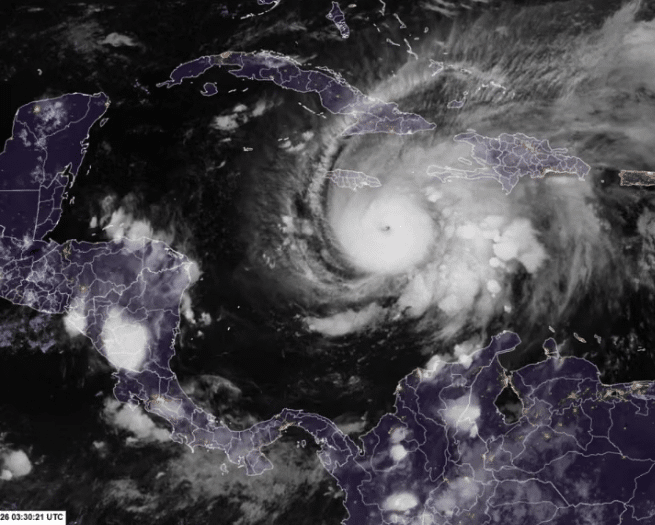
The expected deluge poses a grave threat to communities in Haiti and the Dominican Republic, where weakened infrastructure and poor drainage could amplify the storm’s destructive impact.
Emergency teams across the region raced to fortify coastal defences, while local governments issued evacuation orders for thousands living near rivers and unstable hillsides.
Desmond McKenzie, Jamaica’s Minister of Local Government, cautioned that Kingston’s flat terrain made it particularly susceptible to severe flooding and storm surges.
“Kingston is extremely low,” McKenzie said. “No community here is immune. Many of these communities will not survive the flooding if residents don’t evacuate.”
Despite repeated warnings, several residents in Port Royal, one of Jamaica’s most exposed fishing villages, refused to leave, citing mistrust of public shelters.
Ann Marie Chamberlain, a 51-year-old shopkeeper, said she intended to remain at home with her family, convinced they had adequately prepared for Hurricane Melissa’s arrival.
“We’ve tied down the roofs and secured everything,” she said. “We’ve seen storms before, and we believe we can ride this one out with faith and caution.”
Others shared her sentiment, recalling negative past experiences in public shelters, where overcrowding and theft had left many residents unwilling to return.
Community leaders acknowledged the dilemma, stressing that while preparation was essential, personal safety must take priority over property or comfort during a hurricane emergency.
In Port Royal, rows of small boats were pulled ashore and anchored to concrete posts as fishermen braced for the storm surge expected to engulf the coastline.
By Sunday evening, power outages had begun in several parts of the island, with emergency crews struggling to restore downed transmission lines amid dangerous winds.
Meteorologists described Hurricane Melissa as “a worst-case scenario” because of its combination of intense strength and sluggish movement across warm Caribbean waters.
As the storm edges closer to Jamaica, it continues to absorb heat from the sea, fueling rapid intensification that could push it into Category 5 territory by Monday.
Experts warned that if Melissa maintains its slow track, rainfall totals could reach unprecedented levels, cutting off communities and destroying transportation routes for days.
Jamaica’s disaster management agency confirmed that hundreds of families were relocated from flood-prone parishes including St Catherine, Clarendon, and Kingston.
Volunteers distributed emergency food kits, flashlights, and first aid supplies to residents gathered at designated shelters as strong winds began battering the island’s southern coast.
Across the region, governments in Cuba, Haiti, and the Dominican Republic were also on high alert, issuing storm watches and preparing for Melissa’s potential path northward.
In Haiti, local officials reported that the storm had already destroyed bridges, flooded rivers, and killed at least three people in northern communities over the weekend.
Authorities said one person was confirmed dead in the Dominican Republic, where heavy rains washed away roads and left more than half a million residents without clean water.
The Dominican emergency agency noted that nearly 200 homes were damaged and several towns remained isolated after landslides blocked access roads and communication lines.
In Cuba, officials announced hurricane watches for the eastern provinces of Granma, Santiago de Cuba, Guantánamo, and Holguin, where rainfall could reach 12 inches.
Residents were advised to stockpile food and water, reinforce windows, and prepare for power outages as Hurricane Melissa moved slowly toward the island’s southern coast.
The Cuban civil defence authority also suspended classes and public transportation in vulnerable areas, warning that flooding could disrupt essential services for several days.
Meanwhile, meteorologists in the Bahamas predicted that the storm could bring tropical storm or hurricane conditions to the southeastern islands by late Wednesday.
The Bahamas Department of Meteorology said residents of the Turks and Caicos Islands should also prepare for heavy rainfall and gusts exceeding 80 miles per hour.
Jamie Rhome, deputy director of the US-based hurricane monitoring centre, described the outlook as “increasingly dire” for nations along the storm’s projected path.
“Unfortunately, this system will continue to move very slowly for up to four days,” Rhome said. “That means prolonged rainfall, flooding, and severe wind damage.”
As night fell across Jamaica, emergency sirens echoed through Kingston, Port Royal, and other vulnerable parishes, signaling residents to remain indoors or head to shelters.
Authorities urged caution against venturing outdoors, warning that flying debris and downed power lines posed lethal risks even before the storm’s eye made landfall.
The Office of Disaster Preparedness activated rapid-response teams to monitor critical infrastructure, including hospitals, water plants, and telecommunications towers.
Engineers worked to secure bridges and drainage channels across major highways, anticipating severe overflow from swollen rivers as Hurricane Melissa approached.
Despite widespread fear, many Jamaicans expressed a mixture of resilience and faith, recalling previous storms that tested the island’s preparedness and community spirit.
Local businesses shuttered stores, while gas stations saw long queues as motorists rushed to refuel vehicles before anticipated shortages and curfews took effect.

Supermarkets reported a surge in demand for bottled water, canned goods, and batteries, with some stores running out of essential supplies within hours.
Regional disaster agencies warned that once Hurricane Melissa makes full landfall, access to remote areas may become impossible due to blocked roads and collapsed bridges.
In neighboring Haiti, aid groups prepared for the likelihood of new displacements, noting that many residents still live in makeshift shelters from previous natural disasters.
“We are dealing with overlapping crises,” said Ronald Délice, a civil protection official. “The storm’s path and intensity make evacuation extremely complicated.”
The United Nations’ Caribbean office said it was closely monitoring developments and coordinating potential post-storm relief operations for affected countries.
In the Dominican Republic, military personnel were deployed to assist with evacuations and distribute emergency supplies to communities cut off by rising floodwaters.
As Hurricane Melissa continues its destructive course, regional leaders have emphasized cooperation, promising to share resources and provide mutual support where needed.
Experts attribute the storm’s rapid intensification to warmer ocean temperatures, a trend increasingly linked to climate change and its impact on tropical cyclone behavior.
Meteorologists said the 2025 hurricane season has already been one of the most active in recent history, with Hurricane Melissa marking the 13th named storm so far.
The US National Oceanic and Atmospheric Administration had earlier forecast between 13 and 18 named storms this year, citing elevated sea surface temperatures.
Scientists warn that extreme weather patterns such as Hurricane Melissa could become more frequent, longer-lasting, and harder to predict as global temperatures rise.
For now, the Caribbean braces for the storm’s full fury, with forecasters cautioning that even after Melissa passes, recovery could take months, if not longer.
As emergency crews work through the night, Jamaica’s residents cling to hope that preparation and unity will see them safely through this latest climate ordeal.
Hurricane Melissa remains a symbol of both the region’s vulnerability and its resilience — a powerful reminder of nature’s force and humanity’s enduring will to survive.


