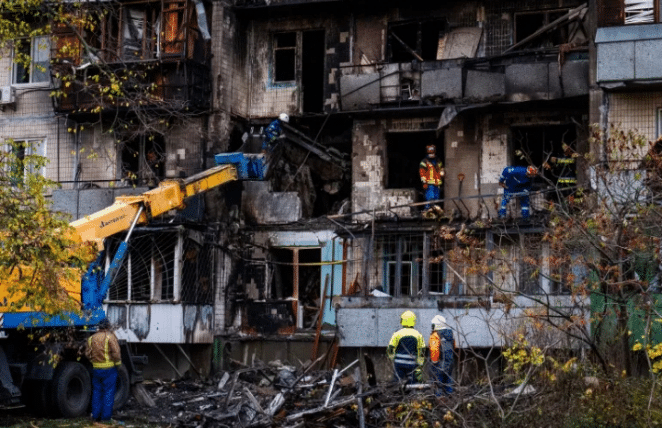
Hurricane Melissa has intensified swiftly into a destructive storm, threatening widespread devastation as torrential rain and powerful winds sweep across the northern Caribbean, battering communities already weakened by earlier tempests.
Authorities in Jamaica are issuing emergency alerts as Hurricane Melissa edges closer to landfall, bringing fears of catastrophic flooding and landslides that could cripple essential infrastructure and communication networks.
Forecasters have classified Hurricane Melissa as a dangerous Category 3 hurricane, warning that it may strengthen further as it barrels toward Jamaica’s southern coast with terrifying, unrelenting force.
Prime Minister Andrew Holness addressed the nation late Saturday, urging citizens to take Hurricane Melissa seriously and to seek shelter before worsening conditions make evacuation impossible in vulnerable areas.
“I urge Jamaicans to take this weather threat seriously,” Holness said. “Protect your families, secure your homes, and follow official instructions without delay for everyone’s safety.”
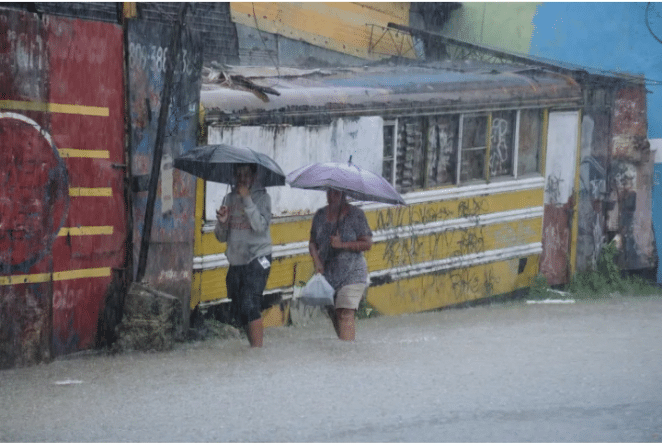
Meteorologists from the United States National Hurricane Center confirmed Hurricane Melissa had maximum sustained winds exceeding 185 kilometers per hour, leaving a trail of early destruction in its turbulent path.
Satellite data showed the storm churning roughly 200 kilometers south of Kingston, Jamaica, while expanding rapidly as moisture-heavy cloud bands intensified across the Caribbean, signalling stronger rainfall accumulation and gustier squalls.
Emergency shelters across Jamaica have been activated, with more than 650 designated centers open as part of precautionary measures to protect families from worsening Jamaica flooding and fierce wind impacts.
Authorities also announced the closure of Kingston’s Norman Manley International Airport, emphasizing that safety remains the top priority until Hurricane Melissa weakens and conditions stabilize sufficiently for air operations.
Supermarkets and gas stations experienced surges of panic buying as residents scrambled to gather food, water, and batteries, fearing prolonged power outages once the Category 3 hurricane makes landfall.
Weather experts projected up to seventy-six centimeters of rain could fall across Jamaica and Hispaniola, triggering major Jamaica flooding and dangerous mudslides in areas already saturated from earlier storms.
In southern Haiti, communities are bracing for severe weather conditions as Hurricane Melissa moves closer, increasing the risk of deadly Haiti landslides in mountainous regions prone to erosion and deforestation.
Local civil protection officers in Haiti reported rivers overflowing their banks, submerging farmlands and homes, with residents evacuating on foot toward makeshift shelters as heavy rain continued through Saturday evening.
“The storm is causing a lot of concern,” said Ronald Delice, a Haitian civil protection director. “We are trying to distribute food and assist families forced from their homes.”
Hurricane Melissa has already killed at least three people in Haiti and one in the Dominican Republic, where rescue workers continue searching for several missing persons swept away by floodwaters.
In the Dominican Republic’s capital, Santo Domingo, rising water levels submerged major roads and toppled trees, adding to widespread Caribbean storm damage that is stretching regional emergency resources thin.
Hundreds of homes have been damaged across the Dominican Republic, with power outages reported in more than two dozen communities, leaving over half a million people without access to clean water.
Jamaica’s disaster management office said warehouses across the island are fully stocked with relief items and thousands of food packages ready for distribution once Hurricane Melissa passes through.
However, authorities warned that Jamaica flooding could isolate several parishes, especially in Clarendon and St. Elizabeth, where bridges and roads have historically collapsed during severe hurricanes in past Atlantic seasons.
Cuban meteorologists have also issued hurricane watches for eastern provinces including Granma, Guantanamo, and Santiago de Cuba, predicting strong winds and coastal surges as Hurricane Melissa continues its slow advance northwest.
The Bahamas Department of Meteorology said the storm could affect the Turks and Caicos Islands and parts of the southeastern Bahamas, where emergency crews are preparing evacuation centers preemptively.
Meteorologist Jamie Rhome of the U.S. National Hurricane Center said, “Unfortunately, for those along the path of this system, conditions will deteriorate for several days as it moves slowly.”
Hurricane Melissa’s slow progression is compounding the threat, allowing rainfall totals to mount dangerously, amplifying the likelihood of Haiti landslides and further Caribbean storm damage through prolonged flooding.
In Sainte-Suzanne, northern Haiti, authorities reported a major bridge collapse due to riverbank breaches, cutting off access to nearby villages and complicating ongoing relief operations amid torrential rain.
Residents of Jamaica’s coastal towns have described terrifying scenes as rising tides pound beaches and palm trees bend violently, while emergency sirens echo through streets warning of approaching danger.
“We’ve boarded up the house and are praying it holds,” said Maureen Clarke, a resident of Kingston’s Harbour View district, speaking as Hurricane Melissa’s outer bands unleashed blinding sheets of rain.
Caribbean disaster agencies have been working jointly to coordinate responses, with supply flights positioned in Trinidad and Puerto Rico to assist quickly once Hurricane Melissa’s winds begin to weaken.
Reports from early Sunday suggest significant Caribbean storm damage to power lines, fishing boats, and farm areas, especially along Jamaica’s southern coast, where banana plantations have been completely destroyed.
Humanitarian organizations, including the Red Cross, are mobilizing volunteers to assist with emergency response, distributing water, blankets, and hygiene kits to families displaced by Jamaica flooding and coastal surges.
The World Food Programme said contingency supplies are ready in Panama, awaiting clearance to ship food aid to Haiti, which remains vulnerable to Haiti landslides and chronic infrastructure collapse.
Experts warn that deforestation in Haiti’s mountainous regions increases disaster risk, as heavy rains from the hurricane loosen topsoil, causing entire slopes to collapse into populated valleys below.
Local officials in Port-au-Prince said emergency response teams are working around the clock, though access to some flooded districts remains limited as heavy rainfall continues to worsen conditions.
Schools and businesses across Jamaica and Haiti have been ordered closed until further notice, while residents are urged to avoid non-essential travel due to the unpredictable strength of Hurricane.
The slow-moving storm has intensified humanitarian challenges across the Caribbean, where economic constraints and fragile infrastructure make large-scale evacuations and post-storm recovery efforts significantly more difficult.
International aid agencies have begun contingency planning, anticipating significant Caribbean storm damage that could strain recovery budgets for small island economies already battling inflation and rebuilding debts.
By midweek, forecasters expect Hurricane Melissa to approach Cuba, maintaining strong Category 3 hurricane intensity before potentially shifting northeast toward the Bahamas and Florida’s southern tip.
Residents across the region remain anxious as the powerful winds and unrelenting rain continue, reinforcing Melissa’s reputation as one of the most dangerous storms of the Atlantic season.
Experts noted that this marks the thirteenth named system in this year’s hurricane season, reflecting an active and volatile pattern influenced by unusually warm Atlantic sea surface temperatures.
As night falls, radio stations in Jamaica and Haiti broadcast emergency information nonstop, reminding citizens to conserve power, avoid flooded areas, and keep emergency kits within reach.
Meanwhile, social media users across the Caribbean are sharing real-time videos of flooded roads, shattered homes, and lightning illuminating storm clouds as Hurricane Melissa rages through the night.
Many Jamaicans fear the coming hours will be decisive, as forecasters warn of possible storm surges reaching three meters high in coastal zones already suffering Jamaica flooding.
For Haiti, the looming concern is worsening Haiti landslides that could isolate mountainous communities and hinder rescue operations for days, trapping hundreds without communication or medical assistance.
In Port-au-Prince, emergency shelters are overcrowded, with families sleeping on concrete floors as officials struggle to maintain supplies amid torrential rainfall unleashed by the relentless Hurricane.
The Caribbean faces another grim reminder that climate extremes are intensifying, with successive systems leaving communities less resilient to recurring Caribbean storm damage each season.

Experts believe the current trajectory of the Hurricane underscores the urgent need for stronger regional coordination and investment in flood-resistant housing, early-warning systems, and climate adaptation projects.
By Sunday night, the National Hurricane Center reaffirmed warnings of life-threatening flooding, with Melissa expected to dump historic rainfall levels across Jamaica and southern Haiti through Monday morning.
Rescue teams remain on high alert as communications falter in rural areas. Hurricane Melissa’s slow passage guarantees further hardship before any relief can reach the worst-affected zones.
The Caribbean region watches nervously as Hurricane Melissa continues its destructive crawl, testing resilience, patience, and unity amid one of the fiercest storms of the 2025 Atlantic hurricane season.
About The Author