

The Hormuz Blockade Crisis has escalated into a critical April 2026 global emergency, where fears of an oil shock, military confrontation, and widening geopolitical alignment are converging into one of the most dangerous moments in recent international relations.
With nearly a fifth of the world’s oil supply flowing through a single vulnerable chokepoint, even limited disruption is now capable of triggering global inflation, energy shortages, and severe economic instability.
As tensions between the United States and Iran intensify, and diplomatic coordination between Russia and China becomes more visible, the crisis is no longer regional—it is evolving into a test of global stability, where a single miscalculation could push the world closer to a broader conflict.
A Strategic Chokepoint Under Extreme Pressure
The Strait of Hormuz remains one of the most important and fragile energy corridors in the world, connecting the Persian Gulf to global markets and carrying roughly 20 percent of global oil supply.
Rising military pressure and uncertainty have already disrupted shipping confidence, with commercial vessels increasingly avoiding the area due to fears of interception, escalation, and unpredictable security conditions.
This has created immediate ripple effects across global energy markets, with insurance premiums rising and traders bracing for volatility in oil supply chains.
Iran’s Escalation Strategy and Strategic Pressure
A growing geopolitical interpretation suggests Iran may be using the crisis not only as a defensive measure but as a deliberate escalation strategy aimed at shifting global pressure dynamics.
By intensifying tensions in the Strait of Hormuz conflict, Tehran could be attempting to create a situation where economic pressure and strategic vulnerability force rival powers into more direct involvement.
This approach risks transforming a regional confrontation into a broader international crisis, where neutrality becomes increasingly difficult for major global actors.
Lavrov’s Beijing Visit and Strategic Signalling
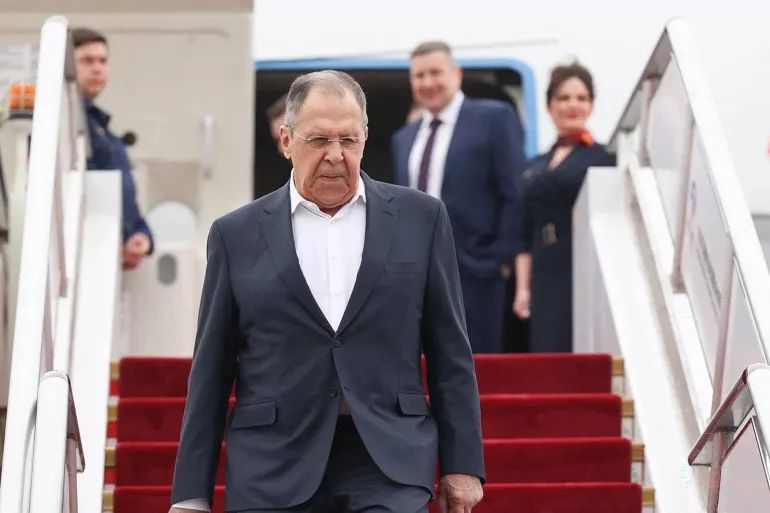
The arrival of Russia’s Foreign Minister Sergey Lavrov in China reflects heightened strategic concern among major powers as the crisis deepens.
While publicly framed as diplomatic engagement, the timing suggests urgent discussions around energy security, regional stability, and the growing risk of uncontrolled escalation.
It highlights how quickly the crisis is drawing in global actors beyond the immediate conflict zone, increasing the complexity of any potential resolution.
Russia–China Alignment and Emerging Global Blocs
The evolving coordination between Russia and China signals a shifting geopolitical landscape where energy security and strategic containment are becoming central priorities.
Both nations face significant exposure to instability in Middle Eastern energy routes, creating incentives for closer cooperation in response to Western pressure.
However, this alignment also raises the risk of hardened global blocs, where diplomatic flexibility is reduced and tensions become more entrenched over time.
Oil Shock Risk and Global Economic Strain
The global oil disruption caused by the crisis is already creating significant uncertainty in energy markets.
With approximately 20 percent of global oil supply passing through the Strait of Hormuz, even partial disruption has the potential to trigger:
- sharp oil price increases
- global inflationary pressure
- currency instability in energy-importing nations
- supply chain delays across multiple sectors
These pressures are particularly severe for developing economies and highly import-dependent regions, where fuel costs directly affect food prices and transport systems.
Human Impact of a Deepening Crisis
Beyond geopolitical strategy, the economic consequences of the crisis are increasingly affecting ordinary populations.
Rising fuel prices, transport disruptions, and inflationary pressure are compounding existing economic vulnerabilities, particularly in regions already facing cost-of-living challenges.
What begins as a geopolitical confrontation is quickly translating into widespread economic strain with long-term social consequences.
US–Iran Tensions Near a Critical Threshold
The escalation in US–Iran tensions has reached a stage where miscalculation or unintended escalation could rapidly expand the conflict beyond its current scope.
Read also:Canada election results: Mark Carney wins historic majority government with 172 seats in shock outcome as Trump tensions reshape North America
Military positioning, political pressure, and failed diplomatic engagement have narrowed available off-ramps, increasing the likelihood of rapid escalation in the event of a trigger incident.
Even limited confrontation in or around the Strait of Hormuz could quickly escalate into a broader regional or international crisis.
A Calculated Push Toward Wider Involvement
A growing analytical concern is that Iran may be attempting to raise the cost of neutrality for global powers by escalating pressure in a critical energy corridor.
By leveraging geographic advantage and control over a strategic chokepoint, Tehran may be seeking to force external actors into a position where disengagement is no longer viable.
If this trajectory continues, the crisis could evolve into a multi-power confrontation with far-reaching consequences for global security architecture.
A Defining April 2026 Turning Point
The Hormuz Blockade Crisis now stands at a decisive crossroads in April 2026, where the balance between containment and escalation is increasingly fragile.
The coming days and weeks will determine whether diplomatic pressure can stabilise the situation or whether the crisis continues its trajectory toward deeper global involvement.
The world remains on edge as one of the most sensitive energy corridors faces unprecedented strain, and the margin for error narrows dangerously.