

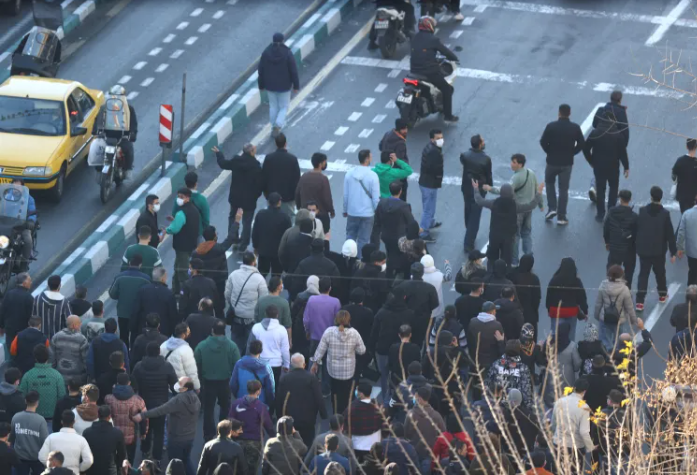
US–Iran tensions– Tensions between the United States and Iran have escalated after US President Donald Trump warned that Washington could intervene if Iranian authorities continue to use deadly force against protesters demonstrating over rising living costs.
Protests erupted across several Iranian cities following sharp increases in prices and prolonged economic hardship.
Clashes between demonstrators and security forces on Thursday resulted in at least six deaths, marking the first reported fatalities since the unrest widened.
The protests initially gathered momentum in Tehran, where shopkeepers closed their businesses in protest against inflation, currency weakness, and economic stagnation.
Similar actions and demonstrations later spread to other regions of the country.
In a message posted on his Truth Social platform, Trump said the United States would not remain silent if peaceful protesters were violently suppressed.
He warned that the US was fully prepared to act should further killings occur.
Iran’s Supreme National Security Council secretary, Ali Larijani, dismissed Trump’s remarks, cautioning that any American interference would trigger widespread instability across the Middle East and seriously undermine US interests in the region.
Larijani said Iranian authorities differentiate between merchants expressing legitimate economic concerns and what he described as violent or destructive actors.
He accused Trump of provoking confrontation and advised Americans to focus on the safety of their own troops deployed abroad.
His comments appeared to reference the extensive US military presence in the region. In June, Iran launched an attack on the Al Udeid airbase in Qatar after US strikes on Iranian nuclear facilities during Israel’s 12-day conflict with Iran.
Iran’s Fars news agency reported that two people were killed in clashes in the city of Lordegan in Chaharmahal and Bakhtiari province, while three others died in Azna, in neighbouring Lorestan province.
State television also confirmed that a member of Iran’s security forces was killed overnight during unrest in the western city of Kuhdasht. Authorities said dozens of arrests have been made across multiple cities.
Reporting from Tehran, Al Jazeera correspondent Tohid Asadi said Iran’s prolonged economic difficulties are placing intense pressure on the population.
He explained that while the protests began sporadically, they gradually spread into smaller cities, reflecting deepening public dissatisfaction.
He added that most confrontations between protesters and security forces have taken place outside major urban centres.
Iran’s economy has remained under strain since the United States reinstated sanctions in 2018, after Trump withdrew from the international nuclear agreement during his first term in office.
That deal had been negotiated under former US President Barack Obama following years of talks involving Iran and Western powers.
The current demonstrations represent the most significant unrest since 2022, when nationwide protests followed the death of Mahsa Amini while in police custody for allegedly violating Iran’s mandatory dress code for women.
Those protests lasted for months and resulted in hundreds of deaths, including dozens of members of Iran’s security forces.
Analysts say the renewed unrest highlights the depth of Iran’s economic crisis, driven by a weak currency, high inflation, and limited access to global markets.
Many Iranians have seen their purchasing power sharply eroded, with basic goods becoming increasingly unaffordable, particularly for small business owners and low-income households.
Read also: CIA tells Trump: Ukraine did not target Putin in deadly drone strikes
Regional observers also warn that the sharp exchange of rhetoric between Washington and Tehran could further complicate already fragile diplomatic channels.
Any escalation, they say, risks drawing in regional allies and increasing military tensions in an area where US forces and Iranian-backed groups operate in close proximity.
Despite official assurances from Iranian authorities that order will be restored, the spread of protests beyond major cities suggests public frustration may persist.
How the government responds in the coming days — both economically and politically — is expected to determine whether the unrest subsides or develops into a broader national challenge.