

The “Iran Hormuz chokehold” is tightening as US intelligence assessments warn Tehran is unlikely to reopen the strategic waterway soon, maintaining leverage over Washington amid escalating conflict dynamics.
Recent intelligence indicates Iran views the Strait of Hormuz as its strongest geopolitical bargaining tool, using maritime restrictions to influence global oil markets and pressure policymakers seeking rapid de-escalation options.
The ongoing crisis reflects a calculated strategy where Tehran leverages geography and energy dependency, amplifying uncertainty across global supply chains already strained by prolonged military confrontation and fragile diplomatic engagement.
According to multiple sources, the chokepoint remains central to Iran’s deterrence posture, reinforcing its ability to disrupt approximately one-fifth of global oil shipments passing through the narrow maritime corridor daily.
This development complicates US military planning, as reopening the passage would likely require significant naval deployment, risking escalation into a broader regional conflict with unpredictable economic and security consequences.
President Donald Trump has publicly downplayed the difficulty of reopening the strait, suggesting American forces could swiftly restore operations while simultaneously benefiting from increased oil access and revenues.
However, defense analysts caution that any forced intervention could provoke asymmetric retaliation, including missile strikes, naval mines, and proxy engagements across the Gulf region and beyond.
The strategic importance of the Strait of Hormuz cannot be overstated, serving as a critical artery connecting major oil producers in the Middle East to global energy markets across Asia, Europe, and North America.
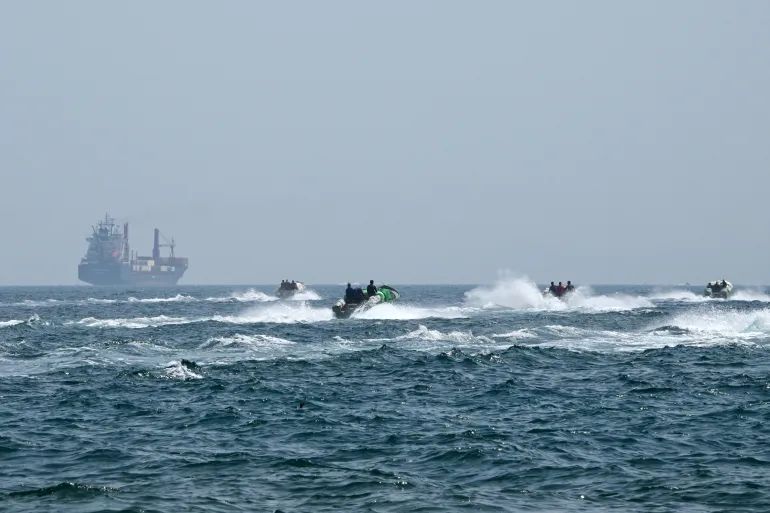
Iran’s ability to disrupt shipping traffic highlights its evolving military capabilities, including fast-attack boats, anti-ship missiles, and drone surveillance systems designed to challenge superior naval forces effectively.
Experts argue that even partial disruptions can significantly impact global oil prices, creating volatility that reverberates through inflation, transportation costs, and broader economic stability worldwide.
The current standoff underscores the limitations of conventional military superiority when confronted with geographic chokepoints that favor defensive strategies and localized dominance by regional powers.
Tehran’s posture also reflects lessons learned from previous confrontations, where indirect pressure tactics proved more sustainable and politically advantageous than direct large-scale military engagements.
By maintaining pressure without fully closing the strait, Iran balances escalation and restraint, ensuring continued leverage while avoiding actions that could trigger overwhelming international retaliation.
This calculated ambiguity complicates diplomatic efforts, as uncertainty over Tehran’s intentions makes it difficult for global powers to coordinate a unified and effective response strategy.
Energy markets remain highly sensitive to developments in the region, with traders closely monitoring shipping patterns, military movements, and official statements for signals of potential escalation or de-escalation.
The prolonged disruption has already contributed to rising insurance costs for tankers, further increasing the financial burden on global oil transportation and ultimately affecting consumer prices worldwide.
Shipping companies have begun rerouting vessels or delaying transit, creating logistical bottlenecks that extend beyond energy markets into broader trade networks reliant on timely maritime operations.
The situation places additional pressure on US allies in the region, particularly Gulf states whose economies depend heavily on uninterrupted oil exports through the vulnerable waterway.
Diplomatic channels remain active but strained, as negotiations struggle to gain traction amid ongoing hostilities and deep mistrust between the involved parties.
Analysts suggest that any sustainable resolution will require addressing broader security concerns, including regional power balances and long-standing geopolitical rivalries that extend beyond the current conflict.
The “Iran Hormuz chokehold” also serves as a reminder of the interconnectedness of global energy systems, where localized disruptions can have far-reaching consequences across continents.
Military planners face difficult choices, weighing the risks of direct intervention against the economic and strategic costs of allowing continued disruption in such a vital maritime corridor.
Some experts advocate for a multilateral approach involving international naval coalitions to ensure safe passage, though coordinating such efforts presents significant political and logistical challenges.
Others argue that increased domestic energy production and diversification of supply routes could reduce long-term vulnerability to chokepoint disruptions like those seen in the Strait of Hormuz.
The crisis has reignited debates over energy security, strategic reserves, and the need for accelerated transitions toward alternative energy sources less susceptible to geopolitical shocks.
Despite these discussions, the immediate reality remains one of heightened tension, with no clear timeline for resolution as both sides continue to assess their strategic options.
The intelligence findings suggest that Iran is unlikely to relinquish its leverage voluntarily, particularly while the ongoing conflict continues to shape its security calculations and diplomatic posture.
This raises concerns about a prolonged period of instability, where periodic disruptions become a persistent feature of the global energy landscape rather than a temporary crisis.
The potential for miscalculation remains high, as increased military presence and heightened alert levels raise the risk of unintended confrontations escalating into wider conflict.
Observers note that even minor incidents in such a tense environment could trigger significant responses, underscoring the fragility of the current situation.
Ultimately, the trajectory of the crisis will depend on a complex interplay of military strategy, economic pressures, and diplomatic engagement among multiple global and regional actors.
For now, the “Iran Hormuz chokehold” continues to define the strategic landscape, shaping decisions in capitals and markets alike as the world watches developments with growing concern.
Read also: Astronauts advance deep Space journey as “Artemis II mission” speeds toward historic Moon flyby
The coming weeks are likely to prove निर्णтивe in determining whether tensions escalate further or whether diplomatic efforts can find a pathway toward de-escalation and stability.
In either scenario, the lessons from this standoff will have lasting implications for global energy security and the management of critical maritime chokepoints.
The situation underscores the enduring importance of strategic geography in modern conflict, where control over key transit routes can rival traditional military strength in shaping outcomes.