Higher taxes on the super-rich dominate calls from nearly 400 millionaires and billionaires demanding urgent reform, arguing extreme wealth now corrodes democracy, markets, and social cohesion worldwide.
The coordinated appeal was timed to coincide with the World Economic Forum in Davos, where political and business elites debate global risks amid widening inequality.
Signatories from 24 countries argue that unchecked fortunes allow a small elite to accumulate disproportionate political influence, weakening democratic accountability and public trust.
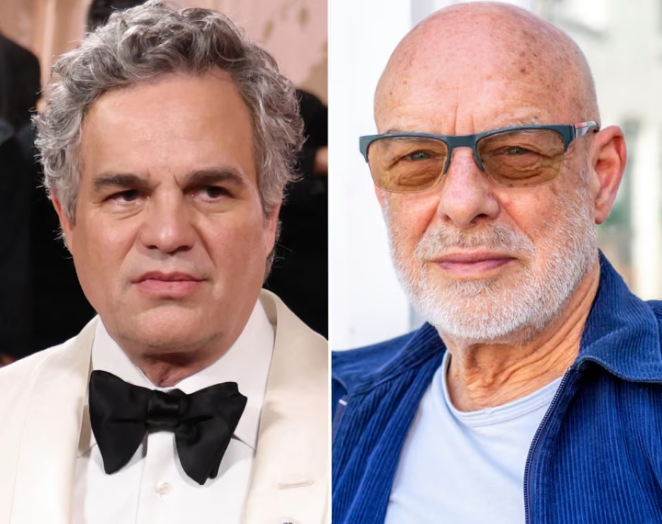
Among the prominent figures endorsing the letter are actor and filmmaker Mark Ruffalo, musician Brian Eno, and philanthropist Abigail Disney, all longtime critics of extreme inequality.
They argue wealth concentration is no longer an abstract moral concern but a systemic threat shaping policy, elections, media ownership, and the future of public institutions.
The letter warns that democratic systems are increasingly distorted by oligarchic power, where money amplifies voices of the wealthy while marginalising ordinary citizens globally.
According to the signatories, this imbalance accelerates social exclusion, deepens poverty, and undermines collective efforts to address climate change and economic instability.
The appeal describes extreme wealth as “polluting politics”, asserting that democratic choice becomes hollow when financial power dominates political outcomes.
It claims that public goods, from healthcare to education, are eroded as tax systems fail to capture a fair contribution from those most able to pay.
The signatories insist the crisis is not inevitable, arguing political will, rather than economic constraint, has enabled inequality to spiral unchecked.
They cite decades of policy choices favouring capital over labour, deregulation, and weak enforcement of progressive taxation frameworks.
By urging higher taxes on the super-rich, the group says governments can restore fairness while funding essential services and rebuilding social contracts.
The letter paints a stark picture of societies nearing a breaking point, where resentment grows as wealth gaps widen without credible reform.
It states that when even wealthy individuals recognise the dangers of excess accumulation, denial by policymakers becomes indefensible.
Polling data cited alongside the letter reinforces the concern, showing strong support among affluent respondents for higher taxation of extreme wealth.
A survey of nearly 4,000 millionaires across G20 countries found most believe the ultra-wealthy buy political influence at alarming levels.
More than three-quarters of respondents agreed that extreme wealth threatens democratic processes and fair governance across major economies.
Two-thirds supported higher taxes on the richest individuals to fund public services, infrastructure, and social investment programs.
Only a small minority opposed increased taxation, undermining arguments that wealth holders universally resist fiscal reform.
The findings challenge assumptions that economic elites reject redistribution, highlighting divisions within wealthy communities themselves.
The debate is sharpened by recent political developments, particularly in the United States, where wealth and power increasingly intersect.
Forbes estimates that the current US administration includes the richest cabinet in American history, intensifying scrutiny of elite influence.
Critics argue such concentration risks policy capture, where decisions serve private interests rather than broader public welfare.
The survey also found widespread concern that recent political leadership has destabilised global economic cooperation.
Respondents cited trade tensions, tariff threats, and nationalist economic policies as factors heightening global uncertainty.
The call for reform comes amid new data from Oxfam highlighting unprecedented growth in billionaire wealth worldwide.
Oxfam reports the global number of billionaires surpassed 3,000 for the first time, driven by soaring asset values.
The charity says the richest one percent now own more wealth than the rest of humanity’s public assets combined.
Its executive director described the trend as an indictment of global economic governance and moral priorities.
Oxfam argues governments have given the super-rich “free rein” while underinvesting in public goods and social protection.
The organisation insists progressive taxation is essential to reversing inequality and preventing democratic erosion.
Campaigners stress that higher taxes on the super-rich are not punitive but corrective, restoring balance within economic systems.
They argue wealth creation relies on public infrastructure, educated workforces, and stable institutions funded by taxpayers.
Without fair taxation, they warn, societies risk sliding into entrenched oligarchy and political instability.
The letter urges leaders meeting in Davos to move beyond rhetoric toward concrete legislative action.
Proposals include wealth taxes, stronger inheritance taxes, and international coordination to close avoidance loopholes.
Signatories say global cooperation is essential to prevent capital flight and regulatory arbitrage by the ultra-wealthy.
They frame the issue as a defining challenge of the era, comparable to climate change in scale and urgency.
Failure to act, they argue, will deepen cynicism, polarisation, and distrust in democratic governance worldwide.
As debates unfold in Davos, the intervention reframes inequality as a crisis acknowledged even by those who benefit from wealth.
The authors conclude that societies still have a choice between reform and rupture, but time for meaningful action is rapidly running out.
About The Author