

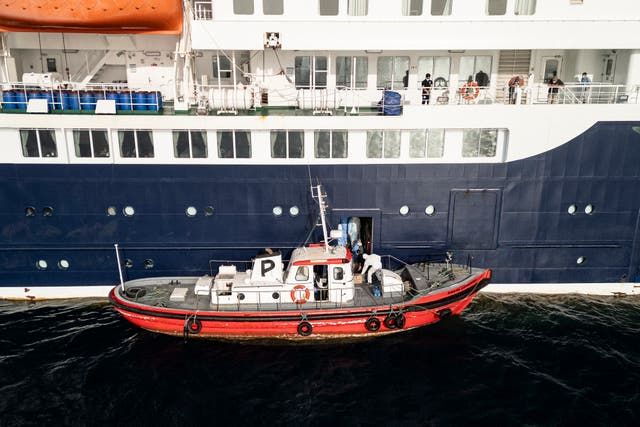
Hantavirus Cruise Ship Outbreak: Cases Rise to 8 as Patients Evacuated
The hantavirus cruise ship outbreak aboard the MV Hondius has escalated, with eight suspected cases now identified, according to the World Health Organization (WHO).
Three patients have been medically evacuated to Europe for treatment, according to the Dutch foreign ministry, as concerns grow over the potential spread of the virus among passengers.
“The overall global risk remains low,” the WHO said, adding that investigations into the source and transmission of the outbreak are ongoing.

Evacuations and Cross-Border Cases Raise Concerns
Officials confirmed that evacuated patients are being transferred to specialist facilities in the Netherlands.
Meanwhile, according to South Africa’s health ministry, two passengers tested in South Africa were found to have the Andes strain of hantavirus, a rare variant known to allow human-to-human transmission.
Swiss authorities also confirmed that one case is being treated in Zurich, underscoring the international scope of the outbreak.
Despite these developments, global health officials continue to stress that the broader public health risk remains limited.
Tenerife Docking Dispute Intensifies
The outbreak has triggered a standoff in the Canary Islands, where regional president Fernando Clavijo previously blocked the ship from docking in Tenerife.
Clavijo said there was not “sufficient information” available to guarantee public safety, reflecting concerns among local authorities.
However, the ship’s operator has since requested permission to dock at Santa Cruz, raising fresh questions about whether the vessel will be allowed to enter port.
Life On Board as Passengers Await Decisions
Passengers on the MV Hondius have described a situation marked by uncertainty but relative calm.
“Our days have been close to normal, just waiting for authorities to find a solution,” passenger Qasem Elhato told the Associated Press.
Another passenger, Helene Goessaert, said: “You don’t embark on a trip with the idea that one of your fellow passengers won’t make it.”
She added that passengers were receiving regular updates, describing the situation as “a waiting game.”
Possible Spread Beyond the Ship Under Investigation
Authorities are also investigating a suspected case in France involving an individual not on board the vessel.
According to local media reports, the case was identified through contact tracing linked to passengers, though officials have not yet confirmed whether it is directly connected to the outbreak.
Testing is ongoing to determine whether the infection involves the Andes strain.
Understanding the Virus and Treatment Challenges
Medical experts say hantavirus infections can initially resemble flu-like illnesses before developing into more severe respiratory conditions.
Dr Charlotte Hammer, an infectious disease epidemiologist, warned that “hantavirus pulmonary syndrome can be very severe with a case fatality rate of up to 40 per cent.”
Experts say treatment is “mainly supportive,” as there is currently no specific antiviral therapy available.
They also caution that the incubation period can range from one to eight weeks, meaning additional cases could still emerge.
Global Travel Implications and Final Analysis
The hantavirus cruise ship outbreak highlights the risks of infectious disease transmission in confined international travel settings such as cruise ships, which have historically been vulnerable to outbreaks due to close-contact environments.
Read also: Elon Musk Mars colonization trial: $80 billion claim, OpenAI power struggle, and IPO stakes
While the WHO continues to assess the global risk as low, the emergence of cross-border cases and ongoing docking disputes underscore the need for coordinated international response.
How authorities handle the situation—particularly decisions around docking, quarantine, and passenger movement—could influence future health protocols across the global cruise industry.
About The Author
