
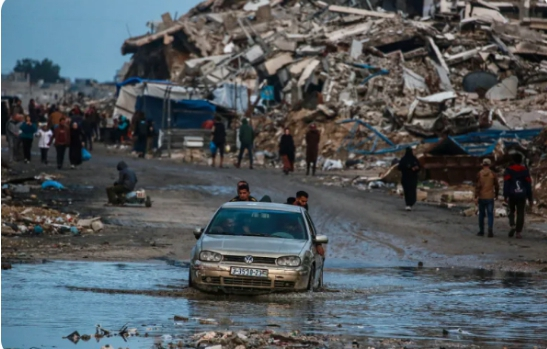
Palestinians in Gaza face worsening humanitarian conditions as Storm Byron batters the already devastated enclave. Torrential rains have caused severe flooding, leaving families stranded in fragile tents.

The Abu Marhil displacement camp in Gaza City has become a symbol of the crisis. Families are struggling to protect themselves and their belongings from rapidly rising water levels.
Arafat al-Ghandour, 39, and his wife, Nour, share a small tent measuring less than 86 square feet with 15 relatives, including elderly parents and young children. Water poured in overnight.
“All night I was plugging holes with rags and plastic bags,” Arafat said. The couple had no choice but to stay awake and manage the flooding as it worsened.
Overcrowding, inadequate shelter, and limited sanitation in Gaza’s displacement camps exacerbate health risks. Children, the elderly, and pregnant women are particularly vulnerable to disease and hypothermia during extreme weather events.
The United Nations warns that hundreds of thousands of displaced people lack proper shelter. Without immediate intervention, the combination of cold, damp conditions and flooding could be deadly.
Since October 2023, Israel’s military campaign has killed over 70,000 Palestinians and wounded more than 170,000. Thousands more remain homeless, living in tents that cannot withstand harsh winter storms.
In Khan Younis, southern Gaza, a nine-month-old girl tragically died due to exposure to the cold. Medical sources cited extreme temperatures, wet shelters, and malnutrition as contributing factors.
Israeli restrictions on aid exacerbate the humanitarian disaster. Essential supplies like tents, shelter poles, and equipment to repair water and sewage systems are blocked under “dual-use” claims.
Ceasefire agreements established obligations for the entry of humanitarian aid, yet reports indicate many shipments remain delayed. Families continue to endure inadequate shelter and limited food, water, and medicine.
International representatives visiting Gaza crossings claimed aid deliveries are sufficient. However, thousands of families still report shortages of food, clean water, blankets, and medical supplies.
Children and the elderly face the brunt of exposure to the cold and flooded conditions. Respiratory infections, hypothermia, and other health risks are increasing with each day of the storm.
Storm Byron has damaged roads, schools, and hospitals, leaving infrastructure unable to support emergency responses. Flooded streets make transport difficult, further delaying urgent medical care and evacuation efforts.
Families in Deir el-Balah and Zawaida wade through floodwaters to reach schools and hospitals. Vehicles are often unusable, forcing residents to navigate dangerous conditions on foot.
Local volunteers and aid groups are working tirelessly to relocate families to higher ground and distribute blankets, food, and sandbags. The scale of the storm overwhelms available resources.
Christmas celebrations in Gaza have slowly resumed after a two-year hiatus. Churches hosting community events offer a fragile sense of hope amid destruction and flooding.
Iceland and other countries have protested Israel’s role in the ongoing conflict, boycotting cultural events and highlighting international awareness of the humanitarian crisis in Gaza.
Human rights organizations continue to document military violations and restrictions on essential aid. Reports of shootings and ceasefire violations have left civilians exposed to further danger.
Storm Byron has highlighted the extreme vulnerability of Gaza’s civilian population. Families displaced by war now face additional risks from flooding, exposure, and overcrowding.
Residents express frustration at insufficient international responses. Families move soaked mattresses and blankets each night, attempting to survive amid worsening floodwaters and freezing temperatures.
Winter weather is expected to continue. UN agencies stress that immediate measures, including temporary shelters and unrestricted aid flow, are necessary to prevent further loss of life.
Displaced families confront a double crisis: ongoing war and life-threatening flooding. Exposure to cold, disease, and lack of shelter threaten thousands across Gaza, particularly infants and the elderly.
Aid agencies are calling for unrestricted access to Gaza. Even simple items like tent poles, paper, and pens are blocked under “dual-use” restrictions, preventing shelter maintenance and educational activities.
Reconstruction in Gaza faces long-term challenges. Storm Byron damages already fragile infrastructure, delaying rebuilding efforts for homes, schools, and water networks critical to survival.
In central Gaza, floodwaters cover streets and tents, forcing children to play in unsafe, muddy conditions. Adults attempt to shield infants and elderly relatives from exposure and disease.
Local volunteers continue makeshift interventions, moving tents to higher ground and creating drainage channels. These efforts provide limited relief but cannot replace proper shelter and emergency aid.
Weather experts warn that winter storms may continue. Rainfall intensity and wind gusts are predicted to worsen, potentially affecting more displacement camps and adding urgency to humanitarian interventions.
Emergency medical teams report growing numbers of respiratory infections, hypothermia, and waterborne illnesses in flooded camps. Immediate healthcare provision is essential to prevent further casualties and long-term complications.
Storm Byron’s impact on education is severe. Schools in flooded areas have closed or relocated, disrupting learning for thousands of children already traumatized by years of conflict and displacement.
Water and sanitation networks destroyed during the conflict are overwhelmed by heavy rainfall. Contaminated water increases the risk of disease outbreaks, especially in overcrowded and unsanitary displacement camps.
Psychological trauma is compounded by the storm. Families already suffering from war-related losses are experiencing stress, anxiety, and helplessness as they confront flooding and freezing conditions.
International organizations are urging governments to lift restrictions on aid and deliver emergency shelter, food, medicine, and hygiene supplies. Delays are directly contributing to unnecessary suffering and preventable deaths.
The global community faces mounting pressure to respond. Failure to provide rapid humanitarian aid risks prolonging the suffering of displaced populations and increasing mortality during winter storms.
Residents describe the flooding as a daily nightmare. Some have lost all belongings, including clothing, bedding, and food, leaving them entirely dependent on emergency aid and volunteers.
Storm Byron underscores the urgent need for international coordination. Emergency measures, including tent distribution, temporary shelters, and medical services, are critical to saving lives in Gaza during the winter season.
Flooded camps expose children to unsafe conditions. Stagnant water, mud, and debris increase the risk of accidents and infection, while families struggle to maintain basic hygiene and nutrition.
Local NGOs and volunteers are stretched thin. Even basic relief efforts, such as transporting sandbags and providing emergency blankets, cannot fully address the scale of the crisis created by flooding.
Gaza’s fragile civilian population remains vulnerable. Storm Byron demonstrates that without immediate and sustained international aid, the combination of conflict and natural disaster could become catastrophic.
Efforts to provide assistance face bureaucratic and logistical challenges. Blocked crossings, limited transportation, and damaged infrastructure hamper the ability of aid organizations to reach those most in need.
The humanitarian disaster has reached alarming levels. Hundreds of thousands of displaced families, especially children, face life-threatening conditions. Relief operations must be prioritized to prevent further tragedy.
Storm Byron also threatens economic stability. Flooding destroys small shops, crops, and livelihoods, leaving residents with fewer resources to recover once the storm passes.
Health professionals warn of long-term consequences. Malnutrition, untreated illnesses, and exposure-related injuries could have lasting effects on children and vulnerable adults in flooded camps.
The crisis is compounded by ongoing political tensions. Ceasefire violations, restricted aid, and continued military activity exacerbate the difficulties of survival during extreme winter storms in Gaza.
Read more: Storm Byron puts hundreds of thousands in Gaza at extreme risk as flooding worsens
International humanitarian organizations are calling for urgent interventions. Temporary shelters, medical support, clean water, and food supplies are essential to reduce deaths and alleviate suffering caused by flooding.
Storm Byron demonstrates how climate events can exacerbate conflict-related vulnerabilities. Flooding and extreme weather create urgent humanitarian needs for populations already suffering from war, displacement, and inadequate infrastructure.
Families trapped in flooded camps rely on local volunteers and makeshift solutions. Despite their efforts, many remain exposed to dangerous conditions, highlighting the necessity of international support and immediate intervention.
Residents express frustration with slow international response. “We are left to suffer in tents while water pours in,” one man said, describing the daily struggle to protect children and elderly relatives.
About the Author




