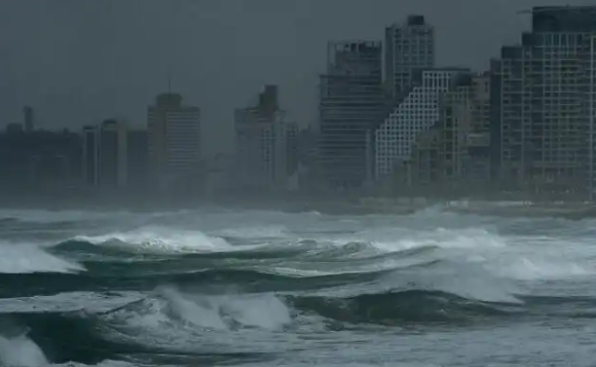
Storm Byron’s arrival has intensified Gaza’s humanitarian emergency, flooding vast displacement zones and threatening already vulnerable families struggling with collapsing shelters, contaminated water sources and critical shortages of lifesaving supplies.
Heavy rainfall swept through southern camps overnight, flattening lightweight tents and creating hazardous pools that forced children, elderly residents and exhausted parents to flee through dangerous, waist-deep floodwaters.
Aid workers describe widespread panic as shelters buckled under relentless rain, leaving communities without dry clothing, secure bedding or safe spaces to protect infants from chilling winter temperatures.
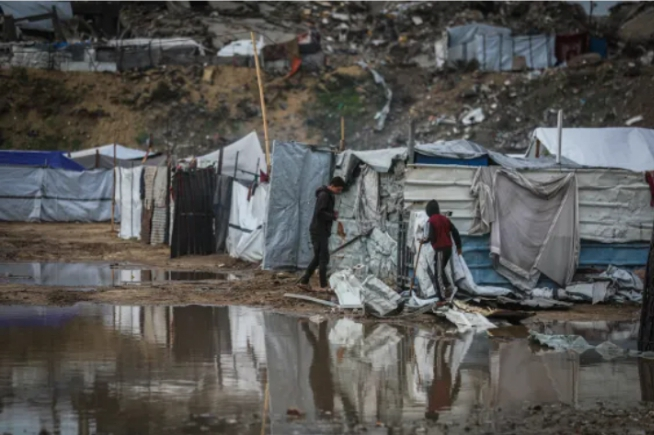
Humanitarian corridors remain heavily restricted, meaning essential winterisation materials never reached Gaza before the storm, leaving thousands exposed to fierce winds and rising groundwater around overcrowded camps.
Medical teams warn increasing cases of respiratory illness and waterborne infections could escalate rapidly, especially as clinics operate without electricity, adequate medicine or proper sanitation following days of uninterrupted flooding.
Contaminated floodwater mixed with sewage has created significant health hazards, prompting fears of cholera outbreaks across shelters already weakened by repeated displacement, food scarcity and long-term infrastructure collapse.
Storm Byron’s powerful surge has also unsettled debris fields, exposing unexploded ordnance buried within collapsed neighborhoods, increasing risks for civilians navigating unsafe routes between isolated aid points.
Families describe traumatic scenes of tents filling instantly with muddy water, forcing them to carry children on improvised rafts made from plastic panels, broken crates or salvaged insulation boards.
Many residents have moved multiple times seeking higher ground, but continuous rainfall has submerged paths leading to relative safety, trapping vulnerable groups in sinking, unstable encampments.
With fuel supplies almost nonexistent, displaced families cannot heat water, dry soaked clothing or warm their shelters, increasing hypothermia risks for newborns and elderly individuals facing harsh overnight temperatures.
Electricity blackouts across major population centers limit communication, leaving communities unable to receive updated weather warnings or coordinate volunteer-led evacuations through rapidly deteriorating flood zones.
Roads used for aid distribution have collapsed or turned into impassable trenches, preventing trucks from reaching shelters where families urgently require food, blankets, tarps and medical support.
Drone footage from rescue teams shows expansive water coverage across camps, with tents visibly tilting, tearing or drifting, emphasizing the severe instability of current shelter arrangements.
Aid organizations say Gaza’s drainage networks were already destroyed, meaning rainfall accumulates quickly, transforming sandy surfaces into thick mud that immobilizes vehicles and slows emergency movement.
Families attempt to dig makeshift trenches around tents, but shifting water levels and continuous rainfall make such efforts ineffective, leaving shelters vulnerable to repeated inundation.
Psychological distress is mounting as parents struggle to calm frightened children who cannot sleep through roaring winds, collapsing tent poles and constant fear of further flooding.
Humanitarian coordinators warn that more rain forecasted this week could deepen the crisis, overwhelming temporary medical points already reporting increased admissions for exposure-related complications.
Women caring for infants report significant shortages of dry formula, diapers and clean water, forcing families to ration supplies dangerously during the storm’s harshest conditions.
Rafah and Khan Younis remain critically congested, reducing safe evacuation routes and limiting mobility for emergency teams attempting to reach isolated families trapped by the deepening floods.
Volunteers navigating camps describe sinking repeatedly into mud while transporting medicines by foot, placing both patients and responders at heightened physical risk during ongoing rainfall.
Communities with destroyed homes lack stable structures for shelter, forcing many to gather in overcrowded tents where exposure to cold and disease becomes significantly more dangerous.
Local clinics operating in makeshift shelters report that medical staff are exhausted, often working without protective equipment, heating or stable lighting as conditions worsen throughout the enclave.
International agencies caution that the full extent of flood damage may not be visible yet, with many areas inaccessible and communication networks severely disrupted by recurring blackouts.
With essential aid stalled and winter intensifying, humanitarian leaders insist that expanded relief access is urgently required to prevent further deterioration of health, mobility and survival conditions.
Storm Byron has intensified vulnerabilities across Gaza, exposing structural collapse, widening contamination, worsening displacement and undermining all remaining coping mechanisms for civilians enduring relentless hardship.
Despite continuous appeals, relief authorities stress that any improvement is impossible without immediate access guarantees allowing large-scale distribution of shelter materials, fuel and essential medical supplies.
As rainfall persists, humanitarian observers warn Gaza’s winter emergency may escalate further, leaving hundreds of thousands at extreme risk without rapid intervention from the international community.