

The Gaza ceasefire has reached a decisive turning point as the Hamas disarmament vision increasingly dominates negotiations, shaping discussions on security, governance, humanitarian access, and long-term regional stability.
International mediators describe the current period as one of heightened urgency, emphasising that progress hinges on resolving the disarmament debate without derailing the fragile truce that has mostly held.
Hamas leaders continue presenting their security blueprint, asserting that any sustainable path forward must incorporate guarantees protecting Palestinians and preventing renewed conflict following years of devastating military operations.
Their stance reflects wider Palestinian fears that disarmament without protective structures would leave them exposed, particularly as Gaza reels from destruction, displacement, and ongoing violations committed during the ceasefire.
Khaled Meshaal has become the most outspoken advocate for the Hamas disarmament vision, insisting that the group is open to compromise but unwilling to accept unilateral vulnerability.
He argues that discussions must ensure weapons are safeguarded responsibly, stored with oversight, and never used or displayed in ways that undermine collective stability or provoke further escalation.
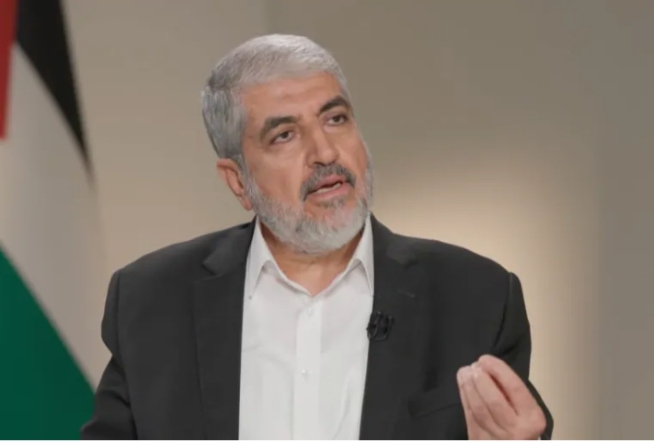
Meshaal stresses that disarmament cannot resemble surrender, explaining that removing armed capabilities without meaningful political concessions risks stripping the group of its foundational purpose and deterrence capacity.
His remarks highlight Hamas’s internal challenge: balancing public expectations, negotiating leverage, and regional pressure while attempting to secure concessions that could reshape Gaza’s political and security environment.
Negotiators familiar with the process note that the disarmament debate remains the most sensitive component of phase two, overshadowing progress made in prisoner exchanges and temporary humanitarian arrangements.
Israel’s insistence on complete disarmament remains a core sticking point, with officials continuing to describe this demand as an essential war objective necessary for preserving long-term national security.
Hamas counters that Israeli violations during the ceasefire illustrate the danger of disarming prematurely, pointing to repeated strikes, limited aid access, and the continued occupation of large northern areas.
These violations, Palestinians argue, undermine claims that Israeli security requires disarmament, instead demonstrating that external guarantees and international monitoring are necessary before relinquishing armed capabilities in Gaza.
As a result, discussions increasingly revolve around mechanisms that could verify compliance, prevent aggression, and create a balanced framework satisfying both Israeli security concerns and Palestinian safety needs.
Meshaal suggests the Hamas disarmament vision could be implemented gradually through internationally supervised arrangements, ensuring no power vacuum emerges and no actor exploits transitional instability.
He also expresses confidence that international actors, particularly the United States, can influence Israeli adherence to agreements, preventing unilateral actions that would jeopardise a delicate peace process.
American negotiators are reportedly assessing Hamas’s proposals, recognising that an inflexible position on disarmament could risk repeating earlier ceasefire breakdowns and prolonging humanitarian suffering.
The United States sees the current moment as an opportunity to stabilise Gaza and curtail broader regional escalations, although significant disagreements persist within the administration about the best approach.
Meanwhile, regional powers such as Qatar, Egypt, and Turkiye have continued facilitating communication, believing a carefully structured transition is crucial to preventing renewed warfare across the coastal strip.
Turkiye, in particular, has promoted a phased strategy, arguing that disarmament cannot occur immediately and must follow clear steps ensuring that political structures and humanitarian needs are properly addressed.
Ankara’s officials have reiterated their willingness to participate in an international stabilisation force, proposing a role that would support withdrawal processes and reduce tension between competing regional interests.
Israel firmly rejects Turkiye’s involvement, citing previous political clashes, but some mediators argue Ankara could play a constructive role given its established communication channels with Palestinian factions.
Hamas has signalled cautious openness to a stabilisation presence, referencing international forces that operate in Lebanon and elsewhere, provided such missions respect Palestinian autonomy and prevent renewed Israeli incursions.
Meshaal underlines that peacekeepers must not function as a tool of external domination, warning that any arrangement appearing to impose guardianship would provoke public anger and undermine legitimacy.
He insists that Gaza must ultimately be governed by Palestinians, with technocrats or agreed administrative teams managing essential services while broader political questions undergo long-term negotiation.
Talks in Egypt have sought to bring together diverse Palestinian groups to form a unified governance framework, though progress has been slowed by disagreements and what negotiators describe as Israeli obstruction.
These internal Palestinian discussions aim to create a structure that can oversee reconstruction, manage aid flows, and communicate consistently with international partners during the evolving truce period.
Such governance planning reflects widespread calls for unified leadership, particularly as Gaza faces catastrophic displacement, damaged infrastructure, and ongoing storms that have devastated improvised shelters across the territory.
With hundreds of thousands living in flooded tents, humanitarian workers repeatedly emphasise that political breakthroughs must translate into immediate improvements in shelter, access, and medical capacity.
The truce’s credibility depends heavily on humanitarian conditions, and many fear failure to alleviate suffering could fuel instability, weaken negotiations, and empower factions opposed to compromise.
Despite these challenges, diplomats remain cautiously optimistic, observing that both sides recognise the risks of another collapse and appear more willing to engage with structured proposals than earlier months.
The Hamas disarmament vision, once dismissed outright by foreign governments, is now being examined more seriously as negotiators seek pragmatic approaches that avoid repeating earlier failed agreements.
Even within Israel, some analysts argue the military cannot achieve unconditional disarmament without risking prolonged occupation, suggesting political negotiation may yield more durable security outcomes.
However, hard-line Israeli leaders continue framing disarmament as non-negotiable, asserting that any compromise undermines national resilience and contradicts objectives set at the beginning of the conflict.
Their position complicates US mediation efforts, especially given the administration’s desire to stabilise the region before further internal political turbulence impacts diplomatic decision-making.
Palestinian officials warn that rigid Israeli demands ignore the reality that Hamas retains substantial influence and cannot realistically be excluded from any long-term arrangement governing Gaza.
This reality forces negotiators to examine hybrid solutions blending phased de-escalation, internationally monitored storage of weapons, and transitional governance mechanisms capable of managing complex security shifts.
Civil society groups across Gaza emphasise that whatever arrangement emerges must ensure accountability, prevent abuses, and uphold Palestinian political agency after years of isolation and siege.
Many argue that focusing solely on weapons overlooks the deeper issues, including occupation, displacement, economic collapse, and a desperate need for reconstruction commitments from global partners.
Humanitarian organisations meanwhile highlight the pressing need for consistent aid access, warning that sporadic Israeli authorisations undermine the ceasefire’s humanitarian goals and delay life-saving assistance.
International agencies stress that safeguarding civilians must remain the central priority, urging both sides to maintain discipline, reduce rhetoric, and support agreements that protect vulnerable communities.
These appeals have gained new urgency as storms continue destroying shelters, spreading illness, and worsening winter conditions for families surviving in overcrowded camps with almost no infrastructure.
Read Also: Hamas leader rejects disarmament but vows to curb Gaza attacks on Israel
Amid this devastation, Palestinian leaders argue that political paralysis is untenable, insisting that the humanitarian catastrophe strengthens the case for a credible process addressing security and reconstruction together.
The Hamas disarmament vision thus becomes part of a broader debate about the future of Gaza, encompassing governance, sovereignty, justice, and the viability of future peace frameworks.
Analysts describe this moment as a potential turning point: either negotiations consolidate into a path toward stability, or unresolved disagreements trigger another collapse with catastrophic consequences.
As the second phase of the ceasefire approaches, stakeholders weigh these risks carefully, knowing the outcome will profoundly shape Gaza’s trajectory and influence regional geopolitical dynamics.
While uncertainties persist, mediators continue urging all parties to remain committed, arguing that the fragile progress achieved must not be squandered by hasty decisions or inflexible demands.
With continued dialogue, humanitarian pressure, and international monitoring, negotiators hope to shape a framework addressing core concerns and positioning Gaza for a future free from relentless cycles of destruction.
Whether the Hamas disarmament vision becomes the foundation of this journey depends on compromise, trust-building, and the political courage required to navigate one of the region’s most complex conflicts.
About The Author


