Eight months old baby died due to cold exposure in flooded tent in Khan Younis, drawing renewed global attention to the worsening humanitarian crisis affecting displaced families enduring severe winter storms.
Medics reported that the infant, Rahaf Abu Jazar, succumbed to freezing conditions after heavy rainfall inundated her family’s fragile shelter, drenching bedding and filling the tent with dangerously cold water overnight.
Her mother, Hejar Abu Jazar, recounted feeding her daughter before sleeping, unaware that intense rainfall would sweep through their shelter and expose the baby to lethal cold for hours.
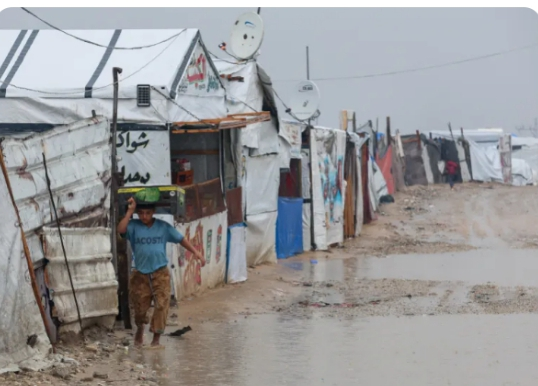
By morning, the family awoke to find water pooled beneath them, cold winds penetrating torn tent coverings, and Rahaf unresponsive despite frantic efforts to revive and warm her.
The mother’s cries echoed throughout the camp as she lamented the sudden loss, describing how nothing had been wrong with the baby hours earlier before the storm struck violently.
Neighbours rushed to assist after hearing her screams, attempting to clear water from the tent and offering blankets, yet the child’s condition had already deteriorated beyond recovery.
Medical teams confirmed that hypothermia caused the tragedy, explaining that prolonged exposure to wet surfaces and cold drafts can overwhelm an infant’s body temperature regulation within minutes.
The storm that night was one of the strongest this season, unleashing relentless rainfall that flooded low-lying tented areas across Khan Younis, affecting thousands of displaced civilians simultaneously.
Residents described hearing rushing water outside before it forced its way into shelters, lifting flimsy coverings, collapsing makeshift walls, and destroying essential belongings accumulated through months of displacement.
Humanitarian workers reported entire rows of tents submerged under rising water, with families struggling to elevate mattresses, protect infants, and salvage dry clothing as freezing winds intensified.
Gaza’s Civil Defence stated that more than 2,500 emergency calls were made during the storm, overwhelming responders who lacked equipment, fuel, and reliable access routes through flooded pathways.
Emergency crews indicated that they attempted to reach stranded families but were slowed by strong currents, fallen debris, and widespread power outages that left camps completely dark.
The loss of Rahaf has become a symbol of this deepening humanitarian catastrophe, demonstrating how vulnerable infants are when forced to sleep in uninsulated, waterlogged shelters.
Doctors emphasised that infants face extreme risk during cold weather, especially in environments lacking heating, dry bedding, or structural protection against freezing rain and powerful winter winds.
Families across Khan Younis expressed fear that similar tragedies may occur again, with numerous shelters already weakened after repeated storms and still lacking essential winter materials.
Parents described staying awake through the night during storms, afraid their shelters might collapse or flood unexpectedly, leaving their children exposed to the dangerous cold.
Many families attempted to dig trenches around tents to redirect water, yet rapid rainfall quickly overran these small barriers, flooding living spaces and undermining ground stability beneath shelters.
Aid groups stressed that such improvised tactics provide only temporary relief and cannot protect vulnerable populations from large-scale flooding events that continue to intensify throughout the winter season.
They warned that worsening weather patterns would likely cause additional casualties unless immediate international support delivers waterproof shelter materials, thermal blankets, and safe heating solutions.
Winter flooding in Gaza’s tent camps has repeatedly destroyed humanitarian supplies, leaving displaced families with limited clothing, no insulation, and insufficient means to stay dry or warm.
The death of Rahaf occurred at a time when medical facilities are overwhelmed with cold-related illnesses, including respiratory infections, fever, and severe chills among infants and elderly residents.
Doctors explained that even a short period of exposure can trigger hypothermia in babies, especially when they are asleep and unable to respond to cold stress effectively.
Health workers across southern Gaza reported increased cases of pneumonia and other winter-related conditions, warning that overcrowded tents amplify health risks and enable rapid illness transmission.
Humanitarian experts highlight that conflict-driven displacement has left families dependent on fragile shelters incapable of withstanding seasonal rains, transforming routine weather events into life-threatening emergencies.
Satellite images confirm that many displacement areas in Khan Younis lie in low-elevation zones prone to flooding, creating persistent danger during heavy rainfall episodes.
Environmental specialists note that climate conditions in the region are becoming increasingly unpredictable, with storms arriving more intensely and frequently, magnifying suffering among displaced populations.
The fact that an eight months old baby died due to cold exposure in flooded tent in Khan Younis underscores the urgent need for reinforced shelter systems.
Community leaders have appealed for durable materials, including waterproof canvas, elevated flooring, insulated coverings, and heating equipment to prevent further deaths this winter.
Volunteers continue distributing limited supplies such as plastic sheets, donated clothing, and blankets, yet demand far surpasses availability, leaving many families exposed to harsh conditions.
Parents said they tried layering clothing for their children, but once soaked, these materials provided no insulation, instead accelerating heat loss and deepening cold exposure.
Weather-related tragedies have accelerated international calls for expanded humanitarian corridors, allowing winterisation supplies to enter the region before additional storms inflict more severe damage.
Aid coordinators insist that winter protection must become an immediate priority, stating that without proper intervention, infants will remain at highest risk during the next rounds of storms.
Neighbours grieving Rahaf’s loss described her as cheerful and healthy before the storm, emphasizing that her death resulted entirely from environmental exposure rather than underlying health conditions.
Mothers in nearby tents have since reported heightened anxiety, fearing that cold nights could claim more young lives as temperatures continue to drop sharply throughout December and January.
Psychological support teams note that trauma among displaced families is intensifying, especially for mothers enduring the sudden death of children in preventable conditions.
Social workers have documented rising distress among parents who feel helpless, unable to shield their children from freezing storms while lacking proper shelter materials or safe indoor spaces.
The circumstances under which the eight months old baby died due to cold exposure in flooded tent in Khan Younis represent a failure of protection on multiple levels.
Civil Defence teams continue assessing damage across camps, reporting destroyed tents, contaminated bedding, ruined food supplies, and widespread displacement caused by storm-induced flooding.
People who survived the storm described hours spent evacuating through high water, carrying children on their shoulders while attempting to preserve essential belongings and maintain footing on slippery terrain.
Many families have since relocated to slightly higher ground, though overcrowding in these areas poses new challenges, including sanitation issues and lack of privacy.
Local volunteers stated that the storm revealed urgent structural vulnerabilities, leaving no doubt that safe shelter must be prioritised before the next weather system approaches.
Humanitarian officials urge the international community to recognise that without substantial intervention, winter conditions will continue threatening displaced families’ survival and well-being across Gaza.

Rahaf’s death now stands as a heartbreaking reminder of the urgent need for adequate humanitarian support to ensure no more children face similar fatal conditions this winter.
Read also: Storm Byron intensifies humanitarian crisis in Gaza as floods worsen conditions
About The Author