Kaduna State Governor, Senator Uba Sani, has unveiled ambitious plans to reposition sports development in the state with the comprehensive remodeling of the historic Ahmadu Bello Stadium, a move widely seen as a major boost to Kaduna’s sporting future.
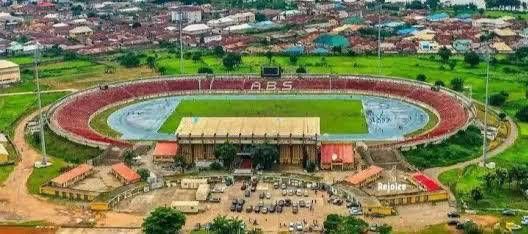
The Ahmadu Bello Stadium upgrade is expected to transform the ageing facility into a modern, FIFA-compliant sports complex capable of hosting international competitions and major national events.
Speaking during a courtesy visit by the leadership of the National Institute for Sports (NIS) at the Sir Kashim Ibrahim House, Governor Uba Sani described the project as both timely and strategic.
He explained that the stadium, which was constructed in 1965, no longer meets contemporary standards required for elite sports and large-scale events, making a complete overhaul unavoidable.
According to the Governor, the remodeling will increase the stadium’s seating capacity to 32,000, more than double its current size.
He added that when completed, the facility would become the second largest stadium in Nigeria, surpassed only by the National Stadium in Abuja.
For the state government, the Ahmadu Bello Stadium upgrade is not merely about bricks and seats but about restoring Kaduna’s reputation as a major sporting hub in the country.
Governor Uba Sani emphasized that sports infrastructure plays a critical role in youth engagement, talent discovery, and economic activity.
He noted that a world-class stadium would open new opportunities for international fixtures, athletics championships, and football tournaments, while also creating jobs and supporting small businesses around the venue.
The Governor used the occasion to commend the Director-General of the National Institute for Sports, Comrade Phillip Shuaibu, describing him as a seasoned administrator with a proven record.
He recalled that before Shuaibu assumed leadership, the Institute struggled with relevance and visibility, but has since experienced renewed momentum.
Reflecting on their shared political history, Governor Sani noted that both men were active in the struggle for the restoration of democracy in 1999, adding that Shuaibu’s performance as former Deputy Governor of Edo State further attests to his experience.
In his remarks, Comrade Shuaibu outlined the core mandate of the National Institute for Sports, which he said centers on building human capacity across Nigeria’s sports ecosystem.
This includes the training of coaches, referees, sports managers, and medical personnel who are essential for sustainable sports growth.
He stressed that infrastructure alone cannot drive progress without skilled professionals to manage and maintain the system.
The NIS Director-General explained that upon assuming office, he initiated a broad reform agenda aimed at repositioning the Institute for greater national impact.
One of the first steps, he said, was the constitution of a 32-member multidisciplinary team made up of experienced professionals from across the sports sector.
This team developed a 10-year strategic plan designed to align Nigeria’s sports manpower development with global best practices.
As part of this reform effort, the Institute also established six zonal offices across the country to improve coordination and decentralize operations.
According to Shuaibu, the North-West zonal office will be headquartered in Kaduna, a decision he said reflects the state’s growing importance in national sports planning.
Yola and Jos will host the North-East and North-Central offices respectively, while Benin City, Enugu, and Abeokuta will serve as headquarters for the South-South, South-East, and South-West zones.
He expressed gratitude to Governor Uba Sani for committing to provide a fully furnished office to ensure the smooth take-off of the North-West zonal office.
The gesture, he said, demonstrates Kaduna State’s readiness to partner with federal institutions in advancing sports education and administration.
Observers believe that the synergy between the Kaduna State Government and the National Institute for Sports could yield long-term benefits, particularly in talent development and professional training.
With the Ahmadu Bello Stadium upgrade underway, Kaduna is positioning itself not just as a host state for competitions, but as a center for sports excellence and innovation.
As Nigeria continues to seek stronger representation on the global sports stage, initiatives such as the Ahmadu Bello Stadium upgrade and the expansion of NIS operations highlight a growing recognition that sustainable sports development requires both modern facilities and skilled human resources.
For many sports enthusiasts in Kaduna and beyond, the project signals renewed hope that Nigeria’s rich sporting potential can finally be matched with world-class infrastructure.
Ireport247news