Global financial markets experienced a volatile start to February 2026 as investors grappled with the effects of AI-related sell-offs on Wall Street. Despite the turbulence, stocks mostly rebounded on Wednesday, while precious metals continued their recovery and oil prices climbed on renewed US-Iran tensions.
Analysts say these movements reflect both investor caution and opportunistic buying after days of sharp market swings.
AI-fuelled sell-off on Wall Street: Impact on global markets
The AI-fuelled sell-off on Wall Street triggered sharp declines in the technology sector, spreading uncertainty across Asia and Europe.
The latest scare came after AI startup Anthropic, the creator of the Claude chatbot, unveiled a new tool enabling businesses to automate legal work.
Market participants reacted cautiously, weighing the long-term impact on software, financial services, and asset management firms.
Compounding the nervousness, semiconductor giant Advanced Micro Devices reported softer-than-expected sales, intensifying the mood.
In Asia, tech-heavy indices experienced notable declines in Tokyo, Manila, and Mumbai, whereas Hong Kong, Shanghai, Sydney, Seoul, Singapore, Wellington, and Taipei posted gains, reflecting a mixed regional performance.
Neil Wilson of Saxo Markets explained: “Investors are cautiously testing the waters after significant clearing of leveraged speculative positions. While the AI-fuelled sell-off caused short-term panic, this correction may be setting the stage for renewed buying activity.”
Wall Street rebound and investor sentiment
The rebound on Wall Street despite AI-fuelled sell-off signals resilience in broader market indices. While tech stocks faced pressure, investors found confidence in sectors less exposed to AI-driven disruptions.
The Dow Jones Industrial Average closed slightly lower at 49,240.99 points, whereas other indices saw mild recoveries, suggesting a cautious but stabilizing market environment.
Precious metals also benefited from the risk-on sentiment. Gold rose to just above $5,070 per ounce, while silver traded around $89, recovering from two days of steep losses. Analysts attribute the rebound to dip-buying, as market participants perceived recent declines as an attractive entry point.
Oil prices rise amid US-Iran tensions
Energy markets followed geopolitical developments closely. Oil prices extended gains after a U.S. fighter jet downed an Iranian drone near an aircraft carrier in the Middle East.
The incident marked the second confrontation that day, following Iranian attempts to seize a U.S.-flagged tanker in the Strait of Hormuz. West Texas Intermediate (WTI) crude rose 0.9% to $63.79 per barrel, while Brent North Sea crude gained 0.8% to $67.88 per barrel.
Traders closely monitored ongoing diplomatic efforts, with U.S. envoy Steve Witkoff scheduled to engage Iranian officials later in the week. The market’s reaction illustrates how geopolitical risks remain a critical driver of oil price volatility.
Macro factors shaping market activity
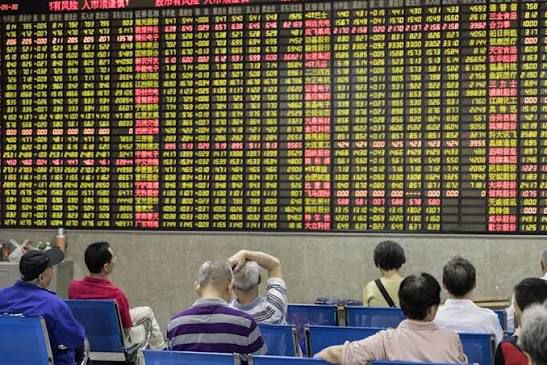
The AI-fuelled sell-off on Wall Street coincided with other macroeconomic factors influencing markets. A surge in the U.S. dollar, combined with uncertainty over a potential government shutdown, heightened volatility.
Trump’s appointment of Kevin Warsh, a former Federal Reserve governor, dampened expectations of immediate interest rate cuts, further affecting trading strategies.
Investors also reacted to U.S. government developments, including the passing of a congressional spending bill that temporarily funded federal agencies.
While this eased some immediate fiscal concerns, ongoing negotiations over immigration policy and Department for Homeland Security funding remain potential flashpoints for market sentiment.
Corporate news further influenced investor behavior. Nintendo reported disappointing quarterly earnings, causing its shares to plummet 11%, its largest decline in 18 months. The drop was attributed to supply chain disruptions, particularly memory chip shortages, raising concerns about profitability in the tech hardware sector.
In contrast, financial services and energy sectors demonstrated relative resilience, as investors sought safer assets amid uncertainty. Analysts noted that the AI-fuelled sell-off on Wall Street was largely concentrated in tech-heavy industries, while diversified portfolios weathered the correction more effectively.
Looking ahead: Volatility and opportunity
Market observers suggest that the current turbulence offers opportunities for strategic investors. The AI-fuelled sell-off on Wall Street has cleared speculative excesses, potentially creating a foundation for renewed growth.
“Those on the sidelines may see this as a chance to re-enter markets at attractive valuations,” said Wilson.
As geopolitical tensions, technological innovation, and macroeconomic shifts continue to intersect, investors will need to monitor developments closely.
The ability to navigate volatility while seizing opportunities will be key in the coming weeks, particularly in sectors impacted by AI and global energy dynamics.
About The Author