The United States has officially deployed a contingent of troops to Nigeria, marking the first direct U.S. military presence in the country following the controversial airstrikes on Islamic State targets on Christmas Day 2025.
The move reflects an intensifying partnership between Washington and Abuja in addressing rising terrorist threats across West Africa.
According to the U.S. Africa Command, the small team brings specialized capabilities to bolster Nigeria’s counterterrorism operations, particularly against insurgent groups such as Boko Haram and the Islamic State West Africa Province (ISWAP).
Although precise troop numbers and operational roles remain undisclosed, sources suggest the deployment will primarily focus on intelligence gathering, operational planning, and technical support to Nigerian forces.
US troop deployment to Nigeria: Strengthening counterterrorism efforts
The US troop deployment to Nigeria underscores Washington’s growing concern over the persistent threat posed by extremist networks in the region.
Since late November 2025, U.S. surveillance aircraft have been operating from neighbouring Ghana to provide real-time intelligence for Nigeria’s military operations.
The deployment formalizes a more permanent role on the ground, enabling faster response times and closer coordination with local security agencies.
General Dagvin R.M. Anderson, head of the U.S. Africa Command, emphasised the strategic importance of the collaboration: “Our partnership with Nigeria allows us to bring unique U.S. capabilities directly to operational planning and execution.
The small team on the ground ensures rapid intelligence sharing and strengthens joint counterterrorism operations.”
Impact on Nigeria’s security landscape
The arrival of U.S. troops is expected to enhance Nigeria’s capacity to tackle terrorist groups that have destabilized several regions in the country.
In recent years, Nigeria has faced criticism for gaps in its counterinsurgency approach, particularly regarding civilian protection in the northwest, an issue highlighted by President Donald Trump during December’s airstrikes.
While the Nigerian government rejected claims of selective targeting, it welcomed international support to strengthen its anti-terrorism initiatives.
Defence Minister Christopher Musa confirmed the presence of U.S. forces but declined to provide further operational details.
Nigerian military analysts, however, suggest that the deployment could improve intelligence-driven operations, reduce civilian casualties, and provide critical training for Nigerian personnel in modern counterterrorism tactics.
Bilateral cooperation and strategic partnerships
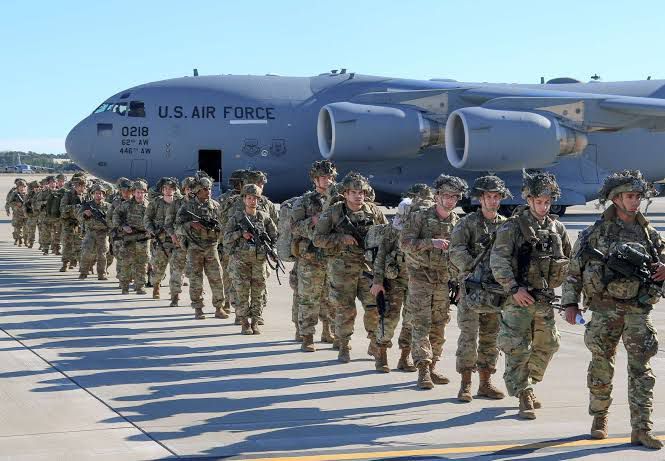
The US troop deployment to Nigeria is part of a broader agreement between the Federal Government and Washington aimed at deepening military and security cooperation.
This partnership has been evolving in response to escalating threats from ISWAP, Boko Haram, and other violent extremist groups in West Africa.
Beyond intelligence support, the U.S. presence may pave the way for collaborative exercises, logistical support, and enhanced crisis response coordination.
Experts argue that the deployment also signals a recalibration of U.S. engagement in Africa. By embedding personnel in strategic locations, Washington seeks to balance direct intervention with capacity-building measures, reducing the need for large-scale operations while maintaining influence over regional security dynamics.
Regional and international implication
The deployment carries significant regional implications. West African neighbours are closely monitoring U.S. involvement, considering its potential to influence security frameworks and multilateral cooperation.
Analysts note that sustained American presence could encourage more robust intelligence-sharing among countries in the Economic Community of West African States (ECOWAS), while also raising concerns about sovereignty and the optics of foreign troops operating on Nigerian soil.
Meanwhile, the deployment could affect U.S.-Nigeria relations beyond security, shaping diplomatic and economic engagements. A stronger military partnership may open avenues for additional development assistance, technology transfer, and investment in Nigeria’s defence infrastructure.
Despite the strategic advantages, the US troop deployment to Nigeria presents challenges. Domestic audiences in Nigeria may view foreign troops as infringing on sovereignty, while extremist groups could exploit the presence to intensify anti-American rhetoric.
Both governments must balance operational effectiveness with transparent communication to maintain public trust and regional legitimacy.
Observers stress that the long-term success of the deployment depends on clear objectives, joint planning, and adherence to international legal frameworks. The deployment, while limited in scale, reflects a significant shift in U.S. policy from remote surveillance to on-the-ground engagement in Africa.
Conclusion: A pivotal moment in counterterrorism
The arrival of U.S. troops in Nigeria marks a historic moment in bilateral security cooperation, highlighting the growing complexity of combating terrorism in West Africa.
The deployment not only enhances Nigeria’s operational capabilities but also demonstrates Washington’s commitment to strategic partnerships in regions of high geopolitical risk.
As the situation evolves, the effectiveness of this deployment will hinge on coordination, intelligence integration, and the ability to address both security threats and public perception challenges.