France’s Macron new government faces its first major test as it battles fierce parliamentary resistance and an imminent budget deadline that could define Emmanuel Macron’s troubled presidency.
President Macron unveiled the reshuffled cabinet led by Prime Minister Sebastien Lecornu, aiming to restore order before presenting the 2026 draft budget under mounting domestic and European pressure.
After days of political bargaining, Lecornu’s return marks Macron’s latest attempt to stabilize a government that has seen five prime ministers in less than three years.
The Macron new government must deliver the budget by Monday or risk breaching France’s constitutional and EU obligations, a challenge compounded by deep opposition within parliament.
Republican allies have refused to formally join the coalition, weakening Macron’s legislative grip and threatening another collapse if the budget fails to secure approval.
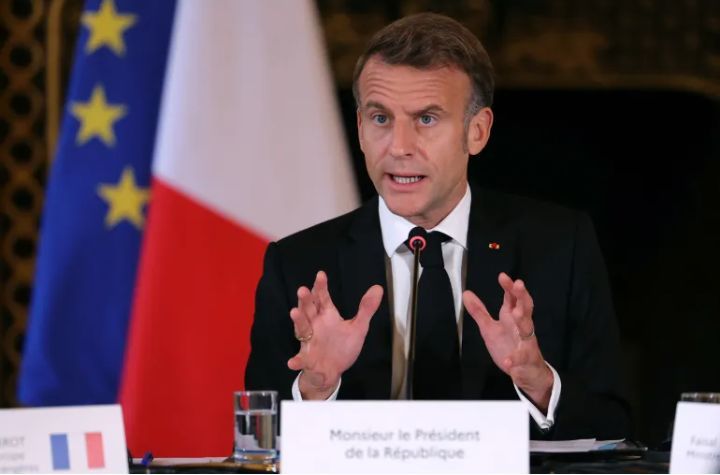
Public discontent over austerity, pension reforms, and rising living costs adds to the turbulence, leaving Macron’s new government under siege from both lawmakers and the French street.
France’s political stage has been reshuffled once again as President Emmanuel Macron unveiled a new government led by Prime Minister Sebastien Lecornu, days before the national budget deadline.
The announcement followed marathon consultations between Macron and Lecornu after the prime minister’s dramatic resignation last week, a move that underscored France’s deepening political instability and parliamentary gridlock.
Lecornu’s reinstatement reflects Macron’s determination to maintain control amid unprecedented divisions within his centrist alliance and a fragmented legislature resistant to austerity measures demanded by the European Union.
In the new government lineup, Jean-Noel Barrot retains the foreign ministry, while outgoing labour minister Catherine Vautrin takes over the defence portfolio, signaling continuity mixed with strategic reshuffling.
Roland Lescure, a trusted Macron loyalist, becomes economy minister, tasked with navigating France’s rising debt and fiscal constraints as the government rushes to present its 2026 draft budget.
Paris police chief Laurent Nunez replaces Bruno Retailleau as interior minister, marking a notable shift toward technocratic appointments after weeks of partisan friction and coalition-building setbacks.
Monique Barbut, formerly of the World Wide Fund for Nature, assumes the environmental transition portfolio—an appointment seen as a nod to green policy advocates demanding stronger climate action.
However, Rachida Dati remains as culture minister despite pending corruption charges, a controversial decision that opposition leaders have cited as proof of Macron’s selective accountability.
Justice minister Gerald Darmanin retains his role, reinforcing Macron’s preference for institutional stability even as public trust in his administration remains fragile.
Lecornu, in his first statement on social media, described the team as a “mission-based government” focused on restoring fiscal discipline while putting “the interests of the country first.”
He thanked colleagues for “setting aside personal and partisan ambitions,” promising that the new cabinet would concentrate on the nation’s pressing economic and political priorities.
But Macron’s leadership gamble comes at a perilous moment. France faces a constitutional deadline to table its budget by Monday, leaving Lecornu minimal time to secure parliamentary backing.
The Republicans (LR), a vital political ally, announced on Saturday that they would not formally join the coalition, preferring instead to cooperate “on a bill-by-bill basis.”
This stance adds uncertainty to Macron’s already narrow legislative majority, raising fears of another government collapse if the budget fails to pass in coming weeks.
France’s political deadlock stems from last year’s snap elections, which delivered a hung parliament, weakened Macron’s centrist Renaissance party, and emboldened the far-right National Rally.
Since then, Macron’s administration has struggled to pass reforms, with repeated clashes over pension changes, labour laws, and spending cuts igniting mass protests across the country.
Analysts say Lecornu’s appointment reflects Macron’s pragmatic shift from bold reformism toward crisis management, prioritising budget approval over ideological battles for now.
“The president needed a loyal operator who understands institutional mechanics, not a visionary,” one observer noted. “Lecornu fits that role perfectly, even under immense political strain.”
The austerity budget remains the core challenge. France’s public debt exceeds 110 percent of GDP, and the European Union is pressuring Paris to cut spending significantly.
Macron’s opponents, from left-wing Socialists to Marine Le Pen’s far-right bloc, accuse him of punishing the middle class while sparing corporate elites through selective fiscal tightening.
Lecornu has pledged to do “everything possible” to deliver a balanced budget, calling fiscal responsibility “a patriotic duty” essential for protecting France’s economic sovereignty.
Still, unions have threatened new strikes if austerity deepens. “Ordinary people are tired of paying for elite mismanagement,” one union leader warned, echoing growing public frustration.
The Socialists demand the rollback of Macron’s unpopular pension reform, which raised the retirement age from 62 to 64, calling it a “betrayal of social solidarity.”
Lecornu has hinted at flexibility, saying, “All debates are possible,” suggesting potential compromises to avert parliamentary rejection and renewed street unrest.
Observers see this as a test of Lecornu’s political skill—balancing fiscal discipline with social peace amid fierce ideological polarisation and mounting anti-government sentiment.
Macron, meanwhile, faces criticism for his silence. He has not addressed the public since Lecornu’s first resignation, prompting speculation about his political exhaustion.
The president is scheduled to visit Egypt for a regional summit on the Gaza ceasefire, raising questions about his domestic focus during this critical political juncture.
Some analysts argue Macron’s international activism—while diplomatically valuable—may alienate French voters who view his presidency as increasingly detached from domestic realities.
“The president seems more comfortable negotiating global peace deals than addressing bread-and-butter issues at home,” one Paris-based columnist remarked.
Still, Macron’s allies defend his global posture, saying France’s leadership abroad enhances its credibility and helps attract international investment to stabilise the national economy.
Behind the scenes, Macron’s advisers view Lecornu’s government as a “transitional cabinet,” designed to survive until year-end and deliver a functioning budget.
If Lecornu fails, France could face stopgap emergency spending legislation from January 1—a scenario that risks triggering financial instability and public service disruption.
Opposition parties are already preparing potential no-confidence motions. The left-wing coalition NUPES has vowed to “fight every austerity-driven law that punishes ordinary workers.”
Marine Le Pen’s National Rally, meanwhile, has intensified calls for snap elections, framing Macron’s repeated cabinet crises as proof of “a collapsing presidency.”
The political tension underscores the fragility of Macron’s second term. Since 2017, five prime ministers have come and gone, each promising stability and leaving under pressure.
Lecornu’s immediate test lies in uniting moderates across party lines, a task that even veteran leaders before him failed to accomplish amid the shifting French political landscape.
His reputation as a pragmatic negotiator could help. Former colleagues describe him as “calm under fire” and “unafraid of unpopularity when duty demands tough choices.”
Yet, Macron’s tight control over his ministers limits Lecornu’s autonomy, raising doubts about whether this new cabinet can genuinely steer France out of its political stalemate.
Public opinion polls reveal widespread disillusionment. Nearly two-thirds of French citizens say they no longer trust the government to manage the economy effectively.
Meanwhile, far-right rhetoric continues to gain traction, exploiting economic anxiety and portraying Macron as “a president of the privileged few.”
Still, some economists see hope if Lecornu can secure EU flexibility on deficit targets, granting France breathing space to implement gradual fiscal reforms.
“The challenge is not austerity itself, but its pace and fairness,” one economic analyst said. “France must restore credibility without crushing growth or morale.”

As the deadline looms, the Macron new government walks a tightrope between fiscal discipline and social peace, aware that one misstep could trigger another political crisis.
Parliamentary factions remain entrenched, and Lecornu’s ability to forge compromise may determine not only France’s budget outcome but the survival of Macron’s political legacy.
If the budget fails, emergency spending laws will follow — a humiliation Macron’s critics say would expose his presidency’s exhaustion and democratic disconnect.
Still, loyalists defend the president’s determination, calling the budget struggle “a moment of responsibility” for all parties amid economic headwinds and waning public trust.
For ordinary citizens, the debate is not just about numbers but about fairness — who sacrifices most as France tightens its fiscal belt once again.
Whether the Macron new government survives this storm or collapses under pressure, it now stands as the defining test of Macron’s capacity to govern a divided France.
About The Author