In a dramatic turn of events, Hamas releases Israeli captives under the long-awaited Gaza ceasefire deal, marking a significant moment in the region’s painful, drawn-out conflict.
Crowds erupted in celebration across Israel as news broke that the International Committee of the Red Cross had received seven Israeli captives from Hamas, sparking cautious optimism nationwide.
Families gathered in squares and community halls, glued to television screens showing the first signs of hope. “It feels like a new dawn,” one relative murmured tearfully.
Officials confirmed the captives’ safe transfer into Red Cross custody before heading to Israel’s Re’im military base for health checks, food, and emotional reunions with loved ones.
Under the Gaza ceasefire deal, Hamas agreed to release 20 living Israeli captives in exchange for nearly 2,000 Palestinian prisoners held in Israeli jails, many without trial.
“This exchange is a humanitarian victory,” an Israeli government source said. “It brings some relief, but the wounds from this long war remain deep and complicated.”
The Israeli Channel 12 network reported that the remaining 13 captives were expected to be released from central Gaza early Monday, completing the first stage of the truce.
A senior Hamas official confirmed that preparations had been ongoing for days. “Our decision reflects a desire for peace, justice, and dignity for all sides,” he stated solemnly.
As Hamas releases Israeli captives, Israel in turn prepares to free hundreds of Palestinians, including those convicted of life sentences, signaling a rare moment of mutual concession.
Yet, Israel insists that Marwan Barghouti, a long-imprisoned Palestinian leader, will remain behind bars, a decision sparking anger among many in the West Bank.
In Ramallah, families of Palestinian prisoners waited anxiously by buses. “We were told not to celebrate,” said a woman whose son was detained five years ago. “But our hearts are dancing.”
Prime Minister Benjamin Netanyahu addressed the nation on Sunday evening, calling the exchange “a step toward healing, a path toward rebuilding and unity after so much suffering.”
“This is an emotional evening,” Netanyahu declared. “Tomorrow our children return home, and we begin to rebuild our hearts, our faith, and our land’s security.”
Still, critics accused Netanyahu of using the deal for political survival. “He failed to protect the captives in the first place,” one opposition lawmaker remarked during a heated interview.
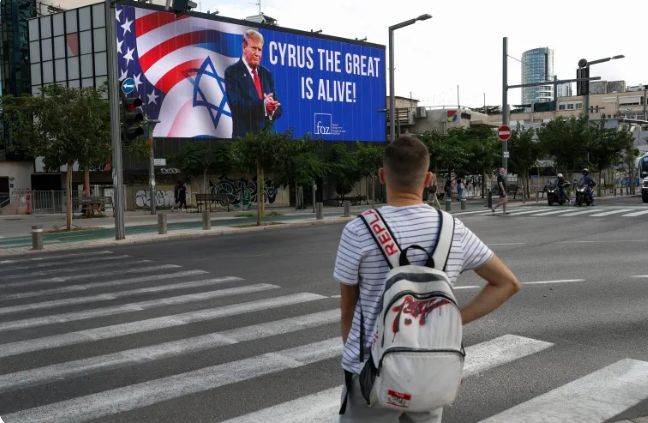
The Hamas releases Israeli captives development comes at a politically charged moment, with U.S. President Donald Trump positioning himself as the central broker of the Gaza ceasefire deal.
Trump’s dramatic intervention, branded by commentators as “Trump’s show,” reshaped the landscape. “He is arriving to take credit for peace,” noted one regional analyst in Amman.
Departing Washington aboard Air Force One, Trump declared, “The war is over. Everyone’s cheering. This will be a very special time for Israel, Palestine, and the world.”
Flanked by Secretary of State Marco Rubio and CIA Director John Ratcliffe, Trump’s visit aims to reinforce American leadership as the Gaza truce transitions from paper to practice.
For the first time in two years, aid convoys have begun entering Gaza. Food, medicine, and tents are trickling in, though UN officials warn that distribution remains painfully slow.
“People are desperate,” reported Al Jazeera’s Hind Khoudary from Deir el-Balah. “They need not just food, but also shelter, solar panels, and the means to rebuild what’s gone forever.”
Entire neighborhoods in Gaza City have been reduced to rubble. “It’s like an earthquake hit,” said an aid worker. “We are walking through ashes, not streets.”
As Hamas releases Israeli captives, humanitarian groups hope the gesture will unlock more sustained relief for Gaza’s two million residents who have endured bombardment, displacement, and starvation.
Palestinians returning home after months of exile describe ghost towns. “The war destroyed not just buildings but trust,” one resident lamented. “Rebuilding Gaza will take generations.”
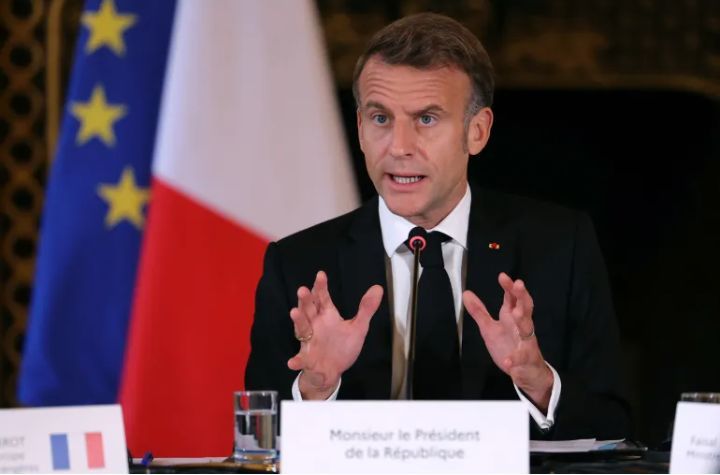
The next major step comes in Egypt, where the Trump Gaza summit will convene in Sharm el-Sheikh, cochaired by Trump and Egyptian President Abdel Fattah el-Sisi.
More than 20 world leaders, including the UN’s Antonio Guterres and Turkey’s Recep Tayyip Erdoğan, are set to attend. Absent, however, will be Iran, protesting recent U.S. military actions.
“This summit could mark the formal end of hostilities in Gaza,” Egypt’s foreign ministry said. “We expect a document declaring the war officially over to be signed.”
Though Israel and Hamas will not attend directly, their representatives have provided input through Qatar, Egypt, and the United States, whose coordination has been crucial to the truce.
“This is an inflection point,” said a European diplomat in Cairo. “If the peace holds, it could reshape the Middle East political map for the next decade.”
But experts caution that Hamas releases Israeli captives is only the beginning of a long and fragile process that could easily unravel without international oversight and good faith implementation.
Adnan Hayajneh, a professor of international relations at the University of Qatar, warned that “the hard work begins after the photo ops and handshakes.”
“There is no functioning government in Gaza, no education system, no economy,” Hayajneh explained. “The reconstruction will demand patience, billions in funding, and political realism.”
US Vice President JD Vance echoed similar caution on national television. “This will take consistent pressure from the president down to the local level,” he told CBS.
In another interview, Vance confirmed that 200 U.S. troops will be sent to Israel to monitor the truce, though “none will step into Palestinian territory or engage in combat.”
Meanwhile, international aid agencies are racing to assess Gaza’s postwar damage. The UN estimates reconstruction will cost upwards of $60 billion, surpassing early projections by the World Bank.
“The Gaza ceasefire deal offers breathing space,” one UN official said. “But rebuilding will test every donor nation’s resolve. The needs are astronomical, and the people are exhausted.”
In Tel Aviv, families of freed captives are clinging to relief. “I finally hugged my daughter after two years of nightmares,” said a mother through tears. “Peace must hold this time.”
Even within Hamas, internal divisions persist. Some commanders resist the disarmament clauses embedded in the next stage of negotiations, arguing they would weaken Palestinian resistance indefinitely.
For Israel, the demand that Hamas disarm remains nonnegotiable. “We will never accept a Gaza that can arm itself again,” said Defense Minister Yoav Gallant in a televised address.
Still, the optics of the day — as Hamas releases Israeli captives and families reunite under cameras and tears — have softened years of anger and reawakened faint hopes of coexistence.

Trump’s aides say he views the Trump Gaza summit as his defining diplomatic achievement. “He sees this as his Abraham Accords 2.0 moment,” commented a senior U.S. official traveling with him.
Egyptian media hailed the summit as a “new Suez moment,” symbolizing Cairo’s revived regional influence. El-Sisi, for his part, called the event “a step toward permanent peace.”
By late Monday, the final confirmation of all released captives is expected, completing the first humanitarian stage of the Gaza ceasefire deal before reconstruction begins in earnest.
“The world must not turn away now,” urged UN Secretary-General Guterres. “The peace must be built on justice, compassion, and the end of occupation.”
Though the scars of war remain visible, the region stands at a threshold. “It is not perfect peace,” one Israeli mother said, “but it is the first breath we’ve had in years.”
As the world watches Hamas releases Israeli captives under the eyes of history, the echoes of this fragile truce may yet define the Middle East’s next chapter — one forged from survival, sorrow, and the shared hope of peace.
About The Author