Flights from Aden airport in Yemen halted amid latest tensions as political rivalries, security accusations, and regional power struggles converge, disrupting aviation, governance, and fragile stability nationwide.
Flights at Aden International Airport were suspended abruptly, leaving passengers stranded and airlines uncertain, as Yemen’s internal divisions collided with worsening regional diplomatic strains.
Airport officials confirmed operations stopped without a clear timeline, reflecting how Yemen’s fractured authority continues undermining basic services and international connectivity.
The halt followed escalating tensions between the Southern Transitional Council and Yemen’s Saudi-backed internationally recognised government, according to Reuters and regional officials.
An airport worker told reporters, “No aircraft were cleared for departure or arrival, and instructions changed repeatedly throughout the day.”
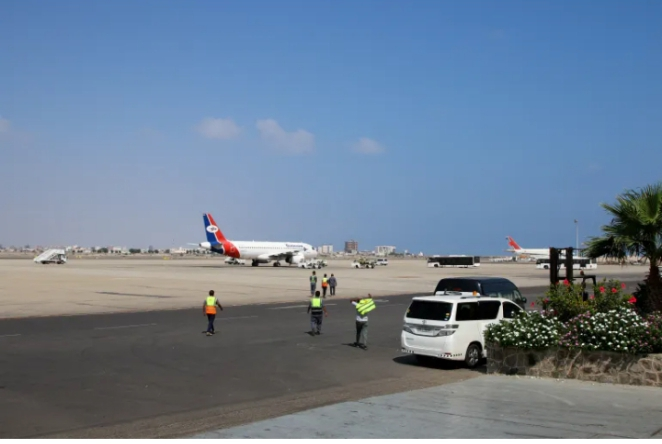
Flights from Aden airport in Yemen halted amid latest tensions also expose growing mistrust between coalition partners once united against the Houthi movement.
The STC, though formally part of the Saudi-led coalition since 2015, continues pushing for an independent southern Yemeni state.
That ambition places the group increasingly at odds with Yemen’s Presidential Leadership Council, headquartered in Riyadh and internationally recognised.
In December, the STC expanded military deployments into Hadramout and al-Mahra, two eastern provinces bordering Saudi Arabia and critical trade corridors.
A Yemeni political analyst said, “Control of these provinces isn’t symbolic; it’s about borders, revenue, and leverage over Saudi security.”
Saudi Arabia has accused the United Arab Emirates of backing the STC militarily and politically, claims Abu Dhabi has repeatedly denied.
Officials in Riyadh argue the STC’s advance threatens Saudi national security, especially along porous border regions long plagued by smuggling.
The UAE insists its involvement in Yemen remains focused on counterterrorism, rejecting accusations of fueling separatist expansion or destabilisation.
Flights from Aden airport in Yemen halted amid latest tensions intensified after conflicting statements emerged over new aviation inspection requirements.
The STC-aligned Transport Ministry claimed Saudi authorities required Aden flights bound for the UAE to undergo inspections in Jeddah.
The ministry said it was “shocked” by the decision, describing it as a unilateral measure harming Yemeni sovereignty and civilian travel.
Saudi officials denied involvement, telling Reuters that Yemen’s own internationally recognised government imposed the inspection requirement.
A Saudi source stated, “Riyadh did not restrict flights; this was an internal Yemeni decision linked to specific security concerns.”
Yemeni presidential adviser Thabet al-Ahmadi confirmed restrictions applied to one route, citing efforts to curb alleged money smuggling.
He told newsmen, “The aim was targeted oversight, not a full shutdown. We want air traffic to continue normally.”
Despite assurances, the confusion triggered a complete halt in flights, illustrating Yemen’s fragile administrative coordination.
Passengers reported cancellations without notice, while airline staff struggled to explain shifting directives amid political finger-pointing.
Flights from Aden airport in Yemen halted amid latest tensions highlight how aviation has become a proxy battleground in Yemen’s conflict.
Earlier this week, the UAE announced it would withdraw its remaining counterterrorism forces from Yemen voluntarily.
That decision followed Saudi air strikes on what Riyadh described as a UAE-linked weapons shipment in Mukalla port.
The UAE denied links to the shipment, calling the strike a dangerous escalation between coalition partners.
Observers say the incident marked a rare public rupture between Saudi Arabia and the UAE after years of close cooperation.
Rashad al-Alimi, head of Yemen’s Presidential Leadership Council, warned the STC against further entrenchment in eastern provinces.
“Any unilateral actions will have severe consequences,” he cautioned during a televised address from Riyadh.
The STC responded defiantly, insisting it would maintain its presence while coordinating with Homeland Shield forces.
The Homeland Shield, previously the main security force in the provinces, is aligned with the Yemeni government and Saudi coalition.
STC spokesperson Mohammed al-Naqeeb said, “Our movements are coordinated. Claims of rogue operations are misleading.”
Flights from Aden airport in Yemen halted amid latest tensions also underscore Yemen’s decade-long civil war legacy.
Since Houthi forces seized Sanaa in 2014, Yemen has splintered into competing zones controlled by rival armed groups.
The Houthis dominate the northwest, while the south and east remain contested by the government and separatists.
Airports, ports, and border crossings have repeatedly become leverage points in political disputes.
Aden airport, once a symbol of restored government control, now reflects Yemen’s unresolved power struggle.
Humanitarian groups warn aviation disruptions complicate aid delivery, medical evacuations, and international diplomatic engagement.
A UN official noted, “Every closure chips away at civilian resilience and worsens isolation in an already battered country.”
Flights from Aden airport in Yemen halted amid latest tensions may also discourage foreign investment and airline confidence.
Aviation experts say frequent political interference raises insurance costs and deters carriers from maintaining routes to Yemen.
Yemenia Airways, the national carrier, has already scaled back operations due to security and regulatory uncertainties.
Regional analysts argue the crisis illustrates how Yemen’s conflict has shifted from battlefield clashes to institutional paralysis.
“Power struggles now play out through ministries, airports, and paperwork,” one analyst explained.
Read also: Kim Jong-un hails “invincible” Russia alliance as North Korean troops fight abroad
Without unified command, even routine security measures trigger nationwide disruptions.
Flights from Aden airport in Yemen halted amid latest tensions ultimately reflect deeper fractures within Yemen’s anti-Houthi camp.
While coalition partners share an enemy, their competing visions for Yemen’s future remain irreconcilable.
Southern separatists seek autonomy, Riyadh prioritises border security, and Abu Dhabi balances influence and withdrawal.
These diverging agendas continue to undermine stability, governance, and civilian life.
For ordinary Yemenis, airport closures mean missed medical care, lost jobs, and prolonged separation from families.
A stranded passenger said quietly, “Politics always wins. We just wait.”
Until political compromises emerge, Yemen’s skies, like its future, remain uncertain.
About The Author