

Kim Jong-un used his New Year message to frame North Korea’s overseas troop deployment as proof of an invincible alliance with Russia, blending wartime rhetoric with loyalty appeals.
Speaking through state media, Kim praised soldiers operating far from home, presenting their actions as a historic mission strengthening ties between Pyongyang and Moscow during a turbulent global moment.
The address coincided with renewed attention on North Korea’s role in supporting Russia’s prolonged war in Ukraine, a conflict reshaping alliances and intensifying international scrutiny worldwide.
According to intelligence assessments, thousands of North Korean troops have been dispatched to assist Russian forces, marking Pyongyang’s most significant foreign military engagement in decades.
Kim’s language portrayed the deployment as both defensive and honorable, describing soldiers as guardians of national dignity while fighting in unfamiliar environments under difficult conditions abroad.
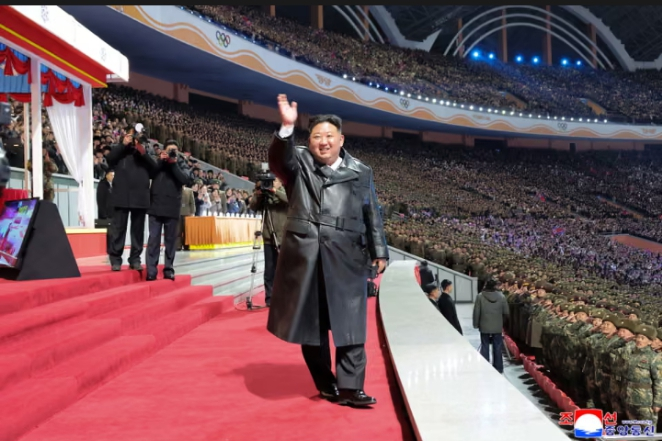
He emphasized emotional solidarity, telling troops they were remembered at home during national celebrations, reinforcing personal loyalty alongside ideological commitment to the state and its leadership.
State media quoted Kim assuring soldiers that Pyongyang and Moscow stood firmly behind them, symbolically linking North Korea’s capital with Russia’s seat of power.
The messaging underscored how the alliance has expanded beyond diplomacy into direct military cooperation, a development that has alarmed South Korea, the United States, and European governments.
Analysts argue that Russia has become a crucial economic and strategic lifeline for North Korea, offering resources and technology amid tightening international sanctions pressure.
In return, Pyongyang’s manpower provides Moscow with additional capacity during a grinding conflict that has stretched Russian forces and resources over several years.
Kim’s New Year remarks also hinted at future overseas operations, suggesting that North Korean troops could remain engaged or even expand their presence beyond current deployments.
Such hints reinforce concerns that the partnership may deepen further in 2026, altering regional security dynamics in East Asia and affecting calculations in Europe simultaneously.
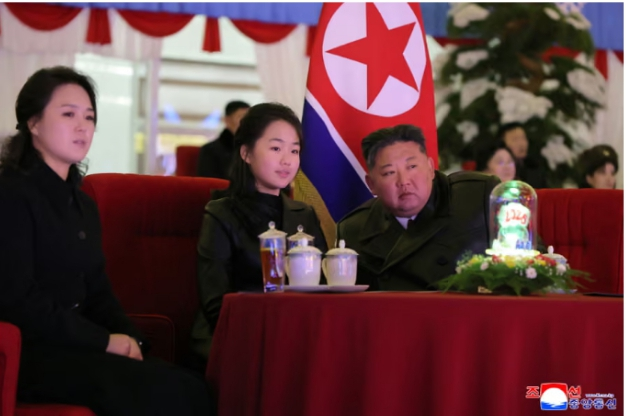
Images released alongside the message showed Kim attending a lavish celebration in Pyongyang, accompanied by his wife and daughter, reinforcing dynastic continuity narratives.
The public appearance of his daughter, widely seen as a potential successor, added another symbolic layer to the speech’s emphasis on legacy, loyalty, and national destiny.
By combining family imagery with military praise, Kim blended personal rule with state ideology, presenting unity at home while projecting strength abroad.
Despite celebratory framing, reports from intelligence agencies describe harsh realities faced by deployed soldiers, including high casualty figures and severe battlefield conditions.
South Korean estimates suggest hundreds of North Korean troops have been killed, with many more injured, highlighting the human cost behind the alliance rhetoric.
These losses contrast sharply with official portrayals of heroism, revealing a gap between propaganda narratives and reported experiences on the ground.
Accounts from captured soldiers have drawn attention to strict discipline and intense pressure, further complicating international perceptions of North Korea’s military involvement.
For Pyongyang, however, the alliance offers tangible benefits, including energy supplies, food assistance, and advanced military know-how difficult to obtain elsewhere.
Such gains help stabilize Kim’s regime domestically, cushioning economic hardships while reinforcing his defiant stance toward Washington and Seoul.
The partnership also allows Kim to reject diplomatic overtures, signaling that North Korea has powerful alternatives to engagement with traditional adversaries.
Russia, for its part, gains a politically aligned partner willing to challenge Western isolation efforts and contribute materially to its war strategy.
Kim’s emphasis on fraternity with the Russian people echoed Cold War-era solidarity language, reviving ideological tones long absent from global politics discourse.
This rhetorical revival suggests Pyongyang sees value in positioning itself within a broader anti-Western axis shaping emerging geopolitical fault lines.
The New Year message therefore functioned as both morale booster and strategic signal, aimed at domestic audiences and international observers alike.
At home, it reinforced loyalty among elites and citizens by framing sacrifice as necessary for national honor and survival.
Abroad, it warned rivals that North Korea intends to remain an active, unpredictable player in global security affairs.
The timing, at the start of 2026, allowed Kim to set the tone for the year ahead, projecting confidence despite economic strain.
By celebrating overseas troops, Kim normalized foreign deployment as part of North Korea’s identity, not an exceptional or temporary measure.
Read also: Xi Jinping vows to reunify China and Taiwan in new year’s eve address amid rising military pressure
This normalization could make future military cooperation easier to justify internally, reducing potential dissent or unease within the armed forces.
Internationally, the alliance complicates diplomatic efforts to isolate either country, binding their interests more closely through shared risks.
Observers note that such mutual dependence can deepen quickly during wartime, making reversal politically costly for both leaders.
Kim’s speech thus reflected calculated messaging, aligning ideology, strategy, and symbolism into a single narrative of resilience.
While framed as invincible, the alliance remains shaped by battlefield realities, economic needs, and shifting global power balances.
As 2026 unfolds, the durability of Pyongyang and Moscow’s partnership will be tested by war outcomes and international responses.
For now, Kim’s New Year message leaves little doubt that North Korea views its alliance with Russia as central to its future direction.
The speech reaffirmed commitment, celebrated sacrifice, and signaled readiness for continued involvement beyond national borders.
In doing so, Kim positioned his regime as both participant and stakeholder in one of the world’s most consequential conflicts.
That positioning ensures North Korea remains firmly embedded in global geopolitics, despite decades of isolation and sanctions pressure.
Ultimately, the message revealed how Kim leverages external conflict to reinforce internal control and international relevance simultaneously.
By tying national honor to foreign battlefields, he reshaped North Korea’s narrative for a new year defined by uncertainty.
Whether the alliance proves truly invincible will depend on forces far beyond speeches, but Kim has made his chosen path unmistakably clear.
About The Author


