

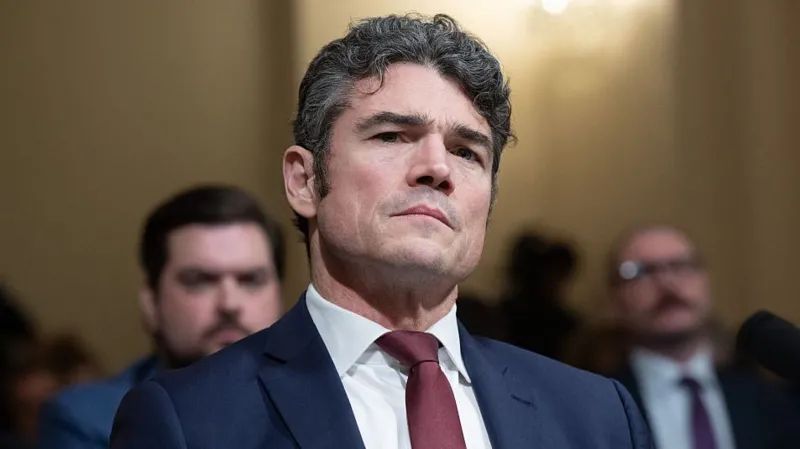
FBI probes Joe Kent– The Federal Bureau of Investigation is investigating former US counterterrorism chief Joe Kent over alleged leaks of classified information, according to sources familiar with the matter.
The probe, which reportedly began before his resignation, has placed renewed scrutiny on one of Donald Trump’s former top national security appointees at a time of heightened geopolitical tensions.
Kent, who recently stepped down as director of the National Counterterrorism Center, is said to be under investigation by the FBI’s criminal division.
While details of the alleged leaks remain unclear, the inquiry is believed to have been ongoing for some time prior to his departure from government service.
Neither Kent nor the FBI has publicly confirmed specifics of the allegations.
His resignation earlier this week followed a sharp policy disagreement over the ongoing conflict involving the United States and Iran.
In a resignation letter addressed to Trump, Kent said he could not support the war “in good conscience,” arguing that Iran posed no imminent threat to the US. That claim was swiftly rejected by the White House, which insisted it had compelling intelligence justifying military action.
The timing of the investigation has intensified political debate in Washington. Shortly after Kent’s exit, former deputy White House chief of staff Taylor Budowich publicly accused him of being “often at the center of national security leaks,” though he did not provide evidence or detail specific incidents.
Budowich further alleged that Kent undermined the chain of command during his tenure.
Kent, a decorated military veteran and long-time Trump supporter, has also drawn controversy for remarks made in his resignation letter and subsequent media appearances.
He suggested that the conflict with Iran was driven by pressure from Israel and its allies in the United States, a claim criticised by the Anti-Defamation League, which said such statements echoed longstanding antisemitic tropes.
In an interview with commentator Tucker Carlson, Kent reiterated his view that there had been no credible intelligence indicating an imminent Iranian attack. He also claimed that key decision-makers had limited access to Trump in the lead-up to the strikes and that there was insufficient debate within the administration before military action was taken.
Despite the public fallout, Kent has described his personal relationship with Trump as amicable. He said he had a “great” conversation with the president following his resignation and believed they parted on good terms.
Trump, however, struck a more critical tone in public remarks, calling Kent a “nice guy” but suggesting it was “a good thing” he had left government, adding that he considered him “very weak on security.”
Kent’s tenure as head of the National Counterterrorism Center began in July 2025 after his nomination by Trump.
Before that, he had twice run unsuccessfully for Congress, building a profile as a staunch ally of the former president and an advocate for hardline national security policies.
His sudden departure and the subsequent investigation now raise broader questions about internal divisions within the administration and the handling of sensitive intelligence during a period of international crisis.
The FBI investigation is likely to take months, if not longer, to conclude. Such probes into alleged leaks of classified information typically involve extensive review of communications, intelligence handling procedures, and access logs. If wrongdoing is established, potential consequences could range from administrative penalties to criminal charges, depending on the severity of the findings.
The case also underscores longstanding concerns within US national security circles about the unauthorised disclosure of classified material.
Leaks can have significant implications, potentially compromising intelligence sources, military operations, and diplomatic strategies. As a result, investigations of this nature are treated with high priority by federal authorities.
At the same time, critics argue that leak investigations can sometimes become politicised, particularly when they involve high-profile figures or contentious policy disputes.
In Kent’s case, the overlap between his policy disagreements over Iran and the timing of the probe is likely to fuel further debate about the motivations behind both his resignation and the investigation itself.
Read also: UK–Iran maritime tensions deepen as Gulf vessel strike escalation intensifies
As tensions continue in the Middle East, the situation surrounding Kent adds another layer of complexity to an already volatile geopolitical landscape.
The outcome of the FBI’s inquiry could have significant ramifications not only for Kent’s career but also for public trust in the management of US intelligence and national security decision-making.
About The Author
