Israel looking for opportunity to attack Iran, Turkish Foreign Minister Hakan Fidan has warned, saying Ankara sees mounting signs that Israel is positioning itself for a possible military strike that could push the Middle East into a new phase of instability.
Fidan made the remarks during a televised interview in which he expressed concern that Israel was actively seeking conditions that would allow it to justify a direct attack on Iranian territory.
He said such an action would not only threaten Iran but also destabilise neighbouring states and undermine fragile regional balances already strained by multiple conflicts.
According to the Turkish foreign minister, the region is entering a dangerous period marked by heightened military deployments, increasingly aggressive rhetoric and a breakdown in diplomatic restraint.
He warned that any miscalculation could rapidly escalate into a wider confrontation involving regional and global powers.
Fidan said Turkiye was closely monitoring developments and felt compelled to share its assessment with Iranian leaders due to the seriousness of the risks involved. He described the current environment as one in which long-standing rivalries were being sharpened by short-term political calculations.
Asked whether the United States shared Israel’s apparent readiness for confrontation, Fidan said Israel stood out as particularly eager to exploit an opportunity to strike Iran.
He stressed that while Washington’s posture remained aggressive, Israel appeared more inclined towards immediate military action.
The foreign minister confirmed that he had recently travelled to Tehran, where he held discussions with senior Iranian officials about the evolving security situation. He said those conversations were frank and reflected Turkiye’s role as a regional actor seeking to prevent further escalation.
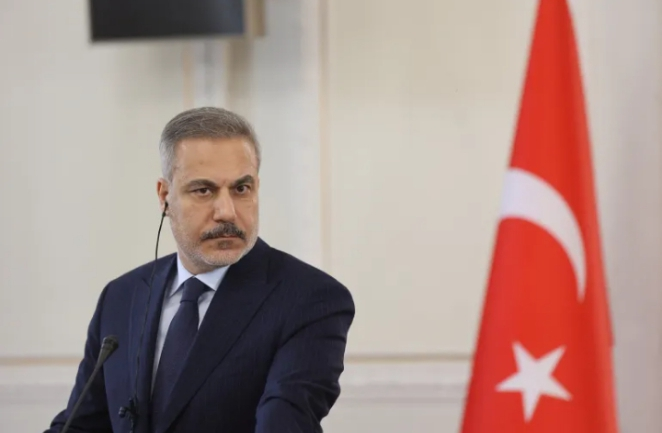
Fidan emphasised that his message to Iranian leaders was delivered in the spirit of friendship, noting that genuine allies sometimes have a responsibility to speak openly, even when the message is uncomfortable.
He said Turkiye believed transparency was essential at a moment when rumours, threats and military movements were fuelling uncertainty.
Turkiye, he said, was firmly opposed to any foreign military intervention in Iran and remained committed to defending principles of sovereignty and territorial integrity. He added that Ankara viewed stability in Iran as directly linked to its own national security and the broader peace of the region.
The warning came amid intensified diplomatic engagement between Ankara and Tehran.
Turkish President Recep Tayyip Erdogan recently held a phone call with Iranian President Masoud Pezeshkian, during which the two leaders discussed rising regional tensions and the potential consequences of military escalation.
During that conversation, Erdogan reportedly reiterated Turkiye’s opposition to attacks on Iran and stressed the importance of dialogue over confrontation.
He underlined that further destabilisation would harm all regional actors, regardless of their alliances or strategic objectives.
Iranian officials, meanwhile, have adopted an increasingly defiant tone. Senior figures in Tehran have warned that any attack by external enemies would be treated as an act of full-scale war, regardless of how it was framed or justified.
A senior Iranian official said the country’s military had been placed on high alert, with preparations underway for what was described as the worst-case scenario. The official warned that Iran would not differentiate between limited, surgical or symbolic strikes, treating all forms of attack as existential threats.
Iran’s leadership has argued that years of sanctions, covert operations and military threats have left it with little choice but to prioritise readiness and deterrence.
Officials have said that Iran’s defensive posture should be understood as a response to sustained external pressure.
Tensions have been further inflamed by recent statements from US President Donald Trump, who announced the deployment of a significant naval force towards the Gulf region. Trump described the movement as an “armada”, language that immediately raised alarm in Tehran and across the region.
The announcement marked a renewed escalation in rhetoric after Trump appeared to briefly soften his stance in the preceding week, when he suggested he preferred to avoid direct confrontation. The abrupt shift reinforced concerns about unpredictability in Washington’s approach.
US media reports indicate that the aircraft carrier USS Abraham Lincoln and its accompanying strike group have diverted from the South China Sea to the Middle East. The deployment is expected to significantly bolster US naval presence in the Gulf in the coming days.
Military analysts say such deployments carry both symbolic and practical significance, signalling readiness while increasing the risk of unintended incidents in crowded waterways.
The Gulf region has historically been a flashpoint where naval encounters have escalated rapidly.
The United States last carried out a comparable naval buildup in mid-2024, during a period of heightened conflict involving Israel and Iran.
That episode culminated in direct strikes on Iranian nuclear-related facilities, marking one of the most dangerous moments in recent regional history.
Israel has long viewed Iran as its principal strategic adversary, accusing Tehran of pursuing nuclear capabilities and supporting armed groups hostile to Israeli interests. Israeli officials have repeatedly stated that they reserve the right to act unilaterally if they believe their security is threatened.
Iran, for its part, denies seeking nuclear weapons and insists its programme is civilian in nature. It has accused Israel and the United States of undermining diplomatic efforts through sanctions, cyber operations and targeted strikes.
The current escalation comes against the backdrop of broader instability across the Middle East, including ongoing conflict in Gaza, fragile ceasefires elsewhere and growing dissatisfaction among regional populations facing economic hardship.
Diplomatic channels remain open, but analysts warn they are increasingly overshadowed by military posturing. The absence of sustained dialogue between Washington and Tehran has heightened the risk that misunderstandings could spiral into open conflict.
Turkiye has sought to position itself as a mediator, leveraging its relationships with both Western allies and regional powers. Fidan said Ankara believed regional actors should take greater responsibility for preventing war rather than relying on external intervention.
He added that prolonged instability would harm trade routes, energy supplies and civilian populations, particularly in countries already struggling with inflation, displacement and infrastructure damage.
Regional governments are watching developments closely, wary that a direct Israel-Iran confrontation could draw in multiple actors and disrupt critical maritime corridors such as the Strait of Hormuz.
Energy markets have already shown signs of nervousness, with analysts warning that any disruption to Gulf shipping could trigger sharp price increases and global economic repercussions.
Despite the tense atmosphere, Fidan said Turkiye continued to believe diplomacy remained possible. He urged all parties to exercise restraint and avoid actions that could lock the region into an irreversible cycle of retaliation.
He warned that history showed wars often began not with deliberate decisions but with incremental escalations that leaders later struggled to control.
Read also: Australian veterans disgusted by Trump’s claim allied troops stayed back from frontline
As military assets move and rhetoric hardens, the margin for error continues to shrink. Regional observers say the coming weeks may prove decisive in determining whether diplomacy can regain ground or whether confrontation becomes inevitable.
For now, Turkiye’s warning underscores growing concern among regional powers that the Middle East may be approaching another critical turning point, with consequences that could extend far beyond the immediate actors involved.
About The Author