Governor Okpebholo orders Edo Assembly investigation into Obaseki’s Radisson Blu and MOWAA projects to ensure transparency, accountability, and proper project execution.
Edo State Governor, Monday Okpebholo, has directed a comprehensive Edo Assembly investigation into two major projects initiated by former Governor Godwin Obaseki — the Radisson Blu Hotel and the Museum of West African Art (MOWAA).
This directive reflects Okpebholo’s firm resolve to promote transparency, accountability, and efficiency in the management of public resources.
The official letter, signed by the Secretary to the State Government (SSG), Mr. Musa Ikhilo, urged the Edo House of Assembly to undertake a detailed review of the two high-profile Obaseki projects.
Both the Radisson Blu Hotel and MOWAA were conceived as flagship developments aimed at transforming Edo into a leading tourism and cultural destination.
However, concerns have emerged regarding the management, funding, and timelines of these projects, prompting Governor Okpebholo’s call for a legislative probe.
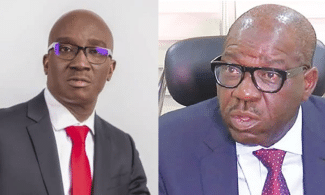
The Edo Assembly investigation is expected to uncover the financial, contractual, and administrative details surrounding the initiatives and determine whether due process was followed in their execution.
During the House’s plenary session, Speaker Blessing Agbebaku announced receipt of the governor’s letter, directing the Clerk, Audu Omogbai, to read it to members.
According to Agbebaku, the governor’s request was clear — to ensure that the state’s investments in the Obaseki projects were properly managed and beneficial to the people of Edo State.
The Speaker further disclosed that an ad hoc committee would be constituted at the next sitting to conduct the probe.
The committee will assess contract documents, examine expenditures, inspect the project sites, and invite relevant officials and contractors to testify.
The outcome of the Edo Assembly investigation will guide future government decisions on project accountability and transparency.
Governor Okpebholo’s letter also included a request for the Assembly to screen and confirm nominees for the Edo State Judicial Service Commission.
The Speaker referred this request to the House Committee on Judiciary, directing members to handle the process promptly and present a report to the plenary.
Political observers see the governor’s dual requests — the investigation into Obaseki projects and the judicial appointments — as evidence of his commitment to institutional reform and good governance.
They argue that the probe is not politically motivated but a responsible step toward ensuring fiscal discipline and continuity with accountability.
Supporters of the current administration have praised Governor Okpebholo for his courage in reopening scrutiny into the Radisson Blu project and the MOWAA project, which they describe as vital to Edo’s economic future.
They believe the Edo Assembly investigation will not only expose possible lapses but also provide clarity on how much has been spent and what remains to be completed.
Civil society organizations have equally welcomed the move. The Coalition for Accountability in Governance (CAG) commended the governor and lawmakers for prioritizing transparency.
In a statement, the group urged the Assembly to conduct the probe in public and make its findings accessible to citizens. According to CAG, Edo people have a right to know how the Obaseki projects were funded and managed.
The Radisson Blu project, located in Benin City, was envisioned as a luxury hospitality facility that would attract local and international visitors, create jobs, and enhance Edo’s tourism sector.
Meanwhile, the MOWAA project was planned as a world-class museum and research center for African arts and culture. While both projects carry immense potential, persistent delays and questions about expenditure have drawn public concern.
For many Edo residents, the Edo Assembly investigation presents an opportunity to finally obtain detailed information about the true state of the projects.
Analysts argue that such legislative oversight will strengthen governance practices, encourage fiscal responsibility, and prevent future misuse of public funds.
Governor Okpebholo’s leadership style has so far been marked by collaboration and transparency. Since assuming office, he has emphasized that all public undertakings must deliver measurable value to citizens.
His call for the investigation into the Obaseki projects reinforces that commitment, signaling that no project will be above scrutiny, no matter who initiated it.
Speaker Agbebaku, in his remarks, reaffirmed the Assembly’s readiness to discharge its constitutional oversight duties with diligence and integrity.
He stated that the legislature’s role is not to target individuals but to safeguard the interests of the people. The House, he added, will ensure that every contractor and official connected to the projects is given the opportunity to present facts before conclusions are drawn.
Political commentators believe that the Edo Assembly investigation could reshape how large-scale state projects are conceived and executed in the future.
It may establish new benchmarks for transparency and serve as a warning to future administrations about the importance of accountability in governance.
Experts in governance and public finance have also hailed the initiative as timely. According to them, consistent legislative oversight of capital projects not only deters mismanagement but also enhances investor confidence, ensuring that taxpayers’ money is effectively utilized.
As Edo State continues its developmental journey, the outcome of the Edo Assembly investigation into the Obaseki projects is expected to have far-reaching implications.
It will test the strength of Edo’s democratic institutions and demonstrate whether both the executive and legislature can uphold integrity in public service.
Governor Okpebholo’s actions send a clear message: his administration will prioritize honesty, openness, and results over politics.
By authorizing the Assembly to examine the Radisson Blu project and MOWAA project, he has reaffirmed his vision of building a state where transparency drives progress and accountability defines leadership.
More news at ireport247news
About The Author