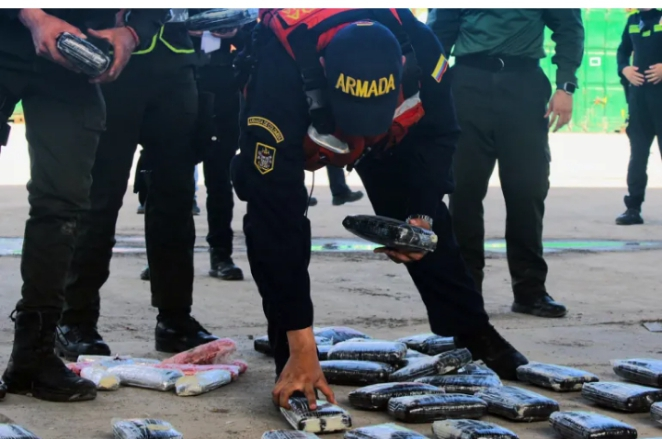
Colombian authorities have executed their Colombia largest cocaine bust, seizing 14 tonnes at a major Pacific port, demonstrating President Gustavo Petro’s commitment to cracking down on narcotics.
The operation targeted the strategic port of Buenaventura, where drug cartels often smuggle cocaine internationally. Officials described the seizure as a pivotal victory in disrupting organized crime networks.
“This is a historic blow to drug traffickers,” said Colombia’s Defence Ministry, emphasizing the careful planning that allowed the raid to occur without a single casualty.
The cocaine, hidden under layers of plaster, was intended for shipment to the Netherlands. Authorities estimate the seizure prevented circulation of over 35 million doses, worth roughly $388 million.
President Petro confirmed the seizure on X, noting that the operation represents the largest intervention by the Colombian police in the last decade.
“This seizure is proof that our policies are effective and targeted,” Petro said. “It highlights the progress of my administration’s Gustavo Petro anti-drug efforts across the country.”
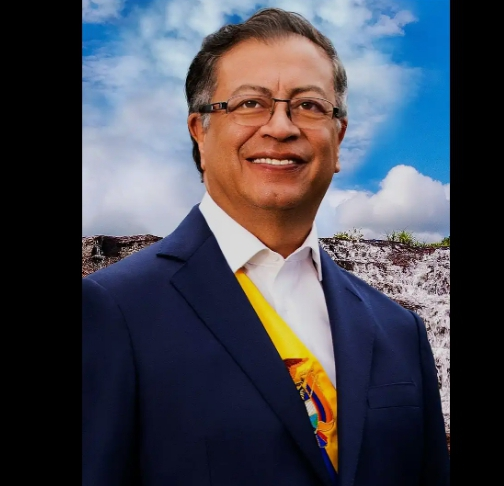
The operation coincides with mounting US-Colombia drug policy tensions, as the Trump administration has criticized Colombia’s approach to tackling cocaine production.
In October, the US Treasury sanctioned President Petro and senior officials, alleging their complicity in the global drug trade, a claim Petro firmly denies.
Treasury Secretary Scott Bessent accused Petro of allowing cartels to flourish, claiming that cocaine production had surged to record highs, flooding the United States and endangering citizens.
Petro responded by publicly releasing his bank records, challenging Washington’s assertions and highlighting his transparency in combatting organized crime.
“Don’t you find it alarming that my bank accounts contradict President Trump’s narrative?” Petro wrote on X, emphasizing the political motivations behind US sanctions.
Colombian authorities stressed that the operation involved meticulous coordination, combining intelligence from multiple agencies to track shipments and dismantle trafficking networks efficiently.
“The drugs were stored in dozens of 50-kilogramme sacks,” said Navy officials. “Our teams identified the contraband using advanced scanning and canine units.”
The port of Buenaventura, long considered a trafficking hub, has seen a significant increase in security operations under Petro, who is intent on eliminating narcotics routes.
“This seizure represents a new era for law enforcement in Colombia,” said Interior Minister Armando Benedetti. “It demonstrates the success of ongoing Gustavo Petro anti-drug efforts.”
Meanwhile, Bolivia is signaling a conservative shift in its approach to narcotics. The new government announced that the DEA returns to Bolivia after 17 years, aiming to tackle rising cocaine production.
Ernesto Justiniano, Bolivia’s newly appointed narcotics chief, confirmed the DEA’s reentry, citing international cooperation as “fundamental to reducing drug flows across the continent.”
“This is a commitment to global partnerships in fighting organized crime,” Justiniano said, adding that Bolivia will no longer act in isolation or political self-interest.
The return of the DEA represents a stark contrast to prior socialist administrations, which had expelled the agency amid accusations of foreign interference in domestic affairs.
As Colombia and Venezuela face heightened scrutiny from Washington, US military presence in the Caribbean and eastern Pacific has intensified, creating regional tension.
President Maduro of Venezuela has accused the US of using anti-drug operations as a pretext to destabilize his government, highlighting growing geopolitical complexity in the region.
The seizure in Buenaventura also underscores the importance of the Pacific port cocaine seizure in intercepting shipments before they reach Europe, a crucial step in international drug enforcement.
“The port is critical for cartel operations,” said a senior Colombian official. “Intercepting cocaine here prevents millions of doses from reaching illicit markets abroad.”
Experts note that while Colombia has long battled cocaine trafficking, the scale of this bust marks an unprecedented achievement in recent decades.
“The seizure is not just symbolic; it impacts cartel finances and operational capacity significantly,” said Adriana Sanchez, a security analyst based in Bogotá.
Petro’s administration views the operation as proof that law enforcement can succeed without resorting to lethal force, contrasting with Washington’s militarized approach.
“This was executed without a single death,” Petro tweeted. “Our strategy balances enforcement with respect for life, unlike extrajudicial operations elsewhere in the region.”
The operation has also prompted discussions about the future of US-Colombia drug policy tensions, with both countries emphasizing the need for collaborative solutions despite public disagreements.
Analysts warn that while the seizure is significant, cartel networks remain adaptive, requiring ongoing vigilance and multi-national cooperation to sustain momentum against cocaine trafficking.
“The fight against organized crime is continuous,” said Sanchez. “Seizures like this one are crucial, but systemic reform is necessary to maintain long-term control.”
Petro’s government continues to advocate for comprehensive approaches, including social programs to reduce coca cultivation, enhancing intelligence sharing, and strengthening port security measures.
“This is one of many operations that will define my presidency,” Petro said. “We will continue to lead with integrity in our Gustavo Petro anti-drug efforts.”
The international community has largely welcomed the seizure, noting that it highlights Colombia’s capacity to act decisively and responsibly in disrupting the global cocaine trade.
Observers caution, however, that Washington’s pressure may intensify, given the administration’s focus on drug interdiction as a foreign policy priority.
As the DEA prepares to reestablish operations in Bolivia, regional cooperation could improve, complementing Colombia’s strategic seizures and creating a multi-national framework against drug trafficking.
“This coordinated effort demonstrates that political differences need not hinder operational success,” said Justiniano, referring to the synergy between Colombia and Bolivia in combating cocaine distribution.
Petro’s message to both domestic and international audiences is clear: Colombia is determined to assert control over its ports and dismantle drug networks while maintaining sovereignty and respecting human rights.
The Colombia largest cocaine bust may mark a turning point in regional narcotics enforcement, signaling a potential new chapter in how South America confronts the persistent threat of cocaine trafficking.
—
About The Author