China has accused Australia of covering up a South China Sea airspace incursion, escalating tensions in a region already fraught with territorial disputes, military rivalries, and strategic competition.
The Chinese Ministry of National Defence lodged a formal complaint, claiming Australia attempted to hide the alleged illegal intrusion by its military aircraft into Chinese sovereign airspace.
Spokesperson Jiang Bin criticized Australia’s official statement, arguing it shifts blame onto China and urged Canberra to restrain its naval and air forces to avoid further diplomatic damage.

Australia’s Defence Ministry said a Chinese fighter jet released flares near an Australian Air Force plane conducting a maritime surveillance patrol over disputed South China Sea waters.
The Australian Defence Force emphasized that its patrols comply with international law and longstanding procedures, while China insists the incident occurred over its Xisha Islands, known internationally as Paracel Islands.
Earlier this year, in February, Australia and China exchanged similar accusations following a midair encounter, signaling persistent friction in the strategic South China Sea region and the risk of escalation.
China claims nearly all of the South China Sea, despite a 2016 Hague tribunal ruling stating its expansive claims have no legal basis under international law or international maritime agreements.
The Paracel Islands are also claimed by Vietnam and Taiwan, making the area a sensitive flashpoint for territorial disputes and raising the risk of regional conflict escalation among multiple countries.
Australia’s patrols, aligned with U.S. freedom of navigation operations, are viewed by Beijing as provocative, while Canberra frames its actions as routine surveillance consistent with international maritime law obligations.
Australian Prime Minister Anthony Albanese met U.S. President Donald Trump to strengthen strategic cooperation, including agreements for rare earth mineral supplies amid Chinese export restrictions affecting global markets.
The leaders also discussed Australia’s plan to acquire nuclear-powered submarines under the AUKUS security pact, raising Beijing’s concerns about nuclear proliferation and intensifying an arms race in the Asia-Pacific.
Trump stated that Australia’s submarine projects are progressing rapidly and reaffirmed U.S. support for Australia’s naval modernization under the AUKUS security pact with the United Kingdom and the United States.
China criticized the AUKUS pact, warning it increases regional tensions, risks nuclear proliferation, and intensifies military competition, directly impacting China-Australia relations and South China Sea stability.
The ongoing dispute reflects broader deterioration in bilateral relations, including trade tensions, sanctions, disagreements over Taiwan and Hong Kong, creating a climate of mutual distrust and strategic caution between the nations.
The Paracel Islands’ strategic location gives China a military and economic advantage, providing access to resources, fisheries, oil, gas, and crucial shipping lanes vital for regional and global commerce.
China views asserting control over the islands as protecting national sovereignty, while Australia emphasizes maritime surveillance and freedom of navigation patrols as legally justified under international law.
The timing of the incident coincides with Australia’s efforts to strengthen military alliances through AUKUS, signaling a potential shift in regional balance and provoking Beijing’s security concerns over advanced naval capabilities.
China’s Defence Ministry emphasized it would firmly oppose intrusions into what it regards as sovereign airspace, warning that provocations from foreign military forces could trigger serious consequences if not managed carefully.
Australia maintains that its maritime surveillance patrols are routine, transparent, and compliant with international law, contrasting with China’s accusations of concealment, blame-shifting, and unilateral interpretation of sovereignty claims.
Repeated aerial and naval encounters in the South China Sea serve as a litmus test for regional security, with high stakes for miscalculation, accidental conflict, or intentional provocations escalating tensions rapidly.
Observers note that repeated incidents heighten the risk of conflict, with China asserting dominance while Australia strengthens U.S.-aligned defense capabilities, underscoring the South China Sea’s strategic importance for Asia-Pacific security.
The South China Sea airspace incursion controversy is emblematic of broader strategic rivalries, testing the ability of nations to manage disputes diplomatically while projecting military strength effectively to deter adversaries.
How both nations manage this incident could set precedents for future military encounters, influencing broader diplomatic relations between China, Australia, and allied nations in the Asia-Pacific region.
Regional stakeholders monitor the dispute closely, as the outcome affects freedom of navigation, trade security, and geopolitical alliances, emphasizing the high stakes of maritime disputes in contested waters.
Both China and Australia face a delicate balancing act: asserting national interests while avoiding escalation that could destabilize the South China Sea and threaten broader regional peace and stability.
The incident highlights how international law, maritime surveillance, and strategic alliances intersect in a contested region, with implications for military operations, diplomatic negotiations, and global security priorities.
The South China Sea remains a complex theater where competing claims, military posturing, and geopolitical alliances converge, making each aerial or naval encounter a potential flashpoint for conflict escalation.
Tensions are unlikely to subside without careful diplomacy, transparent communication, and adherence to international legal frameworks, ensuring that South China Sea airspace incursions do not spiral into broader confrontations.
China’s accusations and Australia’s defense of its maritime patrols underscore the ongoing challenge of balancing sovereignty claims, regional security, and international cooperation in one of the world’s most contested maritime zones.
Experts warn that unresolved disputes in the South China Sea could embolden other claimants, increase militarization, and undermine global trade, potentially dragging multiple nations into strategic and economic conflicts.
Australia’s alignment with U.S. security objectives through AUKUS strengthens its deterrence capabilities but also risks escalating China-Australia tensions if both sides fail to communicate and de-escalate incidents over contested waters.
China’s insistence on defending claimed territory, combined with Australia’s commitment to maritime surveillance, illustrates a fundamental clash of interpretations of sovereignty, international law, and the rules governing disputed airspace and waters.
Analysts highlight that the South China Sea is a litmus test for broader U.S.-China strategic competition, with Australia playing a pivotal role in regional defense architecture and influencing balance-of-power calculations.
The airspace incursion incident demonstrates the need for crisis management mechanisms, communication channels, and diplomatic engagement to prevent minor disputes from escalating into serious confrontations or military engagements.
As tensions simmer, the South China Sea will continue to be a geopolitical hotspot, where miscalculation, political messaging, and military maneuvers carry global consequences, influencing both bilateral and multilateral relations.
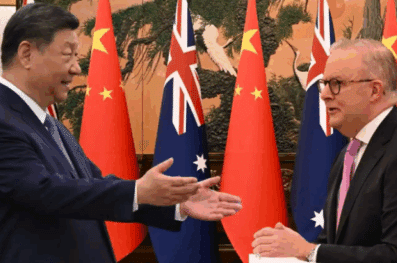
The current dispute underscores the fragility of regional security and the importance of adhering to international norms, legal frameworks, and diplomatic channels to maintain peace in contested maritime zones.
China-Australia relations remain at a crossroads, with military encounters, trade disputes, and strategic alliances shaping the trajectory of interactions, while both nations weigh sovereignty claims against the risks of escalation.
The South China Sea airspace incursion serves as a reminder that contested waters, territorial claims, and regional ambitions require careful navigation to prevent unintended confrontations with broader regional or global implications.
About The Author