Islamabad, Pakistan – Pakistan has accelerated its campaign to expel Afghan refugees, raising fears among families who have lived here for decades amid escalating tensions with the Taliban.
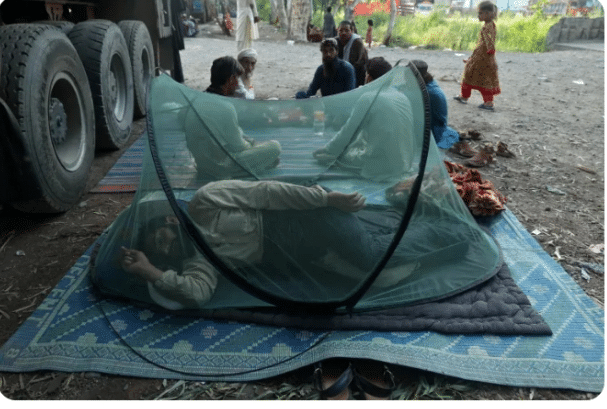
Allah Meer, born in a refugee village in Kohat, has spent all 45 years of his life in Pakistan, yet now faces the looming threat of expulsion.
Over 200 members of Meer’s extended family crossed into Pakistan decades ago, fleeing Afghanistan’s conflict. “How can we uproot everything when this is our home?” he asked, voice heavy with concern.
The Pakistani government recently announced plans to close all 54 Afghan refugee villages nationwide, marking a sharp escalation in its 2023 campaign targeting so-called “illegal foreigners.”
Fighting erupted along the Pakistan-Afghanistan border earlier this month, further straining relations and stoking fears for refugees who may be used as political leverage.
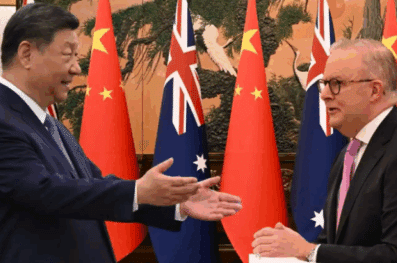
Officials from both sides met in Doha to sign a ceasefire agreement, yet uncertainty persists, leaving Afghan families like Meer’s in a precarious situation with their futures hanging in the balance.
Pakistan has historically hosted millions of Afghan refugees since the Soviet invasion of Afghanistan in 1979, providing sanctuary through successive waves of conflict and political upheaval.
The Taliban’s return to power in 2021 triggered another exodus, sending between 600,000 and 800,000 Afghans to Pakistan, many of whom have now lived in the country for decades.
Relations between Islamabad and Kabul have deteriorated, with Pakistan accusing the Taliban of harboring armed groups responsible for cross-border attacks, heightening the pressure to accelerate the expulsion of Afghan refugees.
Meer, father of ten and an educator, runs a UN-backed vocational project for Afghan refugee children, yet fears that Pakistan’s invalidation of Proof of Registration (PoR) cards will endanger his family.
Since June, the government has stopped renewing PoR cards and invalidated existing ones, leaving families who legally resided in Pakistan vulnerable to deportation despite decades-long residency.
Pakistan also issued Afghan Citizenship Cards (ACC) to undocumented nationals, yet the ACC now provides no protection against expulsion, intensifying the sense of insecurity among the refugee population.
The UNHCR reports that more than 1.5 million Afghans left Pakistan between 2023 and mid-October 2025, voluntarily or forcibly, highlighting the scale and urgency of the expulsion of Afghan refugees.
About 1.2 million PoR cardholders and over 700,000 ACC holders remain in Pakistan, with many asylum seekers trapped in legal limbo, unsure whether they can safely stay under the current Pakistani government refugee policy.
Qaiser Khan Afridi of the UNHCR emphasized Pakistan’s generosity but expressed deep concern over the expulsion of Afghan refugees, calling for any returns to be voluntary, gradual, and dignified.
Afridi warned, “Many affected families fear for their future. Pakistan must continue its proud history of hospitality, ensuring safe and humane treatment during this delicate moment.”
Meer described the dilemma his family faces: “We have no connections in Afghanistan, yet we are suddenly considered illegal in a country we have always called home,” highlighting the personal toll of Pakistani government refugee policy.
The Afghan refugee crisis is further complicated by heightened border violence, security concerns, and political disputes between Pakistan and the Taliban, which now governs Afghanistan with growing international scrutiny.
Pakistan claims that Afghan refugees pose a security risk, citing alleged involvement in violent incidents, yet provides little evidence, leaving families like Meer’s caught in the crossfire of an escalating Afghan refugee crisis.
Meer fears being mistrusted in Afghanistan as well, saying, “We may be seen as Pakistanis, enemies there too,” illustrating the transnational impact of the Afghan refugee crisis on displaced populations.
The UNHCR urges exemptions for Afghans with international protection needs to prevent involuntary return, stressing that the Afghan refugee crisis requires coordinated humanitarian and political solutions.
UNHCR refugee support has been vital for decades, issuing PoR cards, enabling education, medical access, and legal residency for Afghans in Pakistan despite uncertain policies and heightened deportation threats.
Meer credits UNHCR refugee support for allowing him to run vocational training programs for refugee children, providing hope amidst fear of sudden expulsion and statelessness.
Afridi called on Pakistan to recognize international protection needs and apply measures ensuring that UNHCR refugee support continues unhindered during this volatile period.
Pakistan-Taliban tensions have intensified, with recent border skirmishes escalating political friction, directly affecting Afghan refugees caught between host and homeland in a precarious balance of Pakistan-Taliban tensions.
Despite a ceasefire in Doha, families fear renewed violence could coincide with mass deportations, linking Pakistan-Taliban tensions to the real and present danger of displacement.
Observers warn that using refugees as political tools amidst Pakistan-Taliban tensions undermines regional stability and violates international norms protecting displaced populations.
As the expulsion of Afghan refugees accelerates, humanitarian agencies stress that voluntary, safe, and gradual repatriation is essential to avoid deepening human suffering and regional instability.
Meer reflects on the decades his family has spent in Pakistan: “We are considered illegal here, but we are too Afghan to be safe back home. Our lives are caught between borders.”
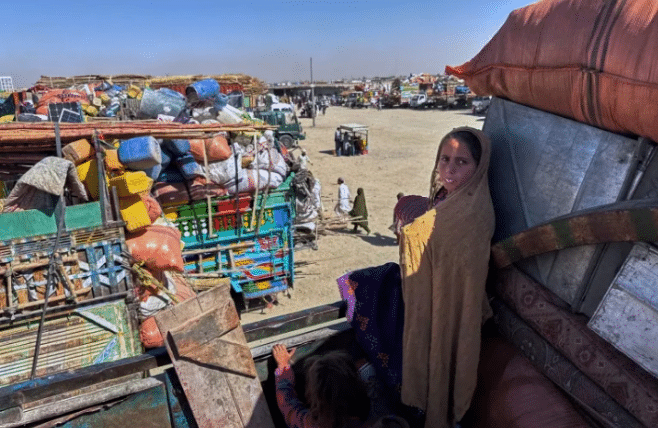
Many families have already begun packing their belongings under duress, selling personal items to fund journeys back to Afghanistan, highlighting the human cost of Pakistan’s accelerated expulsion of Afghan refugees.
Community leaders in Kohat and other regions have appealed to Islamabad to reconsider, noting that decades-long settlement, integration, and economic contribution by refugees are being disregarded.
Children born in Pakistan, who have attended schools and universities here, now face a future in Afghanistan where they have no relatives, no property, and no established social networks.
International human rights groups have criticized the Pakistani government refugee policy, saying that sudden deportations violate both domestic and international legal standards and exacerbate the Afghan refugee crisis.
Medical care, education, and vocational opportunities for refugees are under threat, as invalidated PoR and ACC cards prevent access to hospitals, schools, and government services, increasing anxiety across refugee communities.
Meer’s family is one of many caught between borders, representing a generation that grew up in Pakistan yet remains vulnerable due to escalating Pakistan-Taliban tensions and new restrictive refugee policies.
The expulsion of Afghan refugees is not only a humanitarian crisis but also a political instrument in Islamabad-Kabul relations, demonstrating how refugees can be caught in broader regional disputes.
Humanitarian organizations continue to advocate for Pakistan to allow voluntary, safe, and dignified returns, emphasizing that involuntary displacement can lead to long-term instability and human suffering.
Meer’s personal story underscores the human impact of policy decisions, illustrating how decades of life, community, and family can be destabilized in a matter of months.
As the world watches, Pakistan faces growing international pressure to balance security concerns with humanitarian obligations, ensuring that Afghan refugees are treated with dignity and given the option for voluntary return.
The expulsion of Afghan refugees, a crisis decades in the making, now reaches a critical moment as Pakistan grapples with security concerns, border disputes, and its own national policies.
Long-term solutions require cooperation between Pakistan, Afghanistan, and international agencies, including the UNHCR refugee support system, to prevent further deterioration of the Afghan refugee crisis.
Families like Meer’s are living on the edge of uncertainty, uncertain whether they will remain in a land they consider home or be forced to navigate an unfamiliar homeland, showing the human cost of Pakistan-Taliban tensions.
The coming weeks will determine the fate of thousands of Afghan refugees in Pakistan, as government decisions, border tensions, and international pressure intersect to shape their future.
About The Author