Uganda is facing a tense political situation after opposition leader Robert Kyagulanyi Ssentamu, widely known as Bobi Wine, was reportedly taken from his home by security forces during the ongoing Uganda election.
Wine, the presidential candidate of the National Unity Platform, said he was placed under house arrest a day after citizens went to the polls in the highly contested 2026 presidential vote, before his party later reported that he had been forcibly removed in an army helicopter to an unknown location.
The Ugandan military denied the claims, describing them as “baseless and unfounded” and suggesting they were intended to provoke supporters into acts of violence.
Conflicting reports have left both citizens and international observers uncertain about Wine’s status and the stability of the electoral process.
The 2026 Uganda election has been marked by allegations of intimidation, voter suppression, and irregularities across the country.
Longtime President Yoweri Museveni, representing the ruling National Resistance Movement, sought to extend his nearly four-decade rule and was widely expected to maintain a commanding lead.
Official reports indicated that Museveni had secured 73.7 percent of votes while Wine trailed with 22.7 percent, with roughly 81 percent of votes counted by Friday, January 16.
Wine, a former musician turned politician, has become a prominent figure among Uganda’s younger population, which constitutes more than 70 percent of citizens.
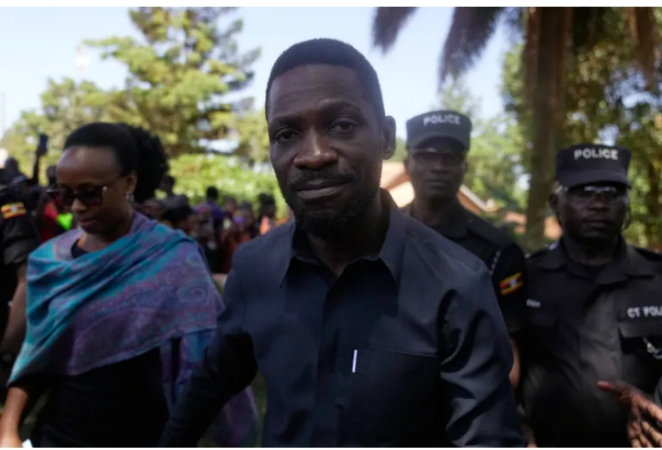
Throughout his campaign, he repeatedly accused authorities of “massive ballot stuffing” and called on Ugandans to reject what he described as a “criminal regime,” highlighting longstanding concerns about the fairness of the electoral process.
Reports of violence erupted in multiple locations in the hours following the vote, including Butambala, a town roughly 55 kilometers southwest of Kampala.
Local police said opposition supporters armed with machetes attacked a police station and a vote-tallying center, resulting in at least seven fatalities.
Opposition lawmaker Muwanga Kivumbi, a member of Wine’s National Unity Platform, disputed this account, asserting that security forces attacked opposition supporters who had gathered at his home to await election results.
Kivumbi alleged that ten people were killed and accused the military of removing evidence of the killings, leaving only pools of blood behind.
These conflicting narratives have underscored the difficulty in obtaining accurate information, especially given the nationwide Uganda internet blackout imposed just before the vote.
The government-enforced internet shutdown has severely limited independent reporting and communication, leaving citizens and journalists struggling to confirm details about Wine’s whereabouts.
Observers noted that the blackout made it nearly impossible to contact party officials or verify developments directly. Calm was reported outside Wine’s residence, but no confirmation of his status was available.
Human rights groups have condemned the blackout, emphasizing that restricting access to information during elections undermines transparency and violates democratic principles.
Wine’s political rise has faced continuous resistance from Museveni’s government. As a young, urban figure, he has galvanized support among voters seeking change, particularly those frustrated by economic stagnation and high unemployment. During the campaign, his supporters faced arrests, harassment, and restrictions on political gatherings.
International observers have described Uganda’s electoral environment as being marred by widespread repression, intimidation, and interference, raising serious doubts about the credibility of the vote.
Reports of ballot tampering, excessive force against protesters, and targeted harassment of journalists have further undermined confidence in the integrity of the election.
The alleged removal of Wine by military personnel has drawn both local and international attention.
The National Unity Platform has called for immediate clarification regarding his status to prevent further unrest. Rights organizations have criticized the government, highlighting that suppressing opposition figures and restricting internet access during elections constitutes a major violation of democratic norms.
Despite the blackout, social media continues to be a platform for citizens using virtual private networks to share information and document events, including allegations of Wine’s abduction and reports of irregularities in the Uganda election.
These posts have attracted global attention and amplified concerns about the fairness of the vote and the safety of opposition leaders.
The 2026 Uganda election has revealed deep divisions within the country and the fragility of its democratic institutions. Museveni, who has ruled Uganda since 1986, continues to consolidate power, while Wine embodies the growing demand for political change among younger citizens.
The situation surrounding his alleged abduction underscores tensions between the state, its security apparatus, and opposition forces, raising concerns about the potential for escalation in Kampala and other urban centers.
Analysts warn that how the government handles this crisis will have long-term implications for political stability, public trust in institutions, and Uganda’s democratic credibility.
For the National Unity Platform, these developments challenge the party’s ability to maintain a political presence under restrictive and potentially threatening conditions.
For Museveni, the way the government addresses allegations against Wine could either stabilize the situation or provoke further unrest.
Observers emphasize that transparent handling of the electoral process, adherence to democratic norms, and respect for human rights will be crucial in determining Uganda’s political future.
Read also: Iran national internet becomes only online option as authorities tighten digital control
Citizens and international organizations continue to monitor developments closely, recognizing that the treatment of opposition figures like Wine and the management of the Uganda election will influence the nation’s democratic trajectory for years to come.
As Uganda awaits final election results and further information about Wine’s status, uncertainty remains high. Conflicting reports regarding his alleged abduction, combined with the nationwide internet shutdown and instances of post-election violence, have created a volatile environment.
The events demonstrate the importance of safeguarding democratic principles, including political participation, freedom of expression, and access to information.
The outcome of the 2026 Uganda election will not only shape the country’s immediate political climate but also serve as an indicator for regional stability in East Africa and the broader struggle for democratic governance in nations with entrenched long-term leadership.
About The Author